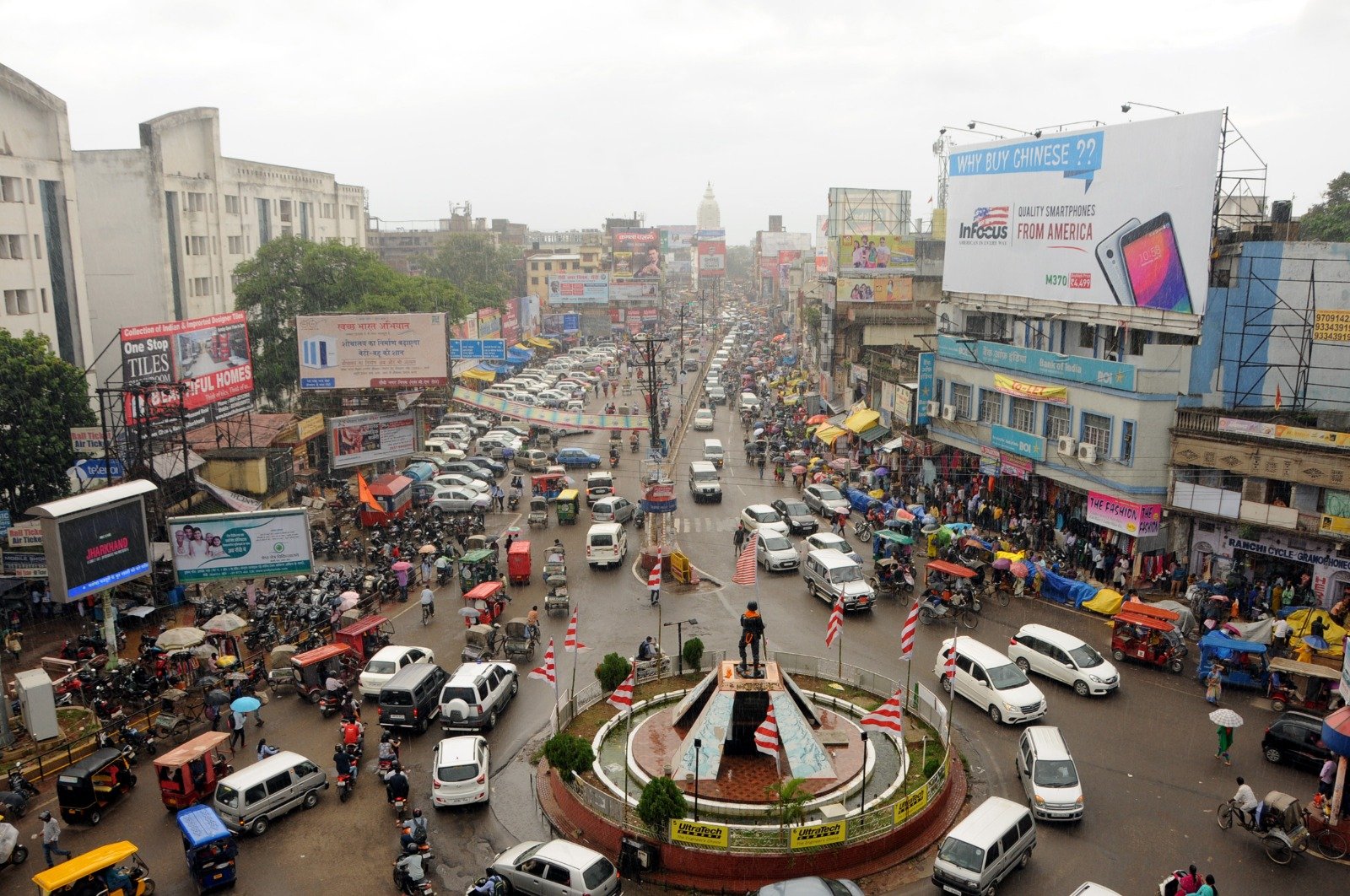
Long before glass-fronted malls and air-conditioned retail chains altered the way Ranchi shopped, the city had already developed its own commercial landmarks. Along Main Road, around the historic GEL Church Complex and later at Firayalal Chowk, shopping was not merely a transaction. It was part of the city’s social life.
The GEL Church, whose construction began in the 1850s, stands among Ranchi’s important historical landmarks. Around its precinct and the Main Road neighbourhood, commerce gradually grew alongside the city’s expanding public life. Shops such as Express Shopee belonged to an era when a well-organised store offering a range of everyday goods could itself feel modern.
Then came Firayalal.
The story of Firayalal is inseparable from the history of post-Partition Ranchi. The Munjal family, which arrived in the city after Partition in 1947, built its business through difficult years of resettlement and enterprise. By the early 1960s, Firayalal had emerged as a distinctive shopping destination, offering something that would later become commonplace across India: the idea of bringing different categories of family shopping under one roof.
For generations of Ranchi residents, Firayalal was more than a shop. It became a place associated with festivals, weddings, family purchases, and the small rituals of urban life. Its influence became so deep that the surrounding junction acquired its popular identity as Firayalal Chowk.
Officially, however, the junction is Param Vir Chakra awardee Lance Naik Albert Ekka Chowk — a distinction that also tells a story about how cities accumulate layers of memory. One name reflects commercial history; the other commemorates military valour.
That duality is characteristic of Ranchi. Its streets are not simply routes between destinations; they are archives of the city’s transformation — from a relatively small colonial-era settlement to the capital of Jharkhand and, eventually, a rapidly modernising urban centre.
The arrival of malls has changed shopping habits, but it has not erased these older landmarks. Indeed, their continuing familiarity suggests that successful urban places are built not only through infrastructure and consumption, but also through memory.
Ranchi’s shopping history therefore deserves to be preserved alongside its political and architectural history. The GEL Church precinct, Main Road’s old commercial establishments, and Firayalal Chowk represent different chapters of the same story: how a city learns to become modern without entirely forgetting where it began.
Author

Related Stories

Most Read
- 1Argentina’s ‘Vanishing Sea’: Rare Low Tide
- 2Effect of the 12 August 2026 Solar Eclipse on the 12 Zodiac Signs, Know Who Will Benefit and Who Will Have to Be Careful
- 3HC finds peon’s dismissal over tea and biscuits amounted to ‘injustice’
- 4Brace for 29 June: a Capricorn Full Moon, Mercury retrograde and Jupiter’s leap into Leo
- 5Japan Coach’s Whiteboard Tactics Go Viral at FIFA World Cup