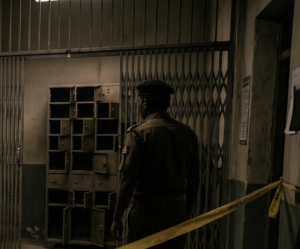
In a judgment that blends legal scrutiny with compassion, the Jharkhand High Court has ordered the reinstatement of a contractual peon who lost his job after allegedly taking tea powder and biscuits from his office, observing that the punishment was “grossly disproportionate” and amounted to “injustice brimming with insensitivity.”
Allowing a Letters Patent Appeal filed by Ranjeet Kumar Himanshu, who had served the District Rural Development Agency (DRDA), Bokaro, for nearly 17 years, a division bench headed by Chief Justice M.S. Sonak and Justice Rajesh Shankar set aside his termination, directed his reinstatement by July 1, and awarded him 50 per cent back wages.
As Vague as Vagueness Can Be’: High Court Slams Violation of Natural Justice
The bench came down heavily on the manner in which the authorities had dealt with the case, holding that the disciplinary process violated the principles of natural justice. It described the show-cause notice issued to the peon as “as vague as vagueness can be”, noting that it merely referred to “some material” allegedly taken from the office without identifying what the material was.
The court said a vague show-cause notice amounts to “no notice” and cannot be treated as compliance with the principles of natural justice. Equally unacceptable, it said, was the May 2, 2022, termination order, which simply stated that the employee’s explanation was “not satisfactory” without assigning reasons or showing that his reply had been considered.
What gave the case a poignant human dimension was the employee’s reply to the show-cause notice. He told the authorities that he had spent 17 years in service on a contractual basis, was supporting a family of six members comprising his wife, three daughters, and younger sister, and pleaded that dismissal would leave them on the streets. He apologised for any unintentional mistake and sought forgiveness with folded hands.
Doctrine of Proportionality: Sacking After 17 Years of Service ‘Shocks the Conscience
The court observed that these circumstances were completely ignored. Significantly, the bench noted that the material referred to in the proceedings appeared to be tea powder and biscuits.
While clarifying that it did not justify or approve the alleged act, the court held that dismissing a low-paid contractual employee after 17 years of service for what appeared to be a singular incident “shocks the conscience.”
“This is certainly not justice tempered with mercy, but injustice brimming with insensitivity,” the bench remarked, stressing that the doctrine of proportionality had been ignored. The judges also observed that there was no allegation that the peon habitually removed office materials and that certificates issued by previous deputy development commissioners (DDCs) commending his work had been overlooked by the authorities.
While directing reinstatement, the court limited the relief to 50 per cent back wages, observing that forfeiture of the remaining half itself constituted a sufficient penalty, if any misconduct had occurred.
The bench also expressed concern over “persistent administrative lethargy” in implementing court orders. It directed the Deputy Commissioner (DC) and Deputy Development Commissioner (DDC), Bokaro, to personally ensure compliance with its directions and ordered the DC to file compliance affidavits before the High Court regarding reinstatement and payment of back wages.
Author

Related Stories




Most Read
- 1Argentina’s ‘Vanishing Sea’: Rare Low Tide
- 2Effect of the 12 August 2026 Solar Eclipse on the 12 Zodiac Signs, Know Who Will Benefit and Who Will Have to Be Careful
- 3HC finds peon’s dismissal over tea and biscuits amounted to ‘injustice’
- 4Brace for 29 June: a Capricorn Full Moon, Mercury retrograde and Jupiter’s leap into Leo
- 5Japan Coach’s Whiteboard Tactics Go Viral at FIFA World Cup