Discovering the Timeless Soul of Majuli
On the world’s largest inhabited river island, history isn’t preserved behind museum walls, it is woven into everyday life.
Imagine waking to the sound of temple bells instead of traffic, watching monks rehearse dance dramas first performed over 500 years ago, or meeting artisans who still craft bamboo masks using techniques passed down through generations. On the world’s largest inhabited river island, life doesn’t stand still—but it does move to a rhythm that has endured for centuries.
Nestled within the mighty Brahmaputra, Majuli is one of the few places in India where history isn’t confined to monuments or museums. It lives in its monasteries, echoes through devotional music, survives in traditional weaving and pottery, and continues in the everyday rituals of island communities. While modern life has certainly arrived, much of Majuli’s cultural fabric remains remarkably unchanged, giving visitors the rare feeling of stepping into another era.
Spread across a vast network of villages, wetlands and monasteries, Majuli is both a geographical wonder and the spiritual heart of Assam. For over five centuries, the island has nurtured the traditions of Neo-Vaishnavism, a reformist movement founded by the saint, scholar and cultural icon Srimanta Sankardeva. His vision transformed Majuli into a centre of learning, spirituality and performing arts, where music, dance and theatre became powerful tools of devotion and education.
Preserving Living Traditions in Majuli, Assam: Satras, Masks, and Ancient Crafts
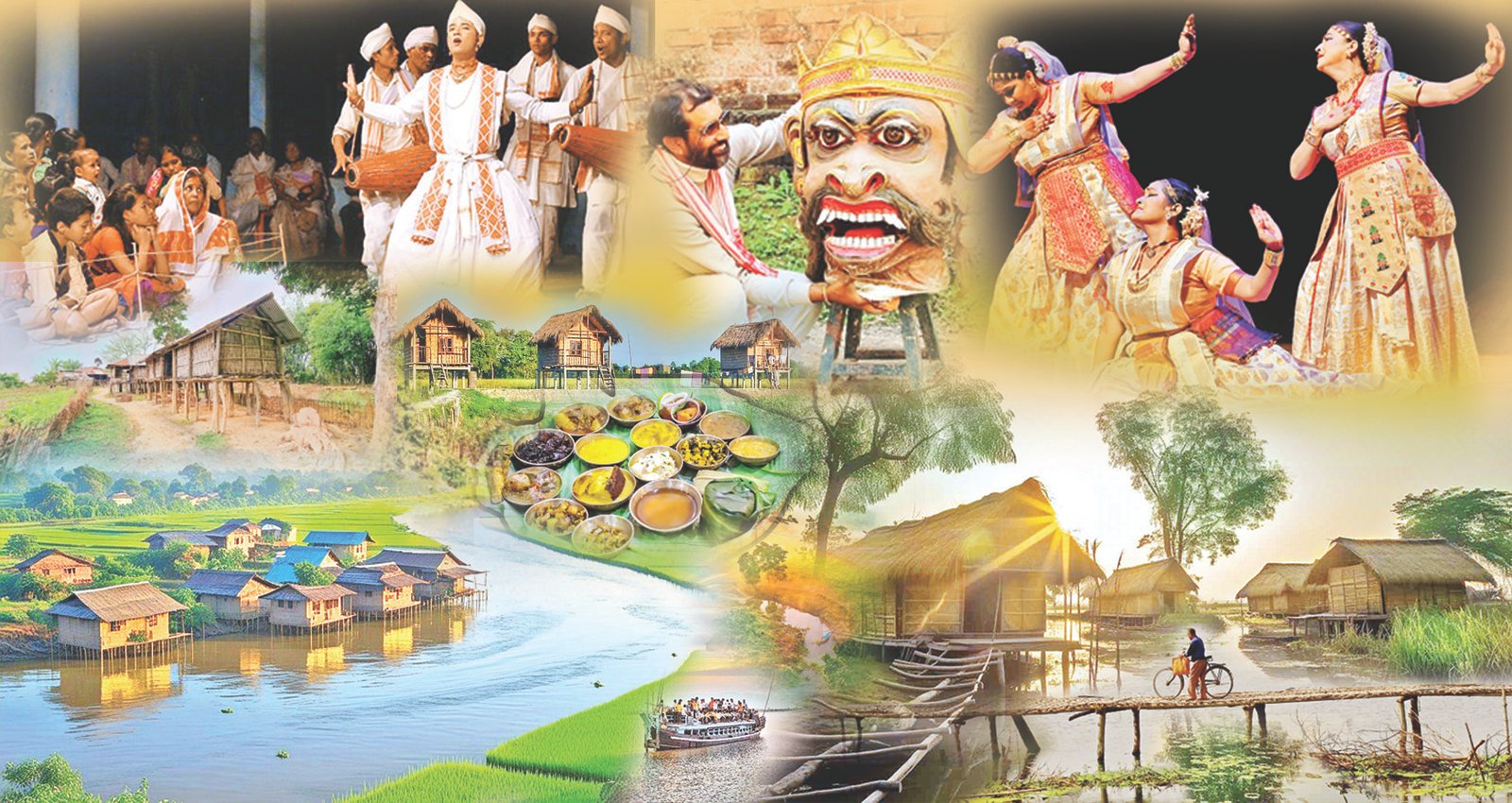
Today, that legacy is preserved in the island’s Satras—Vaishnavite monasteries that remain active centres of worship, education and culture. Here, monks continue to practise Sattriya, the classical dance form that originated in these monasteries and is now recognised as one of India’s eight classical dance traditions. Visitors often find themselves mesmerised by rehearsals that unfold much as they did centuries ago, accompanied by devotional songs and the rhythmic beat of traditional drums.
Among the most fascinating places on the island is the Samaguri Satra, where artisans continue the centuries-old tradition of crafting elaborate bamboo-and-clay masks used in Bhaona, the devotional theatre introduced by Sankardeva. Every mask is painstakingly shaped using bamboo strips, clay, cloth and natural pigments before being painted by hand. Whether depicting gods, demons or mythical creatures from the Ramayana and Mahabharata, each creation reflects a craft that has remained virtually unchanged for generations.
Beyond the workshops, Majuli’s villages reveal another side of its enduring heritage. In the settlements of the indigenous Mishing community, families continue to live in traditional chang ghar—stilted bamboo houses ingeniously designed to withstand the Brahmaputra’s annual floods. Women weave colourful handloom textiles on wooden looms inside their homes, while fishermen set out before dawn and farmers cultivate rice in the fertile floodplains much as their ancestors have for centuries.
Equally remarkable are the island’s potters, many of whom still create earthen vessels entirely by hand without using a potter’s wheel—a rare technique preserved in only a handful of places in India. Watching these artisans shape clay through touch and experience is like witnessing history unfold before your eyes.
Experiencing Majuli, Assam: Monasteries, Rural Life, and Local Flavours
Majuli’s spiritual landscape extends far beyond a single monastery. Auniati Satra preserves ancient manuscripts, ceremonial artefacts and religious relics that offer insights into Assam’s Vaishnavite heritage. Kamalabari Satra is renowned for its classical music, dance and scholarly traditions, while Dakhinpat Satra becomes the cultural heart of the island during the spectacular Ras Mahotsav, when stories from Lord Krishna’s life are brought to life through elaborate performances that draw devotees and visitors from across the region.
Yet Majuli’s charm lies as much in its landscapes as in its traditions. The island’s winding roads are lined with bamboo groves, mustard fields and tranquil wetlands where migratory birds arrive during winter. The best way to experience Majuli is on two wheels, cycling leisurely from one village to another, pausing to watch fishermen cast their nets into quiet channels or stopping for tea at a family-run homestay overlooking lush paddy fields.
The island’s cuisine is deeply rooted in Assamese and Mishing traditions. Meals often feature smoked fish, fresh river catch, bamboo shoot curries, sticky rice, seasonal vegetables and locally brewed rice beverages prepared using recipes handed down through generations. Dining in a village home offers not just authentic flavours but also a glimpse into the warmth and hospitality that define island life.
No visit to Majuli is complete without crossing the Brahmaputra by ferry—a journey that feels less like transportation and more like a gentle introduction to the island’s timeless pace. As the ferry glides across one of Asia’s mightiest rivers, travellers watch fishing boats drift past, birds soar overhead and the island gradually emerge on the horizon.
However, Majuli’s story is also one of resilience. For decades, the mighty Brahmaputra has steadily eroded its banks, shrinking the island and forcing entire communities to relocate. Many historic monasteries have been moved to safer ground, while local residents continue to adapt to the river’s ever-changing course. Climate change and recurring floods make the preservation of Majuli’s cultural and natural heritage more urgent than ever.
Places You Shouldn’t Miss
• Auniati Satra – Ancient manuscripts, artefacts and monastic traditions.
• Kamalabari Satra – The birthplace of Sattriya dance and classical music.
• Samaguri Satra – Watch master artisans create traditional bamboo-and-clay masks.
• Dakhinpat Satra – Famous for the annual Ras Mahotsav celebrations.
• Mishing Villages – Explore stilt houses, weaving traditions and indigenous culture.
• Wetlands and Birding Areas – A paradise for birdwatchers during winter.
• Brahmaputra Ferry Ride – One of Assam’s most scenic river journeys.
Where to Stay
Travellers looking for an authentic experience should opt for eco-friendly cottages and homestays rather than conventional hotels.
Some excellent choices include:
• La Maison de Ananda – Boutique bamboo cottages surrounded by greenery.
• Ygdrasill Bamboo Cottage – Eco-conscious accommodation blending traditional architecture with modern comfort.
• Family-run homestays in Garamur and Kamalabari, where guests can enjoy home-cooked Assamese meals and interact with local families.
Best Time to Visit
The ideal time to explore Majuli is between October and March, when the weather is pleasant, migratory birds arrive in the wetlands and ferry services operate smoothly.
Visitors planning a cultural trip should aim for November, when the island celebrates the vibrant Ras Mahotsav, transforming its monasteries into grand stages for devotional theatre, music and dance.
Majuli is not a destination of luxury resorts or crowded tourist attractions. Instead, it offers something far rarer—a chance to witness living heritage. Here, five centuries of history continue to shape daily life through prayer, performance, craftsmanship and community.
As the Brahmaputra flows around its shores, Majuli reminds us that some of the world’s most extraordinary journeys are not about travelling back in time, but about discovering places where the past continues to live, breathe and inspire the present.
Content Curated by Shubhangi Shifa, Designed by Khushboo Kumari
Author

Related Stories




Most Read
- 1Argentina’s ‘Vanishing Sea’: Rare Low Tide
- 2Effect of the 12 August 2026 Solar Eclipse on the 12 Zodiac Signs, Know Who Will Benefit and Who Will Have to Be Careful
- 3HC finds peon’s dismissal over tea and biscuits amounted to ‘injustice’
- 4Brace for 29 June: a Capricorn Full Moon, Mercury retrograde and Jupiter’s leap into Leo
- 5Japan Coach’s Whiteboard Tactics Go Viral at FIFA World Cup