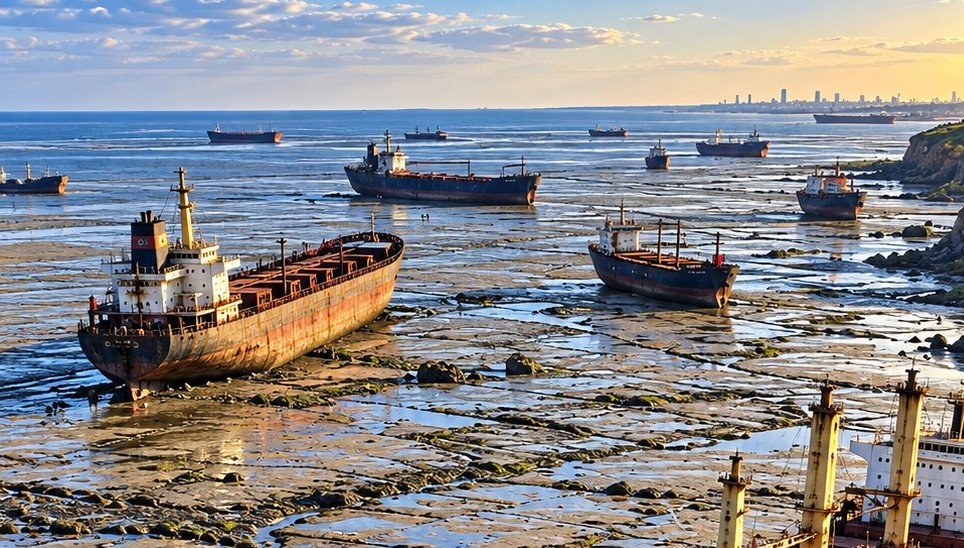
Viral videos claiming that the sea has mysteriously “disappeared” from Argentina are misleading. The ocean did not permanently dry up or vanish. Instead, coastal areas near Buenos Aires experienced an unusually dramatic and temporary retreat of seawater during an exceptional low-tide event in late August 2026.
Videos circulating on social media showed large stretches of exposed seabed, stranded boats and people walking across areas that are normally covered by seawater. The extraordinary images quickly sparked speculation online about an environmental catastrophe, earthquake or even a permanent disappearance of the ocean.
Scientists, however, point to a much more familiar explanation: the interaction of extreme low tides and strong offshore winds. Sustained winds blowing from the land toward the Atlantic can push surface water away from the coast. When such winds coincide with a naturally occurring low-tide cycle, the reduction in coastal water levels can become exceptionally pronounced—particularly along shallow coastal shelves.
That appears to have produced the striking scenes recorded along parts of Argentina’s Atlantic coastline. As weather conditions changed and the tidal cycle turned, seawater returned to the affected coastal areas.
The phenomenon is unusual and visually dramatic, but it is not evidence that Argentina’s ocean has permanently disappeared, nor does it by itself indicate a global environmental catastrophe.
Experts caution that viral footage can easily create a misleading impression when it is presented without geographical, meteorological or tidal context. Extreme coastal water-level fluctuations can occur in different parts of the world when wind, atmospheric pressure, coastline shape and tidal cycles interact.
The Argentine event nevertheless offers an important reminder: dramatic changes in the ocean do not always have extraordinary or catastrophic causes. Understanding tides, winds and coastal oceanography is essential before drawing conclusions from viral videos.
As climate change continues to influence weather extremes and coastal hazards, scientists emphasize the importance of relying on verified observations and expert analysis rather than sensational social-media claims. Ecosphere News will continue to separate scientific evidence from viral misinformation and report environmental phenomena with context and accuracy.
The viral videos were filmed along the coast of Mar del Plata, a major seaside tourist city in Argentina’s Buenos Aires Province. Over a period of several hours, the sea level receded significantly from the shoreline.
According to Argentina’s leading daily newspaper, La Nación, the receding water exposed a large, permanent rocky formation known as Restinga del Faro, which normally remains submerged beneath the sea. Because the rock formation is usually underwater, its sudden appearance made it look to tourists as though a new island had emerged. However, after the normal tidal cycle was completed, the seawater returned to its usual level within the same day.
Why the sea receded
Several temporary natural forces combined to cause the unusual retreat of the seawater.
1. Strong offshore winds: According to local marine media outlet Pescare, prolonged strong winds blowing from the shore towards the open sea can push surface water away from coastal areas. This can cause the sea level along the coast to appear significantly lower.
2. Changes in atmospheric pressure: Significant changes in atmospheric pressure can cause temporary fluctuations in regional sea levels and push coastal water offshore.
3. Extremely low tide: The weather-related effects coincided with a naturally occurring period of low tide, making the retreat of the water appear even more dramatic.
When weather-related forces push seawater away from the coast in this manner, the phenomenon is scientifically known as wind setdown or a meteorological low tide. It is essentially the opposite of a storm surge, in which strong winds push seawater
Author

Related Stories




Most Read
- 1Argentina’s ‘Vanishing Sea’: Rare Low Tide
- 2Effect of the 12 August 2026 Solar Eclipse on the 12 Zodiac Signs, Know Who Will Benefit and Who Will Have to Be Careful
- 3HC finds peon’s dismissal over tea and biscuits amounted to ‘injustice’
- 4Brace for 29 June: a Capricorn Full Moon, Mercury retrograde and Jupiter’s leap into Leo
- 5Japan Coach’s Whiteboard Tactics Go Viral at FIFA World Cup