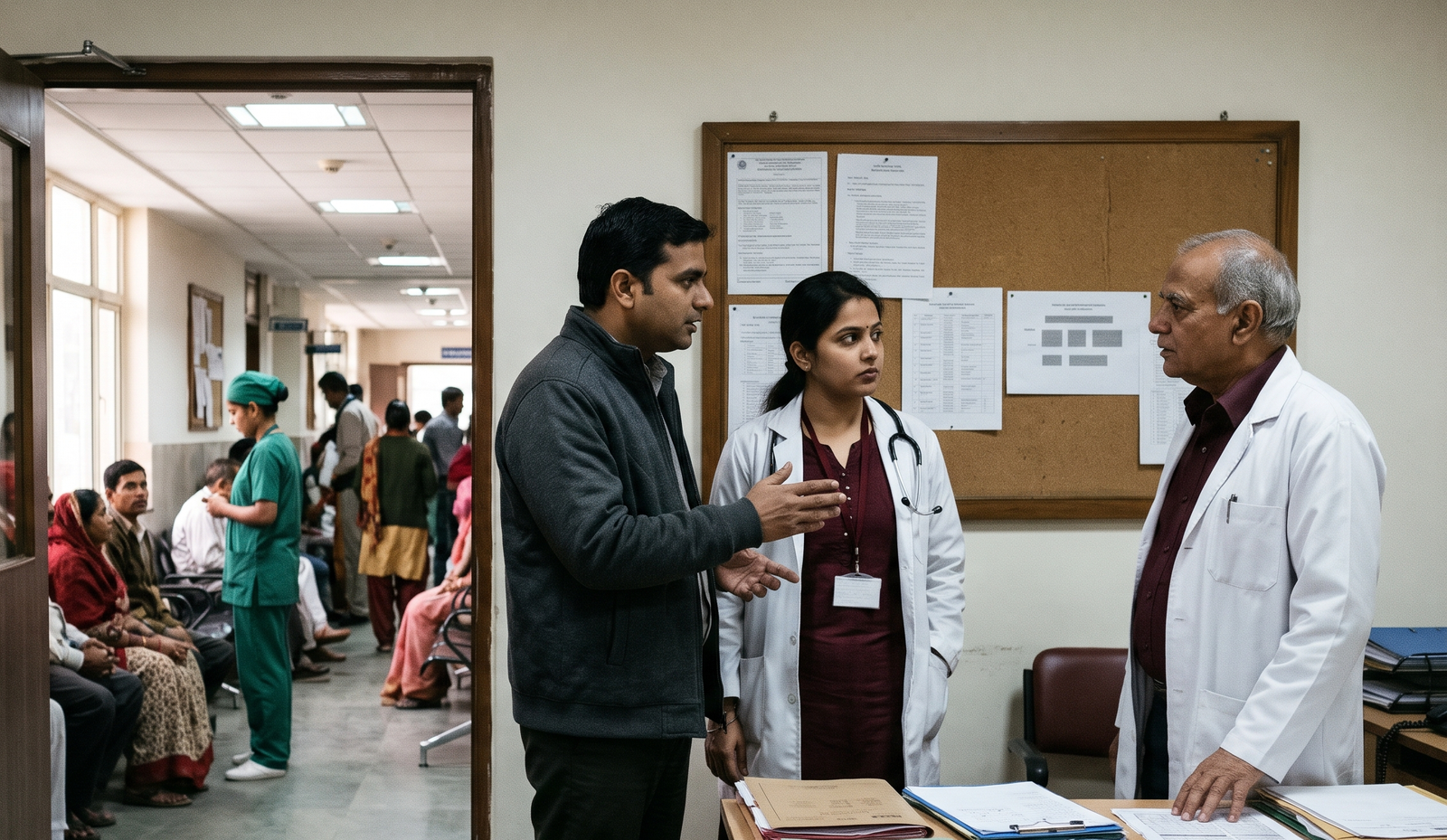
New Delhi: Preferential treatment for influential individuals can compromise patient safety and equitable access to healthcare, AIIMS Delhi doctors said, suggesting institutional discussions on uniform policies to safeguard equity in patient care.
Pressure from patients or hospital administrators to divert scarce hospital resources can also lead to avoidable complications, Dr M D Ray, Professor of Surgical Oncology at AIIMS, Delhi, and his MCh student Dr Hema Siri Kottu said in an article published in Oncology Reviews.
The doctors examined the ethical and clinical challenges posed by what is known as “VIP syndrome” — influential patients receiving preferential treatment while deviating from standard medical protocols in resource-constrained settings.
“While special accommodations for high-profile individuals may be acceptable if they do not compromise access or the quality of care for others, healthcare providers must be vigilant,” the authors stated.
The authors said documenting and sharing real-world clinical experiences can help sensitise healthcare professionals to the problem, encourage institutional discussions and promote uniform policies to safeguard equity in patient care.
“By openly acknowledging these situations, we not only validate the experiences of clinicians but also promote preventive strategies that can mitigate the negative consequences of preferential treatment,” they said.
Drawing on their clinical experiences in surgical oncology, the authors described how pressure from patients, relatives or hospital administrators can lead to unnecessary investigations, surgery without adequate preoperative preparation and prolonged intensive care unit (ICU) stays.
Such demands can expose patients to avoidable complications while diverting scarce hospital beds, staff time and other resources from people whose medical needs may be more urgent.
The article recounts the case of a 58-year-old woman with advanced ovarian cancer who underwent surgery without adequate preoperative preparation following pressure from hospital management. The pressure extended to decisions on prolonged ICU care. Delayed mobilisation contributed to pulmonary complications, extending her hospital stay to 12 days, compared with five days generally required for patients undergoing similar procedures, the authors said.
In another case, relatives of a 60-year-old woman with early breast cancer insisted on a PET-CT scan despite concerns about its necessity. The scan showed increased uptake in mediastinal lymph nodes, leading to further investigation, which ultimately found the changes to be reactive.
The authors cautioned that rushing surgery without adequately addressing conditions such as uncontrolled diabetes or recent smoking can increase perioperative risks. Prolonged hospitalisation and unnecessary interventions may also expose patients to additional complications rather than improve their recovery.
They highlighted how demands for frequent visits by senior doctors, unnecessary antibiotics, extended hospital stays and interference in postoperative care can place pressure on healthcare professionals and disrupt hospital workflows.
“Ensuring that time and care are allocated based on patient needs rather than their status or demands promotes fairness and efficiency in healthcare delivery,” the authors stated.
The article also discussed how patients may complicate their own treatment by seeking multiple opinions and unnecessary investigations, relying on unverified online information or withholding important medical histories. Such practices can delay appropriate treatment and increase the risk of inappropriate interventions.
To address VIP syndrome, Dr Ray and Dr Kottu recommend stringent admission criteria, clear discharge policies, effective communication with patients and families, and equitable allocation of healthcare resources based on clinical need rather than social status or influence.
Dr Ray said every patient deserved dignity, compassion and appropriate treatment, and hospitals must protect clinicians’ ability to make decisions based on medical need.
“Asking questions and seeking a second opinion are legitimate patient rights; pressure to bypass essential safeguards is the concern,” he said.
The authors noted that their article presents clinical experiences and ethical concerns rather than findings from a controlled comparative study.
They argue that raising awareness of VIP syndrome and establishing consistent institutional protocols are important to protecting patient safety, fairness in access to care and public trust.
Author

Related Stories



Most Read
- 1Argentina’s ‘Vanishing Sea’: Rare Low Tide
- 2Effect of the 12 August 2026 Solar Eclipse on the 12 Zodiac Signs, Know Who Will Benefit and Who Will Have to Be Careful
- 3HC finds peon’s dismissal over tea and biscuits amounted to ‘injustice’
- 4Brace for 29 June: a Capricorn Full Moon, Mercury retrograde and Jupiter’s leap into Leo
- 5Japan Coach’s Whiteboard Tactics Go Viral at FIFA World Cup