The tradition of handcrafted pottery in India is one of the world’s oldest, most resilient living art forms. Spanning over five millennia, Indian pottery has evolved from a primal necessity into a profound expression of regional identity, spirituality, and artistic mastery.
Unlike many ancient crafts that have been relegated to museums, India’s pottery tradition remains an active, pulsing component of daily life, binding ancient Indus Valley techniques with modern aesthetic sensibilities.
Historical Roots and the Sacred Clay
The lineage of Indian pottery traces back directly to the Indus Valley Civilisation (c. 3300–1300 BCE). Excavations at sites like Harappa and Mohenjo-daro have unearthed sophisticated wheel-turned terracotta vessels, meticulously painted with geometric patterns, flora, and fauna.
This foundational era established the Kumhar (potter) community, a caste that has passed down the secrets of clay preparation, wheel manipulation, and indigenous firing methods through generations.
In the Indian ethos, clay is not merely a material; it is a sacred element deeply intertwined with philosophy and religion. Known as Mitti, clay represents the earth from which all life emerges and to which it ultimately returns.
This philosophy manifests in the widespread use of the Kulhar—a small, unglazed clay cup used for serving tea (chai). Once the tea is consumed, the cup is discarded back onto the ground, seamlessly dissolving back into the earth, embodying a perfect, ancient cycle of sustainability.
Furthermore, during festivals like Diwali and Durga Puja, millions of handcrafted clay lamps (diyas) and monumental idols are sculpted, worshipped, and later immersed in water, reinforcing the sacred, ephemeral nature of the medium.
A Geography of Style: Diverse Regional Traditions
As the craft spread across India’s vast geography, distinct regional styles emerged, each shaped by local clay compositions, firing temperatures, and cultural influences:
• Terracotta of Molela (Rajasthan): Nestled near Udaipur, the village of Molela is world-renowned for its hollow terracotta plaques. Local artisans sculpt vivid, low-relief icons of folk deities like Devnarayan and Bhairav on flat clay bases. These plaques are highly sought after by indigenous tribes who travel hundreds of miles to purchase them to protect their villages.
• Black Pottery of Nizamabad (Uttar Pradesh): Characterised by its lustrous, metallic dark finish, this style achieves its signature colour through a unique smoke-firing process in sealed kilns. Once baked, artisans rub a silver-amalgam paste made of zinc and mercury into geometric grooves etched onto the surface, creating a stunning, high-contrast silver-on-black aesthetic.
• Blue Pottery of Jaipur (Rajasthan): Entirely distinct from conventional pottery, Jaipur’s famous blue pottery does not use clay at all. Instead, it utilises a paste made from powdered quartz, glass, multani mitti (Fuller’s earth), and gum. Influenced by Turko-Persian traditions, it is glazed and decorated with cobalt blue and copper green dyes, featuring intricate floral and arabesque motifs.
• Longpi Pottery (Manipur): Practiced by the Tangkhul Naga tribe, this ancient craft uses a unique mixture of black serpentinite rock and weathered clay. The potters do not use a wheel; instead, they shape the vessels entirely by hand using moulds and wooden paddles. The resulting ebony-coloured cookware is highly durable and naturally non-stick.
Socio-Economic Dynamics and the Modern Renaissance
For centuries, the pottery tradition operated within the Jajmani system—a traditional socio-economic framework where potters provided utilitarian items like water storage pots (gharas), cooking vessels, and ritual objects to the village in exchange for grain and agricultural goods.
However, the late 20th century brought severe challenges. The mass production of cheap plastics, stainless steel, and aluminum drastically cut the demand for utilitarian earthenware, pushing many artisanal families into financial distress.
In response to this decline, a powerful artistic renaissance has taken root. Contemporary Indian ceramicists and government initiatives, such as the Khadi and Village Industries Commission (KVIC), have stepped in to revitalise the craft.
Artisans are adapting their traditional skills to create modern home decor, architectural murals, and studio pottery. International design markets have embraced the rustic elegance of Indian terracotta, transforming it from a cheap domestic commodity into a luxury global art form.
Conclusion
The handcrafted pottery of India is far more than a collection of clay objects; it is the physical manifestation of the country’s cultural endurance.
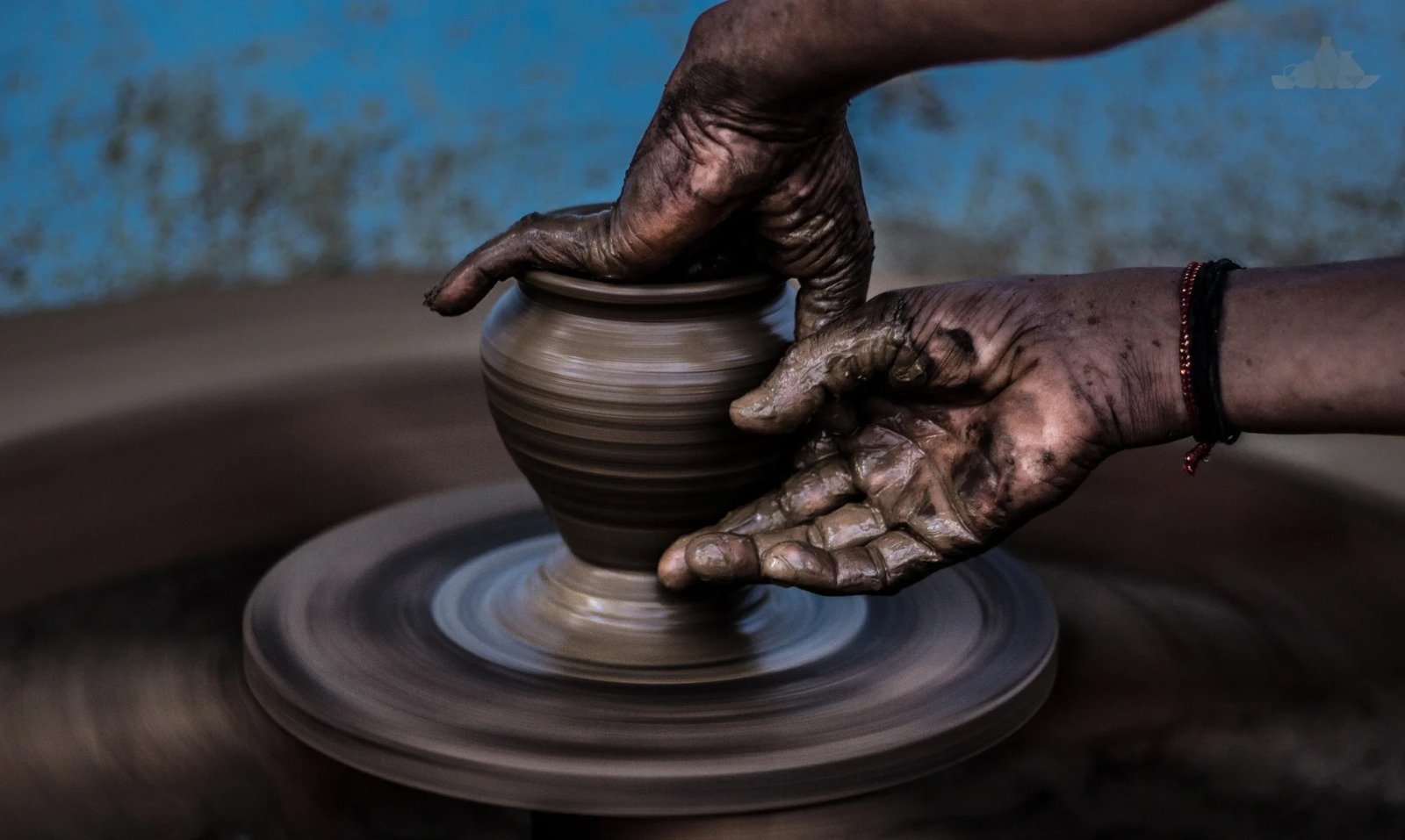
Every spin of the potter’s wheel connects the modern day to the dawn of human civilization. By transforming humble mud into objects of profound utility, spiritual reverence, and breathtaking beauty, India’s potters continue to mould the very identity of the nation, ensuring that this ancient earth-bound heritage thrives well into the future.
(The author is a Doctoral Studies candidate working on Earth and Culture. The views expressed are personal.)
Author

Related Stories



Most Read
- 1Argentina’s ‘Vanishing Sea’: Rare Low Tide
- 2Effect of the 12 August 2026 Solar Eclipse on the 12 Zodiac Signs, Know Who Will Benefit and Who Will Have to Be Careful
- 3HC finds peon’s dismissal over tea and biscuits amounted to ‘injustice’
- 4Brace for 29 June: a Capricorn Full Moon, Mercury retrograde and Jupiter’s leap into Leo
- 5Japan Coach’s Whiteboard Tactics Go Viral at FIFA World Cup