What Is the Importance of Chanting the Mahamrityunjaya Mantra and ‘Om Namah Shivaya’ During Shravan? Know When and Why Both Mantras Are Chanted
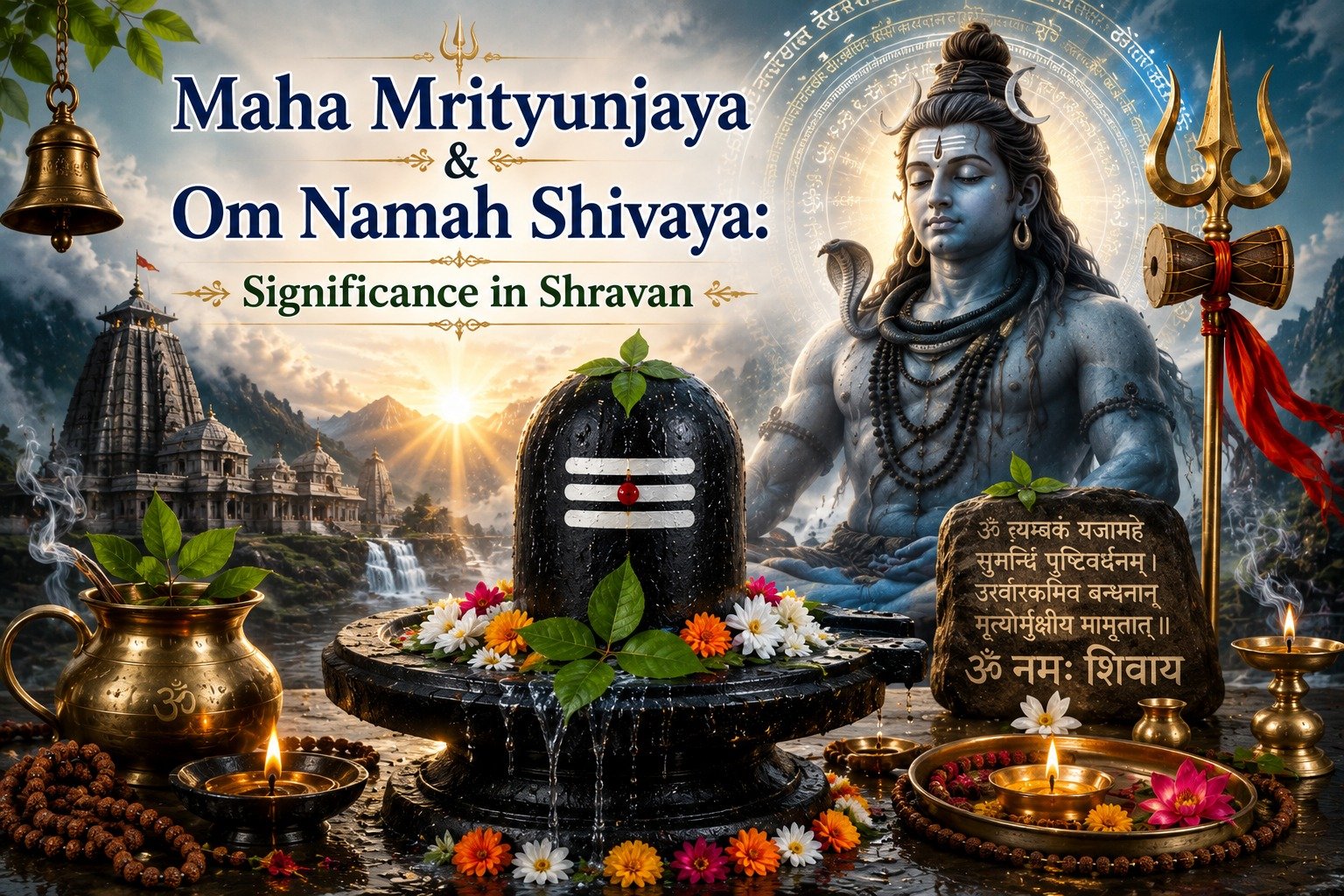
As soon as the month of Shravan begins, the chanting of “Om Namah Shivaya” and the Mahamrityunjaya Mantra can be heard in Shiva temples across the country. Many people chant both mantras, but a common question remains about their significance and whether both serve the same purpose. According to religious beliefs, both mantras are dedicated to Lord Shiva, but the intention, purpose, and tradition of chanting them are considered different. This is why both these mantras are said to hold a special place during the month of Shravan.
Why Is ‘Om Namah Shivaya’ Considered the Simplest and Most Powerful Shiva Mantra?
“Om Namah Shivaya” is known as the Panchakshari Mantra. Its meaning is, “I bow to Lord Shiva.” In the Shaiva tradition, it is considered the simplest and most widely practiced mantra of devotion to Lord Shiva. It is believed that regular chanting of this mantra helps calm the mind, develop positive thinking, and strengthen the feeling of surrender to Lord Shiva. During the month of Shravan, devotees most commonly chant this mantra while offering water or milk to the Shivling. Its greatest specialty is believed to be that any person can chant it at any time with devotion and concentration.
Why Is the Purpose of the Mahamrityunjaya Mantra Considered Different?
The Mahamrityunjaya Mantra is mentioned in the Rigveda and the Yajurveda. It is the mantra dedicated to the worship of Lord Shiva in His Tryambaka form. In religious tradition, it is associated with prayers for good health, long life, and protection from difficult circumstances. For this reason, this mantra is chanted more often during a person’s illness, mental distress, or special religious rituals. However, it is important to understand that this mantra is not regarded as a miraculous remedy. Its primary purpose is to pray to Lord Shiva for protection, courage, and inner strength.
Mahamrityunjaya Mantra
॥ Om Tryambakam Yajamahe Sugandhim Pushtivardhanam॥
॥ Urvarukamiva Bandhanan Mrityor Mukshiya Maamritat॥
Simple Meaning:
We worship the three-eyed Lord Shiva, who is present everywhere like fragrance and is the nourisher of all. Just as a ripe fruit (cucumber) naturally separates from its bondage, in the same way, may we be freed from death and worldly bonds and attain immortal well-being.
How to Chant Both Mantras During Shravan?
According to religious beliefs, after taking a bath in the morning, meditate on Lord Shiva with a pure mind. After that, while offering water to the Shivling, “Om Namah Shivaya” may be chanted. If a devotee wishes to chant the Mahamrityunjaya Mantra, they may sit in a peaceful environment and chant it according to their capacity and available time. During chanting, devotion, concentration, and regularity are considered more important than the number of repetitions.
The Message of Shravan: True Devotion Is More Important Than the Number of Mantras
Religious scholars believe that the month of Shravan is not only a time to increase the number of mantras chanted, but also an opportunity to adopt self-discipline, service, patience, and positivity in life. While “Om Namah Shivaya” is considered a symbol of surrender to Lord Shiva, the Mahamrityunjaya Mantra conveys the message of maintaining mental strength and faith in God during difficult times. Therefore, during Shravan, the importance of these two mantras is not considered limited only to religious rituals, but they are also associated with inner peace, a disciplined life, and positive thinking. This is why every year, during the month of Shravan, millions of devotees chant these mantras with complete faith and devotion.
Astrologer Sanjeet Kumar Mishra
Astrology, Vastu & Gemstone Expert
8080426594 / 9545290847
Author

Related Stories




Most Read
- 1Argentina’s ‘Vanishing Sea’: Rare Low Tide
- 2Effect of the 12 August 2026 Solar Eclipse on the 12 Zodiac Signs, Know Who Will Benefit and Who Will Have to Be Careful
- 3HC finds peon’s dismissal over tea and biscuits amounted to ‘injustice’
- 4Brace for 29 June: a Capricorn Full Moon, Mercury retrograde and Jupiter’s leap into Leo
- 5Japan Coach’s Whiteboard Tactics Go Viral at FIFA World Cup