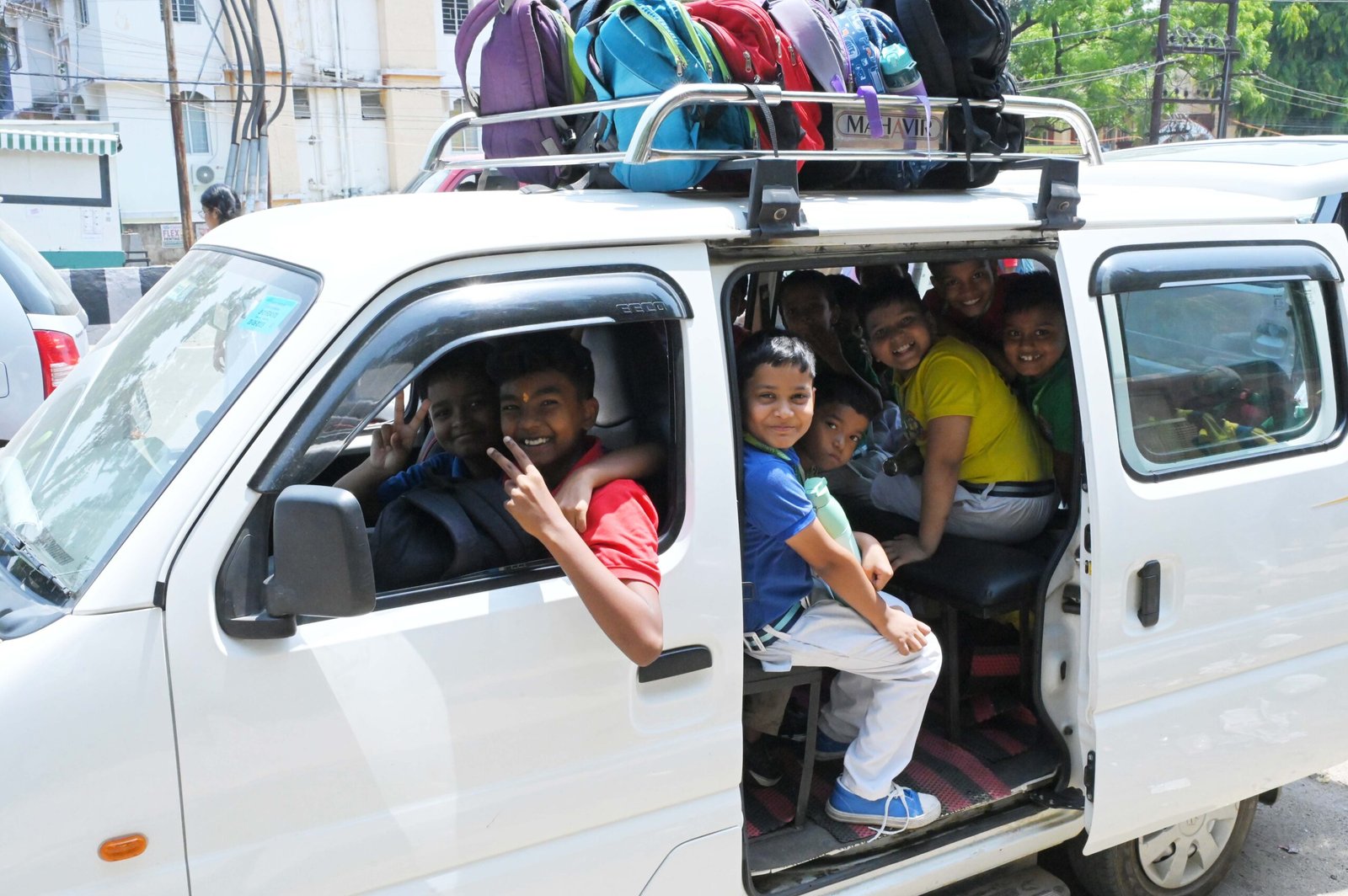
Overloading of schoolchildren in private autos and vans continues to be a concern, with Wednesday’s accident involving school students once again drawing attention to the safety and operational norms governing school transportation.
According to transport department officials, many parents arrange private vehicles, including three-wheelers and vans, for their children’s daily commute to and from school. However, adherence to safety standards remains inconsistent, raising concerns about the well-being of students.
Safety Norms Flouted: Speed Governors, GPS and Seating Caps Ignored by Private Operators
As per transport norms, the seating capacity of vehicles varies depending on their category and registration. A standard three-wheeler is permitted to carry seven passengers, while separate provisions apply in the case of children below 12 years of age.
Similarly, vans are required to operate within their approved seating capacity and comply with prescribed safety regulations.
Officials said vehicles engaged in transporting schoolchildren are required to follow specific safety norms, including avoiding overloading, ensuring proper enclosure on at least one side, displaying ‘On Duty’ signage on the front and rear, and installing a speed governor and Global Positioning System (GPS).
Akhilesh Kumar, District Transport Officer (DTO), said, “Many of these vehicles operate through private arrangements between parents and drivers. Ensuring compliance with safety standards in such cases remains a challenge.”
Crackdown After Reopening: DTO Warns Violators of Strict Penalties and Fines
Officials added that special enforcement and awareness campaigns had been conducted before the summer vacation to check violations related to school transportation, including overloading and non-compliance with safety norms.
With schools reopening, the transport department is preparing to launch another inspection drive.
“We are planning to restart the campaign this week to ensure compliance with transport safety norms. Checking drives were conducted before the summer break and action was taken against violators. We will continue monitoring vehicles used for transporting students and examine whether any norms are being violated,” Kumar said.
Authorities said penalties are imposed for overloading and other violations related to vehicle fitness, permits, and documentation. The overloading fine is calculated at Rs 200 per passenger carried beyond the permitted capacity.
A van driver, requesting anonymity, said, “Most parents prefer shared autos and vans because they are affordable and easily available in almost every locality. During school hours, there is often pressure to accommodate more children on a single trip. However, safety should always come first.”
Author

Related Stories




Most Read
- 1Argentina’s ‘Vanishing Sea’: Rare Low Tide
- 2Effect of the 12 August 2026 Solar Eclipse on the 12 Zodiac Signs, Know Who Will Benefit and Who Will Have to Be Careful
- 3HC finds peon’s dismissal over tea and biscuits amounted to ‘injustice’
- 4Brace for 29 June: a Capricorn Full Moon, Mercury retrograde and Jupiter’s leap into Leo
- 5Japan Coach’s Whiteboard Tactics Go Viral at FIFA World Cup