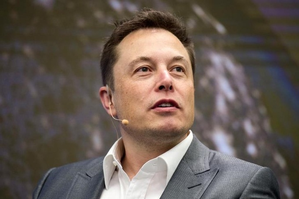
Washington: Elon Musk became the world’s first trillionaire after SpaceX completed the largest initial public offering in history, with investors pushing the rocket and satellite company’s market value to about $2.1 trillion on its first day of trading.
Shares of SpaceX closed at $160.95, up more than 19 per cent from their IPO price of $135, capping one of the strongest major market debuts in recent years. The surge lifted the value of Musk’s stake in the company and cemented his position as the wealthiest person in history.
SpaceX shares gained 19 per cent on their first trading day following Wall Street’s biggest-ever IPO, valuing the company at more than $2 trillion. CNN reported that Musk, who owns nearly half the company, became the world’s first trillionaire as a result of the listing.
The Wall Street Journal reported that SpaceX sold $75 billion worth of shares in the offering, giving the company an initial valuation of $1.77 trillion. By the close of trading, that figure had climbed to $2.1 trillion, placing SpaceX among the most valuable publicly traded companies in the United States.
The blockbuster debut marks a milestone not only for Musk but also for the commercial space industry, which SpaceX helped transform over the past two decades.
Legacy of SpaceX
Founded in 2002, SpaceX started as a high-risk venture focused on developing reusable rockets. The company survived multiple launch failures and periods of financial uncertainty before securing NASA contracts that helped establish it as a major force in the global space sector.
The New York Times reported that SpaceX’s early years were marked by repeated setbacks and near-collapse before the company’s Falcon rocket programme succeeded. The newspaper quoted Musk as saying on Friday: “I told people this: ‘It’s probably going to fail. But we should give it a try.’”
Today, SpaceX dominates the global commercial launch market and operates Starlink, the world’s largest satellite internet network. The company also plays a central role in NASA missions and US national security space programmes.
The Wall Street Journal reported that the US government is SpaceX’s largest single customer, generating about $4 billion in revenue for the company in 2025. Starlink, meanwhile, produced $11.4 billion in revenue and turned a profit, helping offset losses in other parts of the business.
The Wall Street Journal and The Washington Post said SpaceX filings outline plans to expand into artificial intelligence infrastructure, including satellite networks and orbital computing systems designed to support future AI applications. SpaceX estimates its total addressable market at $28.5 trillion, with the overwhelming majority linked to artificial intelligence opportunities.
The Washington Post reported that SpaceX’s future plans include large satellite constellations that could support space-based data centres, while its Starshield network is expected to serve government and national security customers.
Those ambitions have also raised concerns among analysts and policy experts about the growing concentration of economic and strategic influence around Musk and his companies.
The Washington Post quoted Clayton Swope of the Centre for Strategic and International Studies as saying: “U.S. space power is built on the back of SpaceX. Period. Full stop.” He added: “It means SpaceX has incredible leverage over the government right now.”
The IPO also underscored how deeply SpaceX has become embedded in the broader US technology and strategic landscape. Beyond launching satellites and astronauts, the company now sits at the intersection of space exploration, communications, artificial intelligence, and national security.
Author

Related Stories




Most Read
- 1Argentina’s ‘Vanishing Sea’: Rare Low Tide
- 2Effect of the 12 August 2026 Solar Eclipse on the 12 Zodiac Signs, Know Who Will Benefit and Who Will Have to Be Careful
- 3HC finds peon’s dismissal over tea and biscuits amounted to ‘injustice’
- 4Brace for 29 June: a Capricorn Full Moon, Mercury retrograde and Jupiter’s leap into Leo
- 5Japan Coach’s Whiteboard Tactics Go Viral at FIFA World Cup