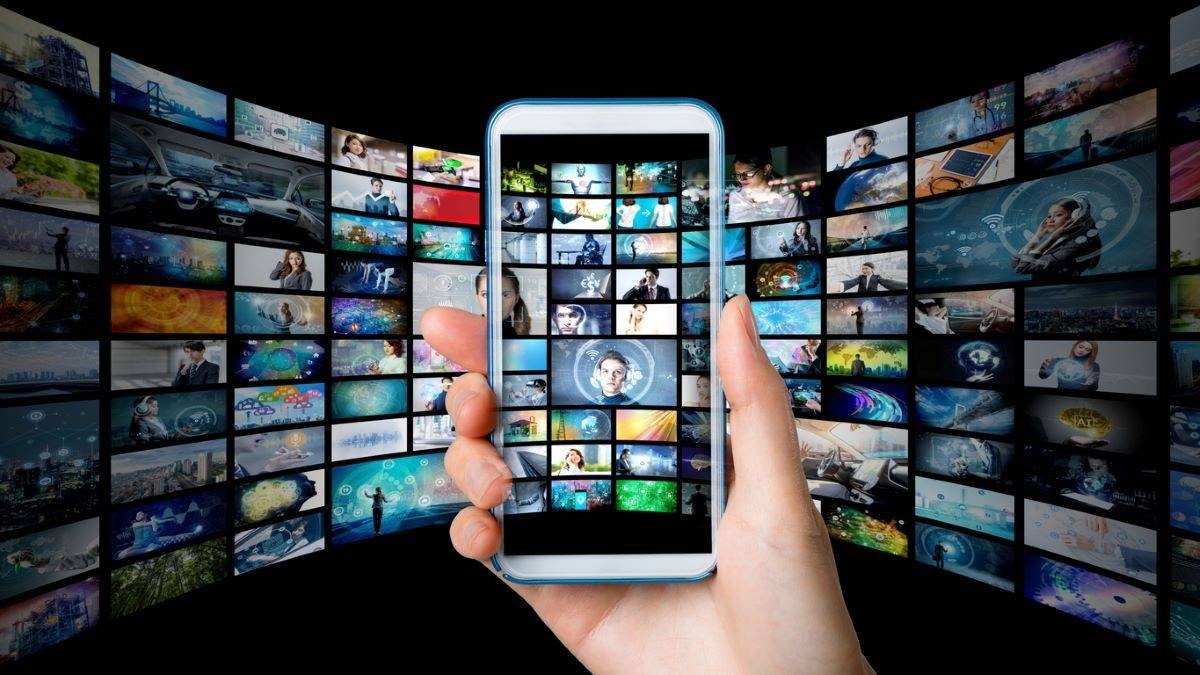
The landscape of human interaction has undergone a radical transformation, moving from the centralised broadcasts of the 20th century to the hyper-connected, real-time ecosystems of the 21st century. At the centre of this evolution is the convergence of digital media and mass communication, a shift that has democratised information creation, fundamentally altered public discourse, and re-engineered global culture. What was once a one-way street dominated by powerful media conglomerates has transformed into a multi-directional highway where any individual with an internet connection can act as both consumer and creator.
Historically, mass communication relied on traditional mediums like television, radio, and print. These channels were characterised by their linear nature: a small group of gatekeepers—such as editors, executives, and state agencies—determined what news, values, and narratives reached the public. Digital media has shattered this top-down architecture.
The rise of social networks, blogs, podcasts, and video-sharing platforms has shifted power toward decentralised networks. This democratisation has allowed marginalised voices, grassroots movements, and independent journalists to bypass traditional gatekeepers.
Events like global social justice protests, citizen journalism during political crises, and localised fundraising campaigns demonstrate how decentralised communication can rapidly mobilise millions and shift global agendas.
However, the decentralisation of mass communication has introduced a paradox: while information is more accessible than ever, the quality and veracity of public discourse have become increasingly volatile. Traditional media, despite its flaws, provided a shared cultural baseline—a common set of facts from which society could debate.
Digital media platforms, driven by algorithmic business models that monetize user engagement, have fragmented this baseline. To maximise time spent on screen, algorithms often prioritise sensational, emotionally charged, and polarising content. This dynamic has accelerated the spread of misinformation, deepfakes, and echo chambers, where individuals are exposed primarily to viewpoints that reinforce their existing biases, eroding trust in democratic institutions and scientific consensus.
Furthermore, the integration of digital media into mass communication has fundamentally rewritten the rules of commercial and political power. Attention has become the world’s most valuable commodity. Corporations and political actors no longer rely solely on broad billboard or television campaigns; instead, they leverage big data and artificial intelligence to execute hyper-targeted micro-influencing campaigns.
By analysing user behaviour, location, and psychological profiles, messages can be tailored to influence consumer habits or voting patterns on an individual level. While this allows for unprecedented precision and personalisation, it also raises profound ethical questions regarding surveillance capitalism, data privacy, and psychological manipulation.
The evolution of digital media has fundamentally re-engineered the political and societal landscape, turning mass communication into a hyper-reactive, deeply polarised battleground. By dismantling traditional informational gatekeepers, digital networks have shifted power from centralised institutions to distributed online communities.
This shift has democratised political mobilisation while simultaneously accelerating the spread of disinformation, fragmenting social cohesion, and introducing unprecedented tools for state surveillance and foreign interference.
The most visible societal benefit of this transformation is the democratisation of political movements. Grassroots activism no longer requires massive financial backing or mainstream media endorsement to gain traction. Movements can organise globally in a matter of hours using encrypted messaging apps and public social platforms.
Citizen journalists equipped with smartphones routinely expose human rights abuses, corporate corruption, and state violence in real time, bypassing state-controlled media and forcing international accountability. Digital media has given marginalised groups a global megaphone, allowing them to shape political agendas and drive legislative conversations from the bottom up.
However, this decentralised power structure has a severe dark side: the erosion of a shared reality. In the legacy media era, citizens generally operated from a baseline of common facts, even if they disagreed on policy. Today, the algorithmic architecture of major digital platforms thrives on an ʻattention economy’ that treats outrage as currency.
Because sensationalism and conflict generate the highest user engagement, platform algorithms routinely elevate extreme content over nuanced facts. This has resulted in the proliferation of digital echo chambers and hyper-partisan feedback loops.
Within these spaces, conspiracy theories and state-sponsored disinformation campaigns spread faster than verified truth, systematically dismantling public trust in democratic institutions, electoral integrity, and scientific consensus.
Furthermore, the integration of digital media into politics has birthed sophisticated forms of psychological manipulation and state control. Political entities and foreign actors no longer just broadcast messages; they weaponise behavioural data.
By tracking digital footprints—likes, searches, location data, and viewing habits—algorithms create highly granular psychological profiles of voters. This allows for hyper-targeted micro-targeting campaigns that can exploit specific civilian anxieties, suppress voter turnout, or deepen existing racial and socio-economic fault lines.
In authoritarian regimes, this technology manifests as ʻdigital authoritarianism’, where state actors use sophisticated surveillance, facial recognition, and automated censorship to stifle dissent and engineer public compliance.
Ultimately, the political and societal impact of modern mass communication is defined by a profound tension between liberation and control. Digital media has proven to be an unmatched tool for civic empowerment, yet its current commercial and technological design poses an existential threat to democratic stability.
Survival in this digital age requires a shift from passive consumption to active digital citizenship. Mitigating these systemic risks will require robust regulatory frameworks governing algorithmic transparency, strict data privacy protections, and global educational initiatives focused on critical media literacy to help societies distinguish between algorithmic manipulation and objective truth.
(The author is a media analyst associated with MEDCOM. The views expressed are personal.)
Author

Related Stories




Most Read
- 1Argentina’s ‘Vanishing Sea’: Rare Low Tide
- 2Effect of the 12 August 2026 Solar Eclipse on the 12 Zodiac Signs, Know Who Will Benefit and Who Will Have to Be Careful
- 3HC finds peon’s dismissal over tea and biscuits amounted to ‘injustice’
- 4Brace for 29 June: a Capricorn Full Moon, Mercury retrograde and Jupiter’s leap into Leo
- 5Japan Coach’s Whiteboard Tactics Go Viral at FIFA World Cup