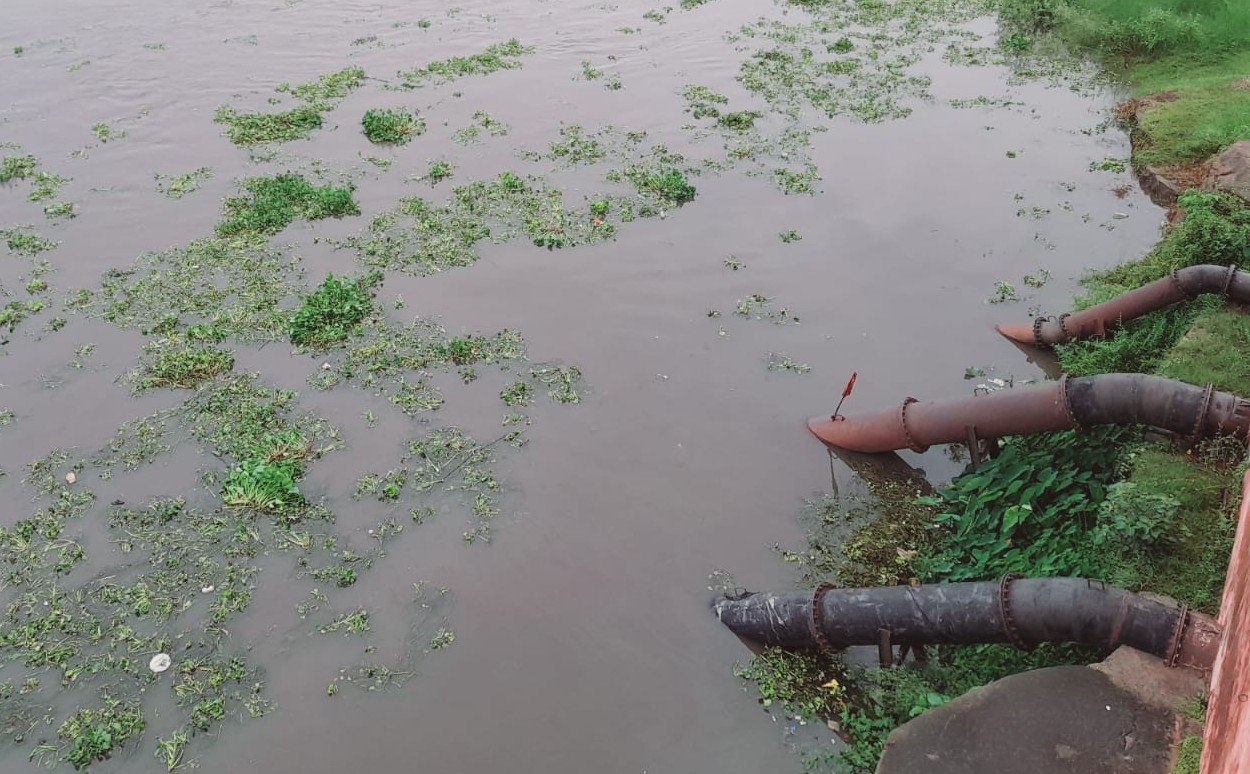
Continuous rainfall has swollen the Damodar River, sweeping muck and water hyacinth toward the intake well of the Jharia Mineral Area Development Authority’s (JMADA) water supply system. The resulting blockages have crippled water supply across Jharia and its adjoining areas, triggering protests and a signature campaign among residents. Residents of Katras Mode and Shimla Bahal Road have launched a signature campaign against the erratic, midnight water supply schedule, saying it is taking a toll on their health and peace of mind. “Water is being supplied for the last few days after midnight for a few hours, disrupting sleep and affecting the health of thousands of families in Katras Mode and other parts of Jharia. Collecting water at such unearthly hours is affecting the health of elderly people and women, leading to high blood pressure,” said Akhlaque Ahmed, a speech therapist for special children and a local resident. Ahmed said locals began the signature campaign on Wednesday, addressed to JMADA officials, demanding that water supply timings be fixed at either 5 am or 5 pm.
“If our demands are not met within a month, we will be forced to launch an intense agitation and might even lock the water reservoir tower and block the road to the JMADA office,” said Praveen Jha, another resident. Jharia based trader Upender Gupta said traders held a sit in protest at their shops on Wednesday, wearing black badges to register their anger over the poor water supply and low pressure.
“There was no water supply on Tuesday and Wednesday and Thursday water was supplied for merely an hour or so, that too at low pressure. If the situation does not improve, we will be forced to sit on an agitation against JMADA,” Gupta said. JMADA sub divisional officer (SDO) Kripa Shankar Jha acknowledged that debris and water hyacinth accumulation is disrupting water storage but said the situation is expected to normalize soon. “Efforts are underway to ensure a continuous water supply to Jharia and the surrounding areas,” he said. JMADA officials explained that the rising water level has intensified the flow of debris and water hyacinth in the river. This material gets trapped in the intake strainer, or foot valve, near the intake point, causing frequent clogging. As a result, the motor pumps fai to draw sufficient water, disrupting storage operations. Frequent pump shutdowns further interrupt the water supply to the storage facility. Officials said that after each cleaning and restart, it takes over half an hour to build up an adequate water level in the storage tank.
Author

Related Stories


Most Read
- 1Argentina’s ‘Vanishing Sea’: Rare Low Tide
- 2Effect of the 12 August 2026 Solar Eclipse on the 12 Zodiac Signs, Know Who Will Benefit and Who Will Have to Be Careful
- 3HC finds peon’s dismissal over tea and biscuits amounted to ‘injustice’
- 4Brace for 29 June: a Capricorn Full Moon, Mercury retrograde and Jupiter’s leap into Leo
- 5Japan Coach’s Whiteboard Tactics Go Viral at FIFA World Cup