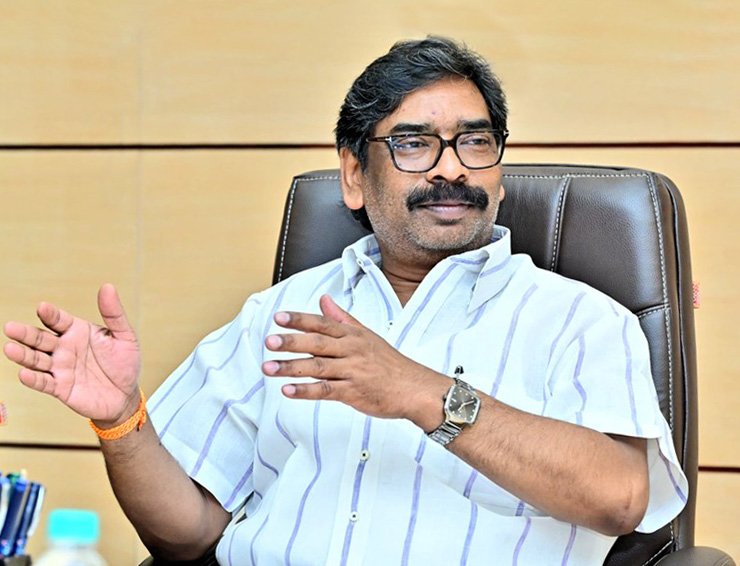
Chief Minister Hemant Soren on Friday directed officials to intensify action against the illegal manufacture, transportation, storage, and smuggling of liquor while reviewing the department’s performance and plans at the state secretariat.
He also instructed the officials to expedite recruitment in the excise and prohibition department and formulate a comprehensive liquor manufacturing policy.
Chairing a high-level review meeting, Soren said illegal liquor production not only causes revenue losses to the state but also poses a serious threat to public health. He called for swift and effective action against those involved in the illicit trade.
Officials informed that excise revenue during 2025-26 stood at Rs 4,013.53 crore, exceeding the target of Rs 3,885.11 crore. For the current financial year (2026-27), the state has set a revenue target of Rs 4,500 crore, of which Rs 1,376 crore, or 30.57 percent, has already been collected by mid-July.
Soren directed officials to adopt modern technology to strengthen monitoring and enforcement. He ordered the installation of GPS tracking systems and digital locks on liquor transport vehicles to enable real-time tracking of routes, stoppages, and destinations, saying the move would improve transparency and help curb illegal activities.
He also asked the department to conduct a comprehensive study on spirit consumption in the state, covering industrial usage, future demand, and revenue potential, and prepare an action plan accordingly.
The chief minister instructed officials to formulate a policy for the manufacture of various types of liquor in the state, including industrial alcohol, and streamline the label registration process to ensure the availability of popular brands.
Emphasising employment and rural development, Soren directed officials to prioritise and support local tribal communities in the construction of excise warehouses across districts, saying the initiative would generate local jobs and strengthen the rural economy.
Reviewing staffing in the department, he asked officials to fast-track recruitment against vacant posts through the Jharkhand Staff Selection Commission (JSSC), stressing that departmental work should not suffer due to manpower shortages. He called for a transparent and time-bound recruitment process.
Author

Related Stories



Most Read
- 1Argentina’s ‘Vanishing Sea’: Rare Low Tide
- 2Effect of the 12 August 2026 Solar Eclipse on the 12 Zodiac Signs, Know Who Will Benefit and Who Will Have to Be Careful
- 3HC finds peon’s dismissal over tea and biscuits amounted to ‘injustice’
- 4Brace for 29 June: a Capricorn Full Moon, Mercury retrograde and Jupiter’s leap into Leo
- 5Japan Coach’s Whiteboard Tactics Go Viral at FIFA World Cup