What Items Should Be Offered to the Shivling and Why?
Whether it is Sawan (Shravan), Mahashivratri, or a Monday fast, the tradition of offering water, Bel leaves, and many other items on the Shivling during the worship of Lord Shiva has been followed for centuries. However, people often do not know why a particular item is offered to Lord Shiva and what its religious significance is. Many times, people also offer such things without proper knowledge, even though they are not mentioned in the scriptures. If worship is performed with the right understanding, its spiritual significance becomes even greater. Let us know which items are offered on the Shivling and what beliefs are associated with them.
1. Water: The Most Essential Offering in Shiva Worship
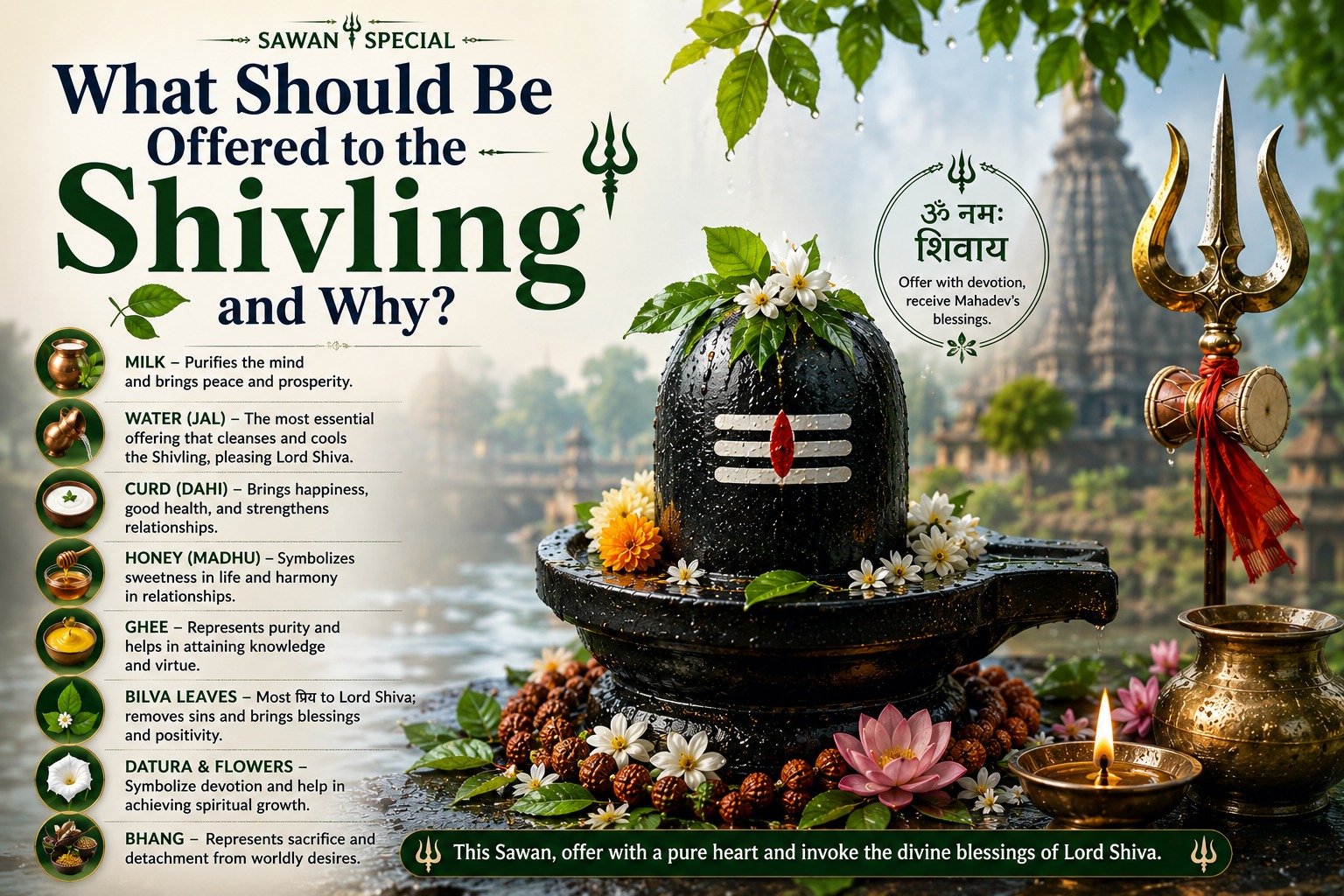
The worship of Lord Shiva is considered incomplete without Jalabhishek (offering water). According to religious belief, offering water on the Shivling brings peace to the mind and fills life with positive energy. The Shiva Purana, along with many other scriptures, describes Jalabhishek as the simplest and most effective way to worship Lord Shiva. This is why devotees can perform worship daily by offering only water.
2. Bel Leaves: The Most Beloved Offering to Lord Shiva
Bel leaves are considered to have special importance. According to tradition, offering a Bel leaf with three leaflets to Lord Shiva is considered auspicious. It is also regarded as a symbol of the Trimurti, the three Gunas, or the three eyes of Lord Shiva. Keep in mind that the Bel leaves should be clean, whole, and free from insects or tears.
3. Milk: A Symbol of Devotion and Purity
Offering milk on the Shivling is also part of an ancient tradition. It is considered a symbol of purity, devotion, and surrender. However, many scholars also advise that instead of using more milk than necessary during worship, it should be offered in a limited quantity and food wastage should be avoided.
4. Datura and Bhang: A Special Belief Associated with Lord Shiva
Datura and Bhang are traditional substances offered to Lord Shiva. According to religious stories, they became associated with Lord Shiva after He consumed poison during the Samudra Manthan (Churning of the Ocean). Therefore, they have been given a special place in Shiva worship. However, their use should remain limited only to worship.
5. White Sandalwood: A Symbol of Coolness and Respect
The tradition of applying white sandalwood to the Shivling is also prevalent. It is considered a symbol of coolness, purity, and respect. The fragrance of sandalwood also makes the atmosphere of worship peaceful and spiritually pure.
6. Akshat, Fruits, and Seasonal Flowers
Whole rice grains (Akshat), fresh fruits, and fragrant flowers are also offered during Shiva worship. They are considered symbols of prosperity, gratitude, and respect towards nature. However, the Puranas mention that Ketaki flowers should not be offered in Shiva worship, and therefore they are not used.
Keep These Things in Mind While Performing Shiva Worship
The most important foundation of worship is devotion and simplicity. All the items offered on the Shivling should be clean and fresh. Do not place the Bel leaves upside down, and try to keep your mind calm during worship. If you have any doubt regarding a particular rule, it is better to seek guidance from the priest of a local temple or a knowledgeable scholar.
Astrologer Sanjeet Kumar Mishra
Astrology, Vastu & Gemstone Expert
8080426564 / 9545290847
Author

Related Stories




Most Read
- 1Argentina’s ‘Vanishing Sea’: Rare Low Tide
- 2Effect of the 12 August 2026 Solar Eclipse on the 12 Zodiac Signs, Know Who Will Benefit and Who Will Have to Be Careful
- 3HC finds peon’s dismissal over tea and biscuits amounted to ‘injustice’
- 4Brace for 29 June: a Capricorn Full Moon, Mercury retrograde and Jupiter’s leap into Leo
- 5Japan Coach’s Whiteboard Tactics Go Viral at FIFA World Cup