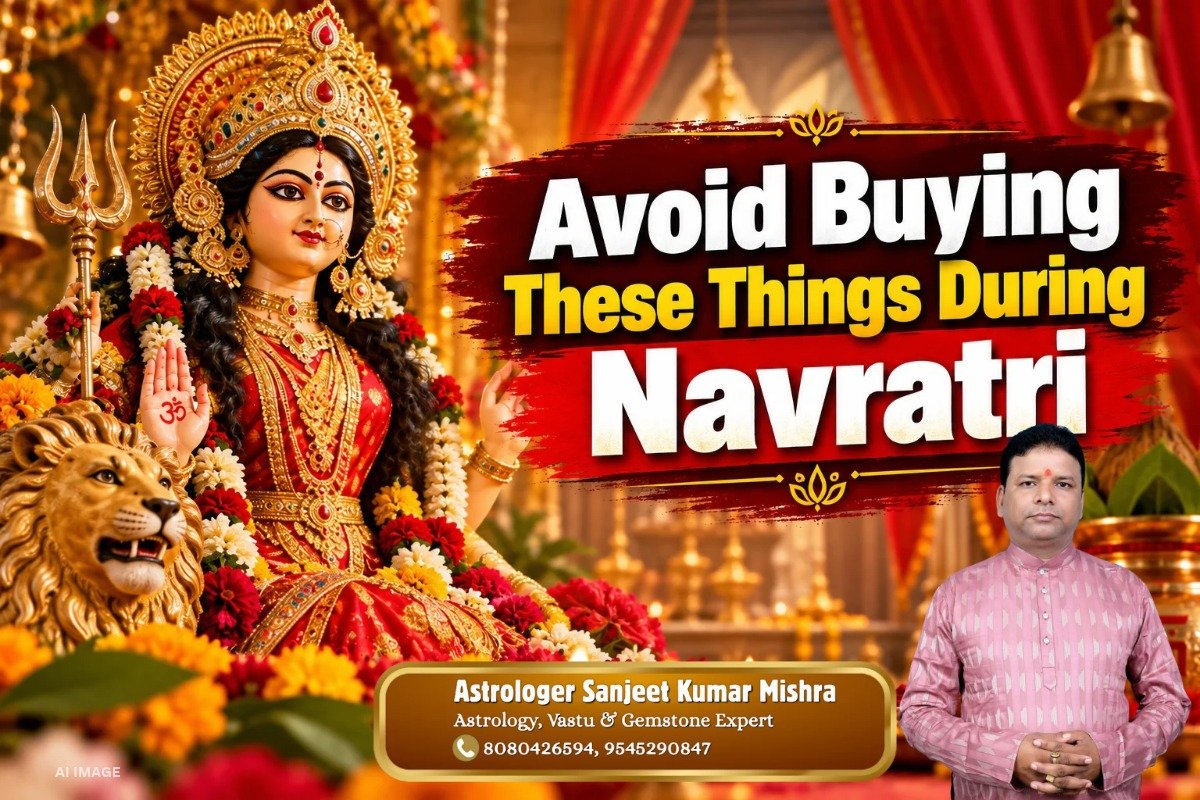
The nine-day festival is observed with prayers, fasting and special rituals dedicated to the nine forms of Goddess Durga.
As Navratri approaches, devotees begin preparing their homes for the festivities, including cleaning, decorating and arranging items required for worship. Along with these preparations, several traditional beliefs are associated with things that are considered better to avoid purchasing during Navratri.
Here are some items that, according to certain religious and traditional beliefs, devotees may choose to avoid buying during this period:
Avoid Buying Iron Items
According to some traditional beliefs, purchasing iron items during Navratri is considered inauspicious. It is believed that bringing certain iron objects into the home during this sacred period may affect the positive atmosphere of the household. Devotees who follow this belief often prefer to postpone the purchase of iron goods until after Navratri
Avoid Buying Black-Coloured Items
Navratri is associated with devotion, purity and the worship of Goddess Durga. Some traditions advise devotees to avoid purchasing black-coloured clothes or other black items during the festival. Instead, colours such as red, yellow, pink and other bright shades are traditionally considered more auspicious during Navratri.
Avoid Purchasing Leather Products
During Navratri, many devotees follow a sattvic lifestyle and pay special attention to purity in their food, habits and surroundings. Because of this, some religious traditions recommend avoiding the purchase of leather products such as belts, wallets, bags and footwear during the festival. However, this is a matter of personal faith and tradition and is not followed by everyone.
Avoid Buying Sharp or Pointed Objects
Some traditional beliefs also advise against purchasing sharp objects such as knives, scissors, needles and other cutting tools during Navratri. It is believed in certain households that bringing such objects home during the festival could symbolically lead to tension, disagreements or conflict within the family. Therefore, devotees who follow this tradition prefer to purchase these items after Navratri.
What Should You Keep in Mind?
These beliefs are rooted in religious traditions, astrology and regional customs and may vary from one family or community to another. There is no universal religious rule that prohibits everyone from purchasing these items during Navratri. Therefore, these practices should be understood as traditional beliefs rather than established facts. Devotees can follow them according to their personal faith and family traditions.
JYOTISHACHARYA SANJIT KUMAR MISHRA
Astrology, Vastu & Gemstone Expert
Contact: 8080426594 / 9545290847
Author

Related Stories


Most Read
- 1Argentina’s ‘Vanishing Sea’: Rare Low Tide
- 2Effect of the 12 August 2026 Solar Eclipse on the 12 Zodiac Signs, Know Who Will Benefit and Who Will Have to Be Careful
- 3HC finds peon’s dismissal over tea and biscuits amounted to ‘injustice’
- 4Brace for 29 June: a Capricorn Full Moon, Mercury retrograde and Jupiter’s leap into Leo
- 5Japan Coach’s Whiteboard Tactics Go Viral at FIFA World Cup