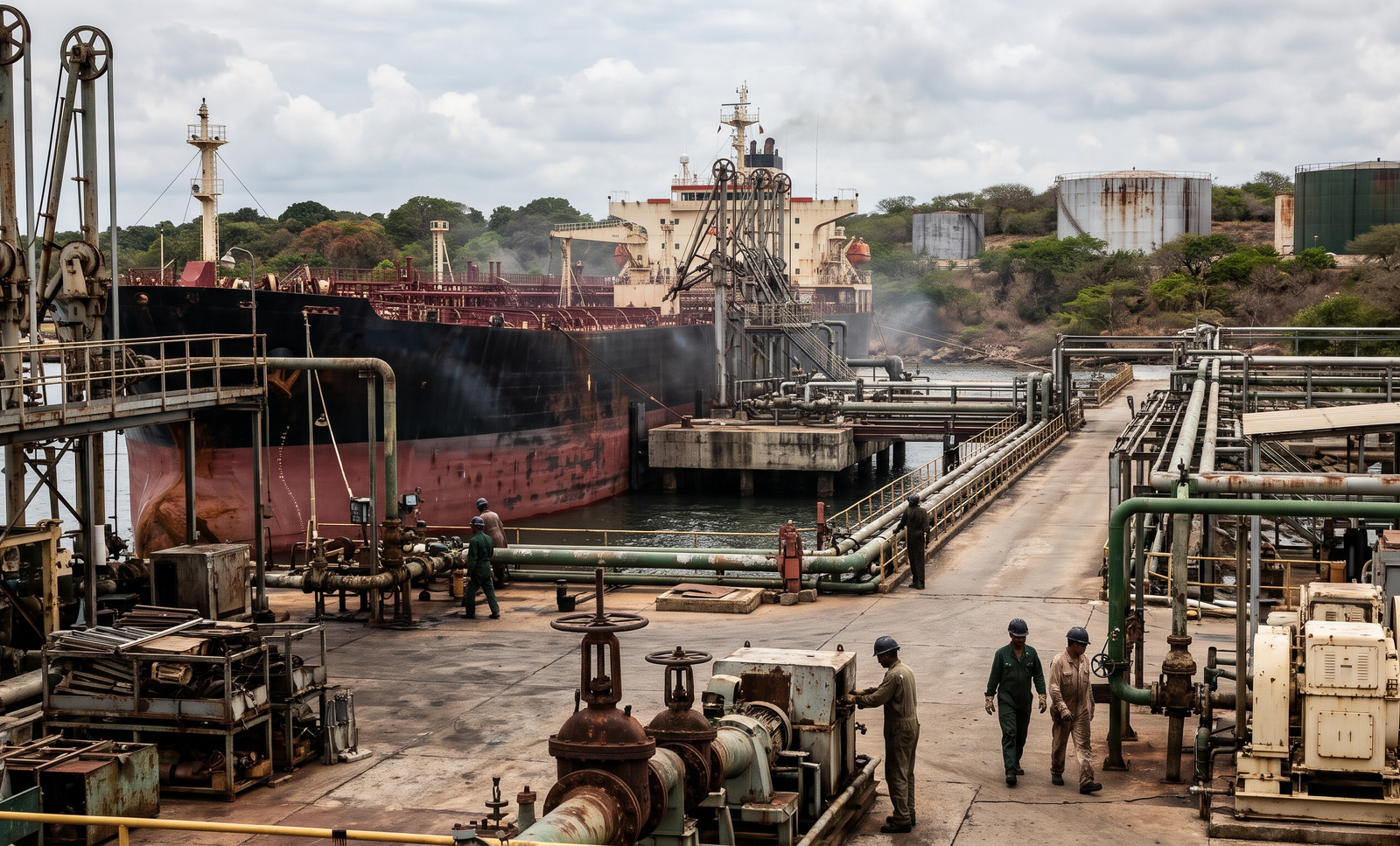
Questions over Vitol’s Venezuelan oil licence have placed JD Vance under scrutiny, exposing the uneasy relationship between political money, corporate access and America’s expanding influence over global energy markets.
The controversy surrounding the Trump administration’s handling of Venezuelan oil has raised questions that reach far beyond a lucrative commercial agreement. At its heart lies a fundamental issue of democratic accountability: can political donors gain privileged access to public resources through their relationships with those in power?
Commodity trading giant Vitol has emerged at the centre of allegations that personal connections and political contributions may have helped secure a valuable US government licence to market Venezuelan crude. The reported involvement of Vice-President JD Vance, and his alleged meeting with Vitol trader John Addison shortly before the US military operation in Venezuela, has intensified scrutiny.
According to a Reuters investigation published on 11 November 2026, Vance and Addison reportedly discussed how quickly Venezuelan oil could be brought to international markets if Washington gained control of the country’s petroleum resources. Both men deny that the meeting took place. Flight records, however, reportedly place their aircraft at the same Montana airport on 27 December 2025. Such records do not establish that a meeting occurred, but they have strengthened calls for transparency.
The subsequent sequence of events has attracted particular attention. Following the US operation on 3 January 2026, which resulted in the capture of Venezuelan President Nicolás Maduro, Energy Secretary Chris Wright contacted Addison on 5 January to discuss whether Vitol would be interested in marketing Venezuelan oil. The company and rival trader Trafigura secured special licences within days.
The financial and political connections are equally significant. Federal Election Commission records show that Addison contributed $300,000 to a political action committee supporting Vance’s 2022 Senate campaign. He and his wife subsequently donated a combined $7m to political committees supporting Donald Trump’s 2024 presidential campaign. Reuters estimates that Vitol and Trafigura have since earned hundreds of millions of dollars from marketing Venezuelan crude, although the companies do not disclose transaction-specific profits.
On 23 November, Democratic Senator Maggie Hassan opened a formal congressional investigation, demanding communications and records from Vance’s office by 14 December. She wants to establish whether political relationships influenced the selection process, whether competitive bidding was considered and whether potential conflicts of interest were properly addressed. Hassan is due to become chair of the Senate Homeland Security and Governmental Affairs Committee in January 2027.
The administration maintains that Vitol was selected because of its global reach and commercial capabilities. Vance’s office and Addison deny the alleged meeting, while the Energy Department says Vance and Wright never discussed Venezuelan oil sales. These denials must be weighed alongside the evidence, not dismissed.
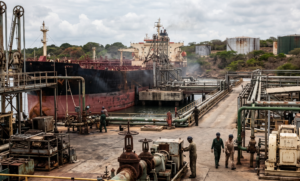
Yet the implications extend well beyond Washington. Venezuela possesses the world’s largest proven oil reserves, making control over its petroleum industry a matter of strategic importance. US management of more than $12bn in Venezuelan oil revenues during the first nine months of 2026 illustrates the extraordinary economic and geopolitical stakes. The question is whether such arrangements can deliver political stability and economic recovery without undermining Venezuelan sovereignty and public accountability.
For a country emerging from authoritarian rule and external intervention, the legitimacy of its economic transition matters as much as the volume of oil exported. If international companies are perceived to benefit through political proximity rather than transparent competition, public trust will suffer and the credibility of any future democratic settlement will be weakened.
This is therefore not simply a story about a corporate windfall. It is a test of whether American power can be exercised with the transparency and institutional restraint that Washington routinely demands of others. The decisive question is not merely who sells Venezuela’s oil, but who benefits, who decides and who is answerable to the people whose resources are at stake.
Author

Related Stories




Most Read
- 1Argentina’s ‘Vanishing Sea’: Rare Low Tide
- 2Effect of the 12 August 2026 Solar Eclipse on the 12 Zodiac Signs, Know Who Will Benefit and Who Will Have to Be Careful
- 3Powai: Minor Girl Sexually Assaulted by Six Men, All Accused Arrested Within 24 Hours
- 4BJP chief Nitin Nabin arrives in Ranchi on a 2-day visit to Jharkhand
- 5HC finds peon’s dismissal over tea and biscuits amounted to ‘injustice’