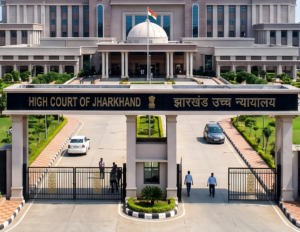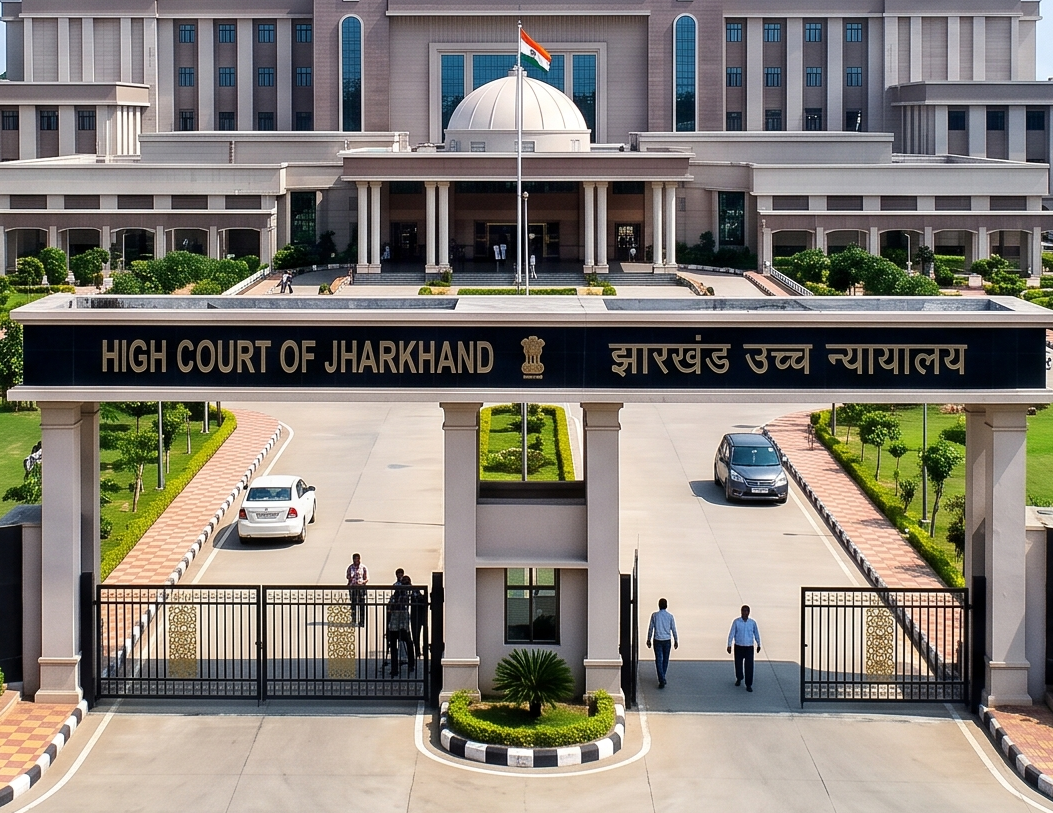
The Jharkhand High Court has acquitted a married government employee accused of raping a Class 10 student he tutored in science, setting aside his conviction 27 years after the case was registered.
The court held that material contradictions in the prosecution evidence created reasonable doubt about the charges against Laxman Mahto.
Justice Pradeep Kumar Srivastava, in a judgment pronounced on September 10, overturned Mahto’s 2008 conviction by the Simdega sessions court. He had been sentenced to seven years’ simple imprisonment under Section 376 of the IPC and five years under Section 420, with the sentences running concurrently.
The case dates back to June 25, 1999, when the girl, then around 16, was taking science tuition from Mahto, who lived as a tenant in her family’s house.
According to the prosecution, Mahto allegedly raped her in his rented room despite her resistance, gagged her and threatened to kill her if she raised an alarm. Her younger sister claimed to have witnessed the incident through a window.
A meeting was later held at an advocate’s house, where Mahto allegedly admitted his guilt and agreed to marry the girl. He subsequently left the rented premises, promising to return for the marriage, but allegedly never came back.
The girl’s family then lodged an FIR on July 10, 1999. A significant aspect of the case was that Mahto was already married and had children.
During cross-examination, the victim acknowledged that he lived in her house with his wife and other family members. She also stated that he had tutored her between January and April 1999, while the alleged promise of marriage was made on June 25.
The High Court noted her statement that she had stayed with Mahto as husband and wife for three days after the alleged incident in his rented room, with his wife’s knowledge, although she maintained that no sexual intercourse took place during that period.
The court reiterated that a rape survivor’s uncorroborated testimony can sustain a conviction if it inspires confidence and meets the standard of reliable evidence.
However, it found that the victim’s testimony in this case contained material inconsistencies. It also considered the absence of injuries in the medical examination and discrepancies in witness statements, including the account attributed to the victim’s younger sister by the investigating officer.
The alleged panchayat confession was never produced before the trial court. Holding that the prosecution had failed to establish the charges beyond reasonable doubt, the High Court set aside Mahto’s conviction and acquitted him.
Author

Related Stories




Most Read
- 1Argentina’s ‘Vanishing Sea’: Rare Low Tide
- 2Effect of the 12 August 2026 Solar Eclipse on the 12 Zodiac Signs, Know Who Will Benefit and Who Will Have to Be Careful
- 3HC finds peon’s dismissal over tea and biscuits amounted to ‘injustice’
- 4Brace for 29 June: a Capricorn Full Moon, Mercury retrograde and Jupiter’s leap into Leo
- 5Japan Coach’s Whiteboard Tactics Go Viral at FIFA World Cup