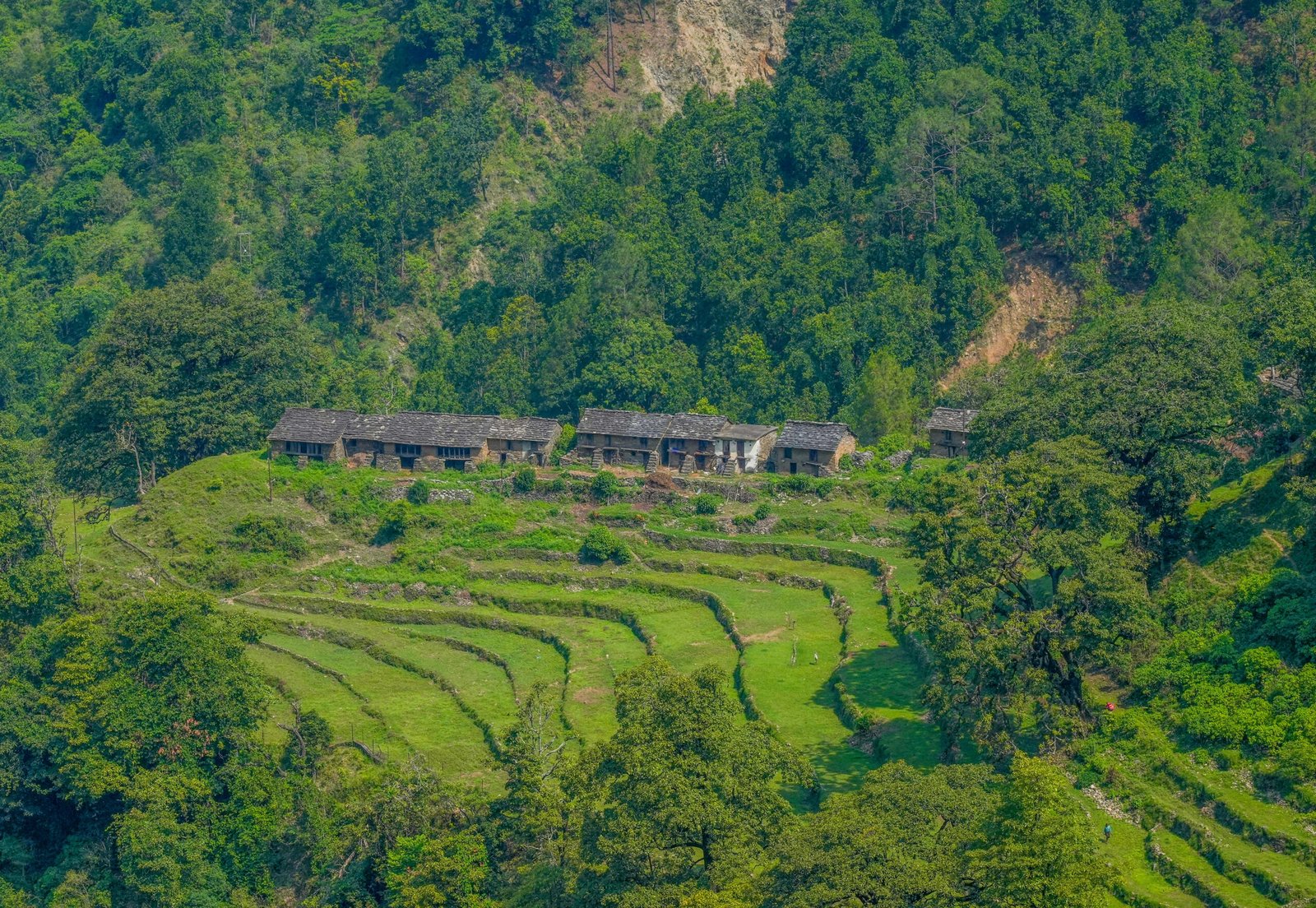
Forests are the ecological foundation of a nation, embodying critical environmental, economic, and cultural wealth. In India, a land characterized by profound geographical diversity, forests are not merely collections of trees but complex, living infrastructures. They regulate localized macroclimates, anchor fragile river watersheds, secure topsoil fertility, and support over half of the world’s wild tigers alongside thousands of endemic species.
According to the Food and Agriculture Organization’s (FAO) Global Forest Resources Assessment (GFRA), India ranks 9th globally in terms of total forest area and 3rd in net annual forest area gains. As per official domestic data from the Forest Survey of India (FSI), India’s combined forest and tree cover stands at approximately 827,357 square kilometres, blanketing 25.17% of the nation’s total geographical area. However, this massive repository of green wealth faces constant friction from an expanding economy, urbanization, and climate vulnerabilities. Protecting these resources demands a balanced approach that fuses strict statutory regulations with active community participation.
The Spectrum of India’s Forest Wealth
India’s distinct latitudinal reach, topography, and monsoon systems give rise to an incredibly wide variety of forest ecosystems, traditionally classified into five primary types:
• Tropical Evergreen Rainforests: Found in regions of heavy rainfall like the Western Ghats, the Andaman and Nicobar Islands, and Northeast India. These multi-layered, dense canopies host rich biological repositories, including valuable hardwood trees like rosewood, ebony, and mahogany.
• Tropical Deciduous (Monsoon) Forests: The most widespread forest type across India, stretching across the Indo-Gangetic plains, Central India, and parts of the Deccan plateau. Sub-divided into moist and dry deciduous zones, they feature economically vital timber trees like teak, sal, shisham, and sandalwood.
• Tropical Thorn and Scrub Forests: Dominating the arid and semi-arid landscapes of western Rajasthan, Gujarat, and the rain-shadow regions of the Deccan. They consist of hardy, deep-rooted species like acacia (babul), euphorbia, and wild palms adapted to extreme moisture stress.
• Montane (Alpine and Sub-Alpine) Forests: Spanning the altitudinal gradients of the Himalayas. They transition smoothly from broad-leaved oaks and chestnuts at lower elevations to conifers like deodar, pine, and silver fir at higher altitudes.
• Mangrove (Littoral/Swamp) Forests: Hugging the deltaic coastlines of the Sundarbans, the Mahanadi, Godavari, and Krishna rivers, as well as coastal pockets in Gujarat and the Andaman Islands. These unique halophytic trees act as natural shock absorbers against cyclonic storm surges and act as nurseries for marine life.
[India’s Forest & Tree Cover Distribution]
├── Forest Cover: 21.76% (715,343 sq km)
│ ├── Very Dense Forest (VDF)
│ ├── Moderately Dense Forest (MDF)
│ └── Open Forest (OF)
└── Tree Cover: 3.41% (112,014 sq km)
Total National Green Cover = 25.17%
(Target set by National Forest Policy 1988 = 33.00%)
Ecological and Economic Value
The wealth of India’s forests can be evaluated through dual lenses: their material contribution to the economy and their invaluable, non-marketed ecosystem services.
1. Economic Contributions
Forests are a critical livelihood lifeline for over 250 million people in India, especially indigenous tribes and forest-fringe communities. They provide valuable timber for manufacturing, structural construction, and paper industries. Beyond timber, Non-Timber Forest Products (NTFPs)—such as bamboo, tendu leaves, honey, resin, and medicinal herbs—form a thriving rural micro-economy. Furthermore, India accounts for a massive share of Asian agroforestry, cultivating a highly productive matrix of Trees Outside Forests (TOF) that meets a significant portion of domestic industrial wood demands.
2. Ecological Services and Climate Mitigation
Ecologically, India’s forests function as massive carbon sinks. Under its Paris Agreement Nationally Determined Contributions (NDCs), India committed to creating an additional carbon sink of 2.5 to 3 billion tonnes of CO₂ equivalent through expanded forest and tree cover by 2030.
Forests also play a critical role in anchoring upper river catchment basins, preventing catastrophic soil erosion, regulating regional hydrological cycles, and recharging depleting groundwater tables.
Pressing Challenges to India’s Forests
Despite incremental gains in total open forest cover, India faces significant qualitative and quantitative pressures on its native, primary woodlands:
• Fragmentation and Industrial Diversion: Linear infrastructure projects, including highways, railway expansions, and mining operations, consistently carve up large, contiguous forest patches. This fragmentation disrupts crucial wildlife corridors, escalating human-wildlife conflict.
• Degradation of Canopy Density: While total green cover shows long-term growth, data highlights a concerning trend where pristine, Very Dense Forests (VDF) are gradually degrading into disturbed, Open Forests (OF). Concurrently, ecologically critical areas like the Northeast region have faced net forest cover losses due to shifting cultivation (jhum) and infrastructure expansion.
• Implementation Deficits: Ambitious domestic afforestation initiatives have encountered substantial operational friction. A recent audit report by the Comptroller and Auditor General (CAG) of India flagged that the Green India Mission (GIM) missed its ten-year target to expand forest cover by nearly 98%, pointing directly to chronic underfunding, fragmented planning, and weak field monitoring.
• Climate Change and Forest Fires: Rising global temperatures have lengthened and intensified dry seasons, leaving more than 30% of India’s forest area highly vulnerable to devastating forest fires.
Conservation Strategies and the Way Forward
To bridge the gap between India’s current 25.17% green cover and the 33% target mandated by the National Forest Policy of 1988, a multi-pronged conservation architecture is essential:
1. Strengthening Statutory Frameworks
India maintains a robust legal foundation through the Indian Forest Act of 1927, the Wildlife (Protection) Act of 1972, and the Forest (Conservation) Act. These laws strictly classify state lands into Reserved Forests and Protected Forests to limit unsustainable commercial exploitation. Moving forward, regulatory bodies must mandate more rigorous Environmental Impact Assessments (EIAs) for infrastructure projects, ensuring that compensatory afforestation programs focus on planting complex, native biomes rather than commercial, monoculture timber plantations.
2. Technology-Driven Monitoring
The Forest Survey of India leverages advanced remote sensing capabilities, utilizing high-resolution ISRO satellite data to track canopy health, log legal boundary compliance, and map localized fire hotspots in near-real time. Expanding these geospatial tools allows forest rangers to intervene quickly against illegal logging and encroachment.
3. Community-Led and Decentralized Conservation
True sustainability relies heavily on the communities living along forest fringes. The Joint Forest Management (JFM) model and the Forest Rights Act (FRA) of 2006 empower Gram Sabhas and indigenous tribes to manage and protect their traditional forest tracts. Fusing indigenous conservation practices with modern state resources creates a collaborative defence against illegal exploitation.
4. Focused Ecosystem Restoration
Targeted initiatives are yielding positive localized results. Schemes like MISHTI (Mangrove Initiative for Shoreline Habitats & Tangible Incomes) have successfully restored over 22,500 hectares of vulnerable coastal mangrove ecosystems. Replicating this focused approach across degraded montane and dry-scrub zones will help restore ecological equilibrium.
Conclusion
India’s forest wealth is an invaluable ecological asset that underpins the country’s water security, climate resilience, and economic future. While remote sensing data shows resilient macro-trends, localized canopy degradation and implementation gaps in major afforestation missions emphasize that conservation requires constant, active vigilance.
Protecting India’s forests requires a shift from viewing trees as mere industrial timber to valuing them as vital ecological infrastructure. By strictly enforcing conservation laws, leveraging advanced satellite tracking, and empowering forest-dependent communities, India can secure its rich natural heritage for generations to come.
(The author is a researcher in Society, Culture and Philosophy. The views expressed are personal.)
Author

Related Stories




Most Read
- 1Argentina’s ‘Vanishing Sea’: Rare Low Tide
- 2Effect of the 12 August 2026 Solar Eclipse on the 12 Zodiac Signs, Know Who Will Benefit and Who Will Have to Be Careful
- 3HC finds peon’s dismissal over tea and biscuits amounted to ‘injustice’
- 4Brace for 29 June: a Capricorn Full Moon, Mercury retrograde and Jupiter’s leap into Leo
- 5Japan Coach’s Whiteboard Tactics Go Viral at FIFA World Cup