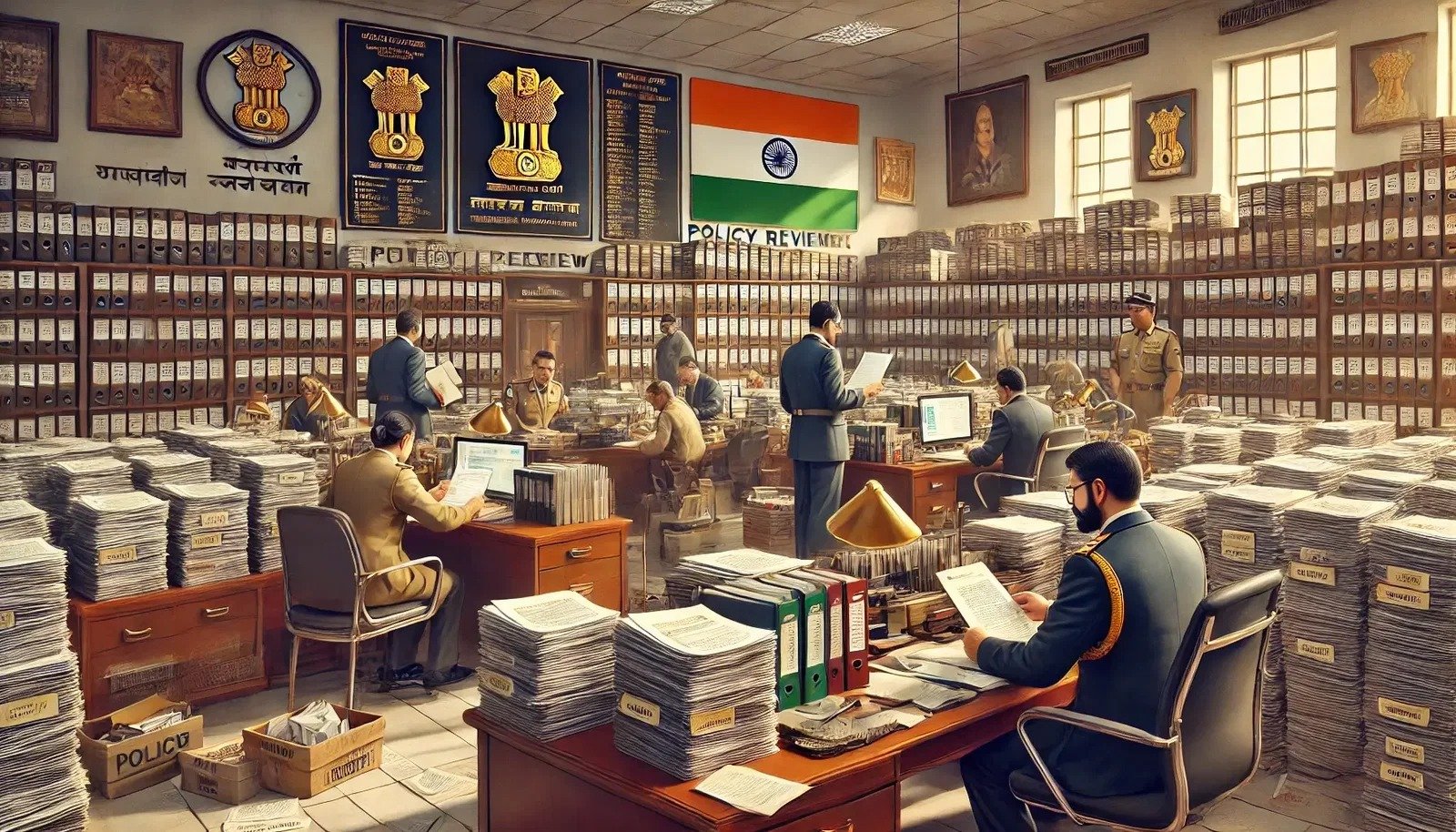
An evaluation of the Indian bureaucracy—often referred to as the ‘steel frame’ of the nation—reveals a complex institutional architecture. Originally designed by the British colonial administration to maintain order and collect revenue, it was retrofitted post-independence to drive socio-economic development and democratic governance.
While this structure has successfully held a highly diverse nation together, it simultaneously faces severe systemic challenges that impede India’s growth potential.
Strengths of India’s Bureaucratic Structure
1. Meritocratic and Elite Recruitment
The core of India’s higher bureaucracy, particularly the All India Services (like the IAS and IPS), is recruited through the rigorous Civil Services Examination conducted by the Union Public Service Commission (UPSC). This highly competitive, multi-layered selection process ensures that the top tier of administration consists of exceptionally capable individuals drawn from diverse academic and socio-economic backgrounds, bringing high intellectual capacity to policymaking.
2. Institutional Continuity and Political Neutrality
As a permanent executive, the bureaucracy provides vital institutional stability. While political governments change through democratic elections, the administrative machinery remains intact, ensuring that governance does not grind to a halt during transitions. Modelled on the Westminster system, it maintains an official stance of political neutrality, serving successive political parties with the same institutional fidelity.
3. Administrative Resilience and Crisis Management
The Indian bureaucracy has consistently demonstrated extraordinary competence during massive logistical challenges and crises. From executing the world’s largest democratic elections and managing complex census operations to orchestrating large-scale disaster relief operations (such as during tsunamis or cyclones) and implementing massive public health campaigns, the system’s top-down command structure excels in high-stakes mobilisation.
4. Deep Grassroots Reach
The unique architectural framework of the bureaucracy ensures an administrative footprint that extends to the remotest corners of the country. The position of the District Magistrate (DM) or District Collector serves as a powerful focal point of local governance, anchoring development, law and order, and state authority directly at the grassroots level.
Weaknesses of India’s Bureaucratic Structure
1. Colonial Legacy and Institutional Rigidity
The structural DNA of the Indian bureaucracy remains rooted in the colonial-era Max Weberian model, which prioritises procedural conformity over performance outcomes. This has bred an entrenched culture of red tape, complex hierarchies, and defensive decision-making, where avoiding procedural errors is often valued more than solving public problems efficiently.
2. Generalism Over Specialisation
The administrative system heavily favours the ‘generalist’ administrator, frequently rotating officers across vastly different sectors—such as moving an official from agriculture to cyber security, and then to civil aviation—within short spans. In a modern, technology-driven economy, this lack of domain expertise often leaves the bureaucracy ill-equipped to handle complex, technical policy challenges.
3. Politicisation and Patronage Networks
Despite the theoretical ideal of political neutrality, the system suffers from significant political interference. Because political executives hold absolute control over postings, transfers, and promotions, the weaponisation of frequent transfers is common. This pressure can compromise administrative independence, creating patronage networks where survival and career progression become tied to political compliance.
4. Accountability Deficit and Corruption
The layers of protection granted to civil servants, combined with low transparency in traditional workflows, have historically created an accountability vacuum. Lower and middle tiers of the bureaucracy, in particular, frequently suffer from rent-seeking behaviour and corruption, which increases transaction costs for citizens and businesses and dilutes the impact of welfare schemes.
The Evolution: Path to Reform
To address these structural weaknesses, India has introduced several targeted reforms aimed at modernising the administrative framework:
• Lateral Entry: The selective induction of private-sector professionals and domain specialists at senior levels (such as Joint Secretaries) to inject technical expertise into policy formulation.
• Mission Karmayogi: A comprehensive national capacity-building initiative designed to shift the bureaucratic mindset from a rules-based culture to a roles-based and competency-driven approach.
• Digital Governance (e-Kranti): The aggressive digitisation of public service delivery, using tools like the Jan Dhan-Aadhaar-Mobile (JAM) trinity to bypass rent-seeking intermediaries and transfer benefits directly to citizens.
(The author is a freelance writer. The views expressed are personal.)
Author

Related Stories




Most Read
- 1Argentina’s ‘Vanishing Sea’: Rare Low Tide
- 2Effect of the 12 August 2026 Solar Eclipse on the 12 Zodiac Signs, Know Who Will Benefit and Who Will Have to Be Careful
- 3HC finds peon’s dismissal over tea and biscuits amounted to ‘injustice’
- 4Brace for 29 June: a Capricorn Full Moon, Mercury retrograde and Jupiter’s leap into Leo
- 5Japan Coach’s Whiteboard Tactics Go Viral at FIFA World Cup