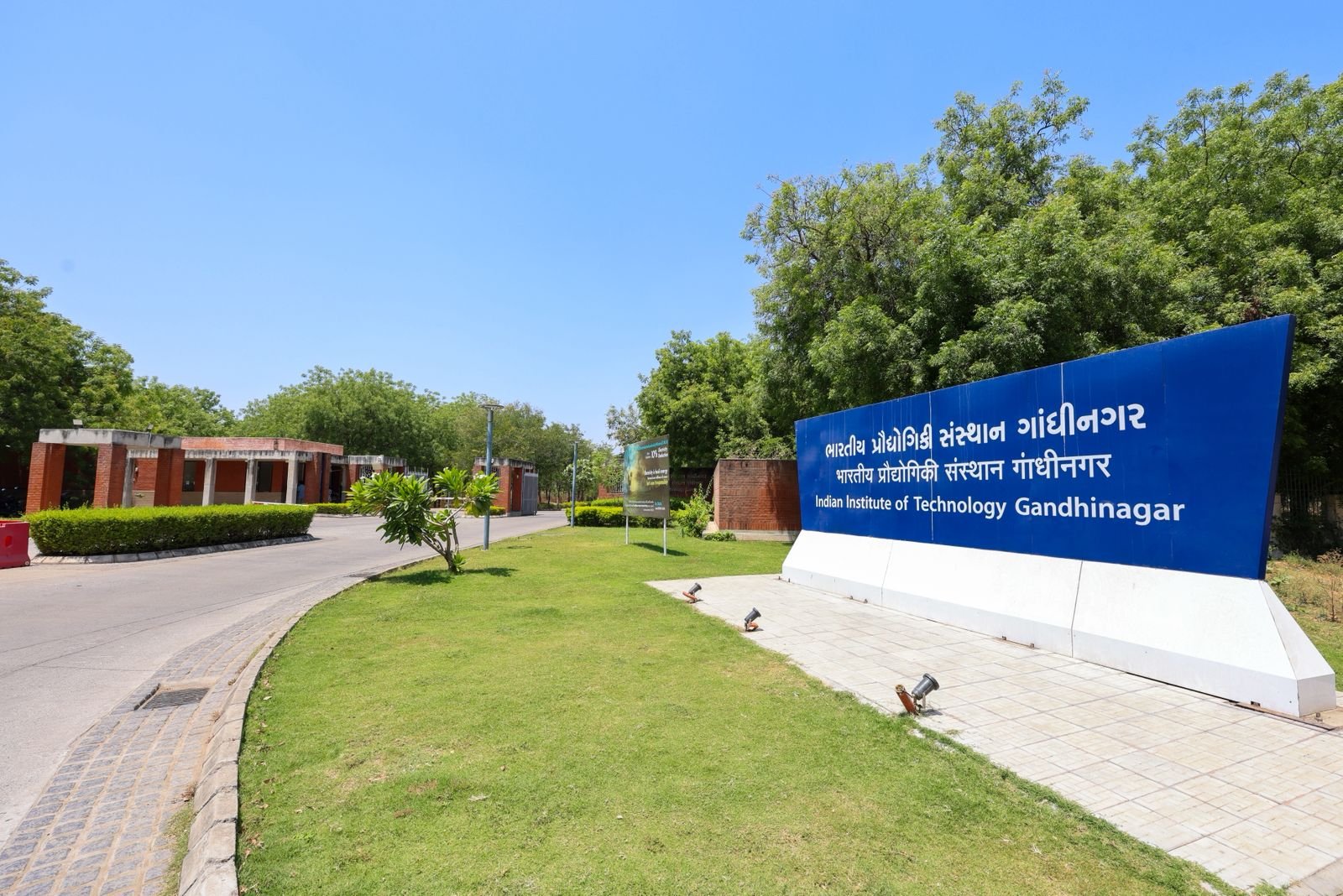
Gandhinagar: Gujarat is set to establish a dedicated semiconductor research and training centre at IIT Gandhinagar as part of efforts to build a skilled workforce for India’s growing semiconductor industry.
The Silicon and Advanced Semiconductor Manufacturing Research and Training Hub (SAMARTH), backed by a Rs 190 crore investment from the Union Ministry of Electronics and Information Technology, the Gujarat government’s Department of Science and Technology, and IIT Gandhinagar, is expected to begin operations soon.
The project aims to provide advanced research facilities and industry-oriented training to engineering students, faculty members, and professionals working in the semiconductor sector.
IIT Gandhinagar has initiated the process of procuring equipment and appointing consultants for construction and other infrastructure required to establish the centre.
According to the state government, SAMARTH has been conceived to support India’s goal of becoming self-reliant in semiconductor manufacturing while strengthening Gujarat’s position as a hub for the sector.
The centre will focus on research, development, and skill enhancement, with engineering students receiving practical training to become “fab-ready,” allowing them to work in semiconductor fabrication facilities.
Faculty members and professionals from the semiconductor industry will also be able to upgrade their skills, while awareness programmes will introduce students to opportunities in the field from an early stage.
The centre is also expected to collaborate with local and international partners for research, training, and workforce development.
To widen participation, IIT Gandhinagar is preparing to sign memorandums of understanding (MoUs) with engineering colleges across Gujarat. Students from the state will be able to enrol in programmes at nominal fees.
The centre will also offer specialised short-term certificate courses, while summer schools and outreach programmes will familiarise school and college students with semiconductor technologies and related courses.
Over the next five years, SAMARTH plans to train more than 10,000 people. The target includes 5,600 undergraduate, postgraduate, and doctoral students; 1,500 technicians pursuing vocational and technical education; 1,000 participants in certificate programmes; 230 faculty members; and 230 industry professionals through upskilling initiatives.
More than 2,700 students are also expected to participate in summer schools and one-day exposure programmes.
The facility will include laboratories for nano-fabrication, CMOS process training, semiconductor process and device design, device modelling, IC design, and prototyping, along with a device process characterisation facility for the testing, inspection, and quality assessment of electronic devices and chip manufacturing processes.
Referring to the broader objective of developing the sector, Prime Minister Narendra Modi had said, “Our goal is not limited to setting up just one factory, but to build an entire ecosystem. India is now focusing on the entire semiconductor value chain, from design engineers to machine manufacturers and logistics. The announcement of the ‘India Semiconductor Mission 2.0’ is a major step in this direction. As production increases, the demand for materials and components within India will also rise, creating the biggest opportunity for domestic industries.”
Author

Related Stories




Most Read
- 1Argentina’s ‘Vanishing Sea’: Rare Low Tide
- 2Effect of the 12 August 2026 Solar Eclipse on the 12 Zodiac Signs, Know Who Will Benefit and Who Will Have to Be Careful
- 3HC finds peon’s dismissal over tea and biscuits amounted to ‘injustice’
- 4Brace for 29 June: a Capricorn Full Moon, Mercury retrograde and Jupiter’s leap into Leo
- 5Japan Coach’s Whiteboard Tactics Go Viral at FIFA World Cup