Student movements have long been a powerful force in shaping modern history. Far from being isolated academic disruptions, student activism has historically served as a critical catalyst for political revolution, social reform, and cultural transformation worldwide. By virtue of their unique position—possessing intellectual resources, high social mobility, and relative freedom from full-time economic and familial responsibilities—students have frequently acted as the moral conscience of their societies, challenging authoritarian regimes, demanding colonial liberation, and driving civil rights advancements.
Anti-Colonial and Nationalist Awakenings (Early 20th Century)
In the early decades of the 20th century, universities became the breeding grounds for anti-colonial sentiment and national self-determination. Students who travelled abroad or studied within colonial institutions utilized Western political philosophies—such as liberalism, Marxism, and democracy—to critique imperial rule.
• The May Fourth Movement (1919, China): Prompted by the Treaty of Versailles, which transferred German territories in China to Japan rather than returning them to Chinese sovereignty, over 3,000 students from thirteen universities protested in Beijing. This movement ignited a massive wave of cultural and political nationalism, shifting China toward modern political mobilization and laying the groundwork for the Chinese Communist Party.
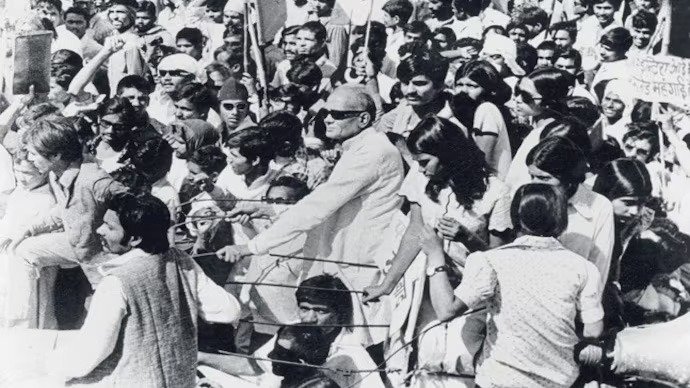
• The Indian Independence Movement: Throughout the 1920s and 1940s, student organizations like the All India Students’ Federation (AISF) became integral to Mahatma Gandhi’s non-cooperation and Quit India campaigns. Students boycotted British-run educational institutions, organized strikes, and suffered mass arrests, turning the academic sphere into a prominent battleground for national liberation.
The Global Explosion of 1968
The year 1968 marked a historic peak in transnational student solidarity. Connected by growing mass media and shared grievances against the Cold War status quo, institutional stagnation, and systemic inequality, a wave of rebellions swept across continents.
• May 1968 (France): What began as a series of student protests at the University of Paris at Nanterre over strict social regulations quickly escalated into a national crisis. Students occupied the Sorbonne and built barricades in the Latin Quarter, leading to a general strike by 11 million French workers that nearly brought down the government of President Charles de Gaulle.
• The Anti-Vietnam War Movement (United States): Led by groups like Students for a Democratic Society (SDS), American university students organized massive rallies, draft-card burnings, and campus occupations to protest the Vietnam War and university complicity in military research. The tragic killing of four unarmed students by the National Guard at Kent State University in 1970 crystallized the deep generational divide of the era.
• The Tlatelolco Massacre (1968, Mexico): In the weeks leading up to the Mexico City Olympic Games, Mexican students mobilized to protest state authoritarianism and police violence. The movement met a tragic end when government forces opened fire on a peaceful student rally in Tlatelolco, killing hundreds of demonstrators—an event that permanently altered the country’s political landscape.
Challenging Dictatorships and Authoritarianism (Late 20th Century)
In many parts of the Global South and Eastern Europe, student movements took on the life-threatening task of confronting entrenched dictatorships and communist regimes.
• The Soweto Uprising (1976, South Africa): On June 16, 1976, thousands of Black South African students marched to protest the enforcement of Afrikaans—the language of the oppressor—as the medium of instruction in schools. Police opened fire, killing young activists like Hector Pieterson. This uprising catalyzed international outrage against the Apartheid regime and rejuvenated the domestic liberation struggle.
• The Kwangju Uprising (1980, South Korea): Following a military coup by General Chun Doo-hwan, university students in Gwangju led demonstrations demanding democratization. The brutal military crackdown led to a popular uprising. Though suppressed at the time, it became a foundational milestone for South Korea’s transition to a democracy in the late 1980s.
• The Velvet Revolution (1989, Czechoslovakia): On International Students’ Day, a peaceful student demonstration in Prague was brutally suppressed by riot police. In response, students and theatres went on strike, mobilizing the wider public. Within weeks, the peaceful pressure forced the collapse of the communist regime, electing dissident playwright Václav Havel as president.
• The Tiananmen Square Protests (1989, China): Led primarily by university students calling for political reform, freedom of speech, and an end to government corruption, millions gathered in Beijing. The movement ended with a violent military crackdown on June 4, highlighting the severe risks student activists face under uncompromising regimes.
Contemporary Student Activism (21st Century)
In the digital age, student movements have evolved, leveraging social media to organize rapidly and connect local issues to global systemic crises. While tuition fees and education accessibility remain central, contemporary activism heavily intersects with climate justice and human rights.
• The Penguin Revolution and “Free Education” Movements (Chile): In 2006 and 2011, secondary and university students—nicknamed “penguins” due to their school uniforms—staged massive strikes and occupied schools to protest the privatized, unequal education system inherited from the Pinochet dictatorship. This activism fundamentally reshaped Chilean politics, eventually leading to structural tax reforms and the election of student leader Gabriel Boric as the country’s president in 2021.
• The Rhodes Must Fall and Fees Must Fall Movements (2015–2016, South Africa): Initiated by students at the University of Cape Town, this movement began as a protest against a statue of colonialist Cecil Rhodes and grew into a nationwide demand to decolonize institutional curricula and eliminate crippling tuition fee increases.
• Climate Strikes and Global Interventions: Led by youth and university students worldwide, initiatives like the Fridays for Future movement have organized millions to demand institutional divestment from fossil fuels and urgent policy action on climate change. Similarly, modern campuses remain epicenters for anti-war activism, civil rights defense, and democratic institutional checks across the globe.
Conclusion
The global history of student movements demonstrates that universities are far more than centers of academic learning; they are incubators of societal evolution. Over the past century, student activists have repeatedly stepped into political vacuums, transforming private grievances into public imperatives. Despite facing state surveillance, systemic violence, and public skepticism, student movements continue to serve as an indispensable barometer for democracy, justice, and human rights across the world.
(The author is researching cinematography and theatrical arts. The views expressed are personal.)
Author

Related Stories




Most Read
- 1Argentina’s ‘Vanishing Sea’: Rare Low Tide
- 2Effect of the 12 August 2026 Solar Eclipse on the 12 Zodiac Signs, Know Who Will Benefit and Who Will Have to Be Careful
- 3HC finds peon’s dismissal over tea and biscuits amounted to ‘injustice’
- 4Brace for 29 June: a Capricorn Full Moon, Mercury retrograde and Jupiter’s leap into Leo
- 5Japan Coach’s Whiteboard Tactics Go Viral at FIFA World Cup