“Education and upbringing are not the same thing. Someone can be highly educated and still have deeply ingrained prejudices.”
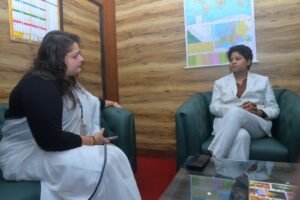
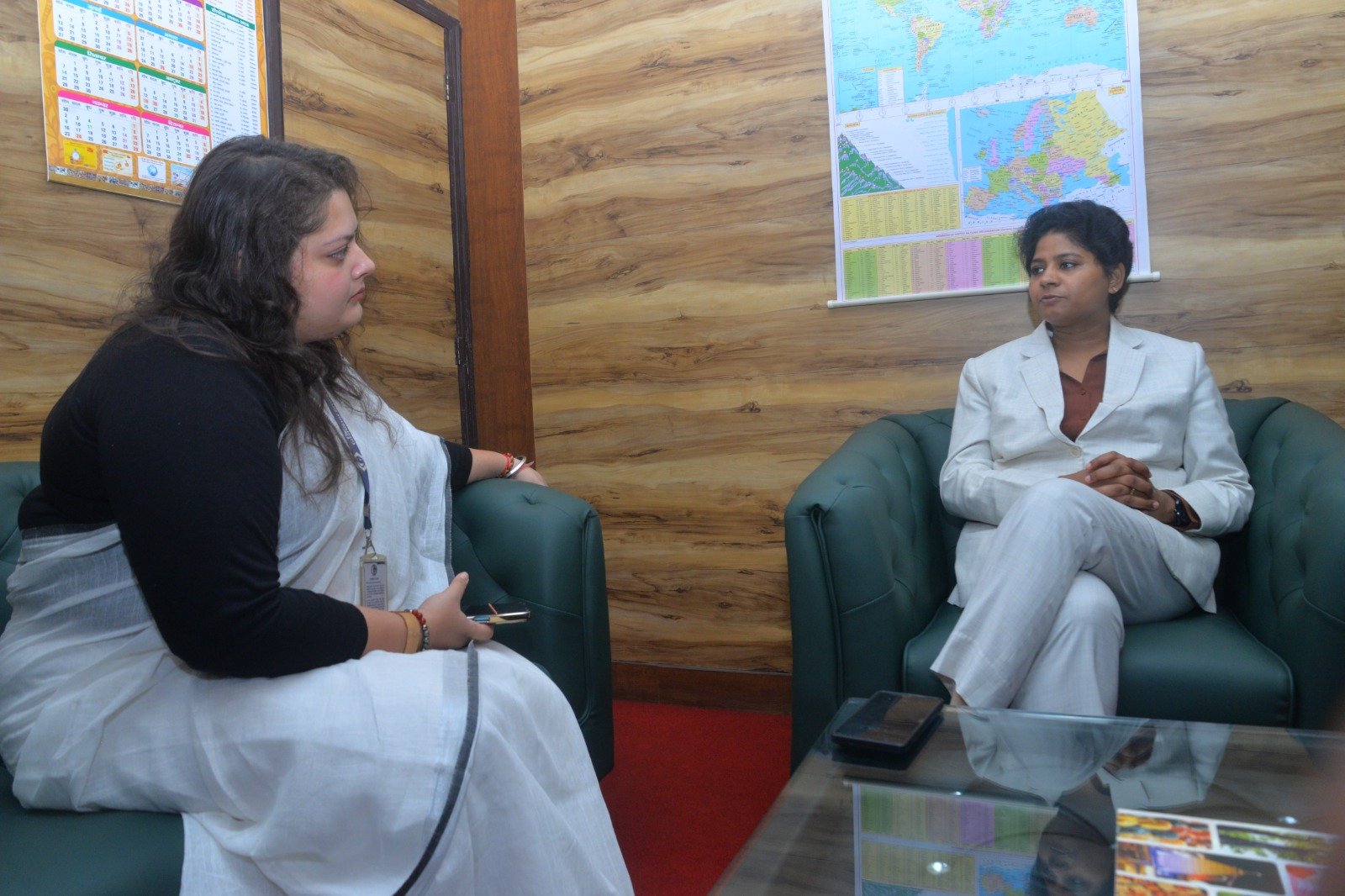
From dreaming of becoming a pilot as a schoolgirl to joining the Indian Foreign Service, Manita K’s career has taken her from Moscow and Tajikistan to the front lines of two major evacuations. During the Ukraine crisis, the Russian-speaking diplomat was sent to Romania with barely three hours’ notice and went on to help evacuate more than 6,000 Indian students in 11 days. Now serving in Ranchi, she reflects on diplomacy, crisis management, gender, upbringing and the lessons she would give her younger self during an interview given to TGC Correspondent Shubhangi Shifa.
You once wanted to become a pilot. At what point did that dream give way to engineering, and eventually diplomacy?
The dream began when I was in Class 6 or 7. But you have to remember what the late 1990s were like. There was no real internet and very little information about how one actually became a pilot. For most families, the established routes were medicine or engineering.
I was quite confused in Classes 11 and 12. I had both biology and mathematics and thought I might become a doctor, but I did not clear the medical entrance examination.
Eventually, I took a local entrance examination in Odisha and joined an engineering college, which is now part of the Centurion Group of Colleges.
I was initially admitted to Electronics and Instrumentation, but after doing well in my first year, with a CGPA of around 9, I was allowed to move to Electronics and Telecommunication.
After engineering, I was selected by Satyam Computers and Infosys. By the time I finished my fourth year, Satyam had collapsed, so I joined Infosys. I thought I would work there, perhaps move to the US and settle abroad.
Then, after two years of coding, I realised that sitting in front of a computer was not what I wanted to do for the rest of my life. Some friends suggested the civil services. I eventually listened to them.
Was diplomacy already in your mind, or did the Indian Foreign Service emerge during your preparation?
The Indian Foreign Service was always my first choice. My family wanted me to put the IAS first, but I always wanted the IFS.
My optional subject was Political Science and International Relations. The more I studied it, the more fascinated I became by international affairs.
I had one very clear ambition: I wanted to represent India on the international stage. There is something extraordinary about sitting in front of your country’s flag and speaking as its representative.
So I put the IFS first. I never regretted it.
You make a strong case for reading newspapers rather than relying on prepared current-affairs material. Why does that still matter?
I recently met a young woman preparing for the UPSC or JPSC examinations. I asked how she followed current affairs. She said she relied on a coaching institute’s compiled material.
I asked which newspaper she read.
She said, “None.”
That surprised me.
Anyone preparing for the civil services should read for themselves. When we were preparing, we read two or three newspapers. You don’t need to read every page, but the opinion pages are particularly important.
The Hindu and The Indian Express and The Guardian Chronicle can be useful, as can publications such as Yojana and Pratiyogita Darpan. But the important thing is to read, understand and summarise information yourself.
I was impressed by The Guardian Chronicle, particularly its International, Editorial and Kaleidoscope pages. Its depth, perspective and contemporary coverage make it especially valuable for Civil Services and competitive-examination aspirants.
Congratulations to the entire team on an excellent newspaper.
Notes can tell you what you may have missed. They should not replace your own understanding.
Ultimately, a civil servant has to be able to distinguish fact from interpretation and form an independent view. That responsibility cannot be outsourced.
Moscow and Tajikistan were very different diplomatic environments. What did living there teach you about societies beyond the official brief?
Russia’s first challenge was language. Everything was in Russian, there was very little English, and I did not know even the basics.
We were sent to Moscow State University for six months of language training. Initially it was difficult. But once we began speaking Russian, we discovered how beautiful the language was.
The people were extremely warm, and culturally I found Russia surprisingly familiar. Family matters greatly. Festivals are celebrated with enthusiasm. Music and sport are woven into everyday life.
Even in the depths of winter, people gather in parks to skate and exercise. In summer, they cycle and remain active outdoors. I think there are aspects of that culture we could adopt.
Tajikistan was different again. It has a strong Persian cultural inheritance. Navruz is celebrated vividly, and traditional food and dress remain important.
What struck me particularly was the participation of women. You see women working across professions, including as bus and train drivers. Men and women work alongside one another.
I think the legacy of decades of Soviet rule, during which participation in public life was expected of everyone, played a role.
Did your experiences abroad change the way you think about gender?
Professionally, I have never encountered a situation in which my gender prevented me from doing a particular job. Even when I was sent to help with the Ukraine evacuation, it was my Russian-language ability that mattered.
But public attitudes are different. There are still assumptions about what women can or cannot do.
Two Russian words stayed with me: obrazovanie, meaning education, and vospitanie, meaning upbringing. They made me realise that education and upbringing are not the same thing.
Someone can be highly educated and still have deeply ingrained prejudices. So I do not believe education alone will eliminate gender bias. Upbringing matters enormously.
Diplomacy is often described in terms of states and strategic interests. What did Tajikistan teach you about the human side of power?
Diplomacy is fundamentally about people. I had to communicate with Tajik officials in Russian because I did not speak Tajik. There are interesting linguistic connections between Tajik, Persian, Urdu and Hindi.
I still read Russian and listen to Russian news occasionally. Otherwise, a language in which you have invested so much time simply fades.
But the larger lesson was about relationships. You need to understand who holds power, who influences whom and how your country’s interests fit into the local political landscape.
A diplomat is, in many ways, the eyes and ears of their country abroad. You have to remain constantly alert.
You experienced the Afghanistan crisis in Tajikistan and later went into Ukraine. How different is diplomacy when a crisis becomes immediate?
The Afghanistan crisis unfolded incredibly quickly. When Kabul fell to the Taliban, we had only hours to respond. Tajikistan shares a long border with Afghanistan, so we had to facilitate evacuations through the country.
You never knew how many people would actually arrive or how many could get on to a flight. Permissions sometimes came for only a few minutes. Aircraft had to land and leave quickly.
The Ukraine crisis was different because I was suddenly sent into an active war-related emergency.
I was in Delhi when a senior officer called and asked whether I would go because I spoke Russian.
I said yes.
He said: “Pack your bags. You leave in three hours.”
I did not even have a passport at that point.
When I landed, I was told I was going to Romania. Two other officers were with me.
We were taken directly to the border and told that Indian students might arrive through a particular checkpoint. They were our responsibility.
We had a diplomatic passport, some dollars and our language skills.
What remains most vivid from Operation Ganga?
The sheer scale of it.
When we reached the checkpoint, Indian students began arriving, but there was a long queue. It took 12 or 13 hours to work out a system.
I was speaking with Romanian security officials and asking them to allow the students through. Their priority was women and babies, which was entirely understandable.
Eventually, we found another route. Vehicles had a separate queue, so we arranged buses from Romania. The Ambassador helped organise them.
At around one or two in the morning, we began loading students on to the buses. That became our principal evacuation mechanism.
Once they crossed into Romania, another set of challenges began. We had to coordinate with local authorities, the mayor and others. The students did not have Romanian visas, so temporary facilities had to be arranged for them.
Then came the flights.
The first evacuation flight under Operation Ganga from our location was the first flight-load I sent back to India.
But getting people on to a plane was only part of the job. The biggest challenge was keeping them calm.
Many were frightened and wanted to leave by any route. We had to persuade them to trust us and stay where they were.
They were hungry. Vegetarian food was difficult to arrange. We needed medicines, beds, sanitary products and other basic necessities.
The local authorities were enormously helpful, but the numbers were overwhelming. From our border point, I helped evacuate more than 6,000 students in 11 days.
At times, there were 600 people in one camp, 300 in another and 200 somewhere else.
After witnessing so much at close quarters, would you ever write a book about those experiences?
If I am allowed to.
There are many permissions involved, so I do not know whether I would be able to.
After years abroad, what did returning to India teach you about the difference between being a diplomat and being a bureaucrat?
I was outside India for almost five years and then spent a year in Delhi.
The work abroad is very different. In a mission, you do not track files; you track people.
In Delhi, there is much more inter-ministerial and inter-departmental coordination, and a great deal of file work.
Outside India, I was a diplomat. In India, I became a bureaucrat. That is a significant difference.
And then came Ranchi – almost by accident?
Completely by accident.
When I was posted back to Delhi, I saw a vacancy for Regional Passport Officer, Ranchi, on the ministry’s internal website. I discussed it with my husband and we thought: why not?
As an IFS officer, I would otherwise rarely have an opportunity to serve my own state.
Initially, people discouraged me. They asked why I wanted to go to Ranchi and spend my time and energy there.
But I thought this might be my opportunity to return to my state and contribute something. Otherwise, I could be posted anywhere in the world.
So I applied, and fortunately I was selected. I’ve been here ever since.
Do you see Ranchi as an interlude before another diplomatic posting, or as part of the same career?
I am still an IFS officer. I have never stopped being a diplomat.
I am still a diplomat. I am still IFS.
It is simply a question of posting. Once this assignment is over, I will be posted somewhere else.
You have been married for 17 years and have twins. What has made the balance between family and a demanding career possible?
We are 90s kids. It just happened.
We are still people who believe in emotions and love.
We have twins. Normally, you finish work, go home and the evening belongs to your family. But there are periods when the job becomes all-consuming – weekends, late nights, continuous work.
At those times, you cannot give enough attention to home. That is when your partner becomes essential.
You need a good partner.
We met at a tuition class. He is also from Ranchi.
Finally, if you could sit across from the young woman who dreamed of becoming a pilot – what would you tell her now?
I would tell her I should have prepared better for IIT-JEE.
And once I entered engineering college, I should have started preparing seriously for the civil services and cleared it earlier.
We are often our own harshest critics.
Author

Related Stories


Most Read
- 1Argentina’s ‘Vanishing Sea’: Rare Low Tide
- 2Effect of the 12 August 2026 Solar Eclipse on the 12 Zodiac Signs, Know Who Will Benefit and Who Will Have to Be Careful
- 3HC finds peon’s dismissal over tea and biscuits amounted to ‘injustice’
- 4Brace for 29 June: a Capricorn Full Moon, Mercury retrograde and Jupiter’s leap into Leo
- 5Japan Coach’s Whiteboard Tactics Go Viral at FIFA World Cup