The state’s education department is facing a formidable list of challenges: a shortage of teachers, recruitment delays, teacher training and assessment, the expansion of mother-tongue education, and the integration of digital technology and artificial intelligence into classrooms.
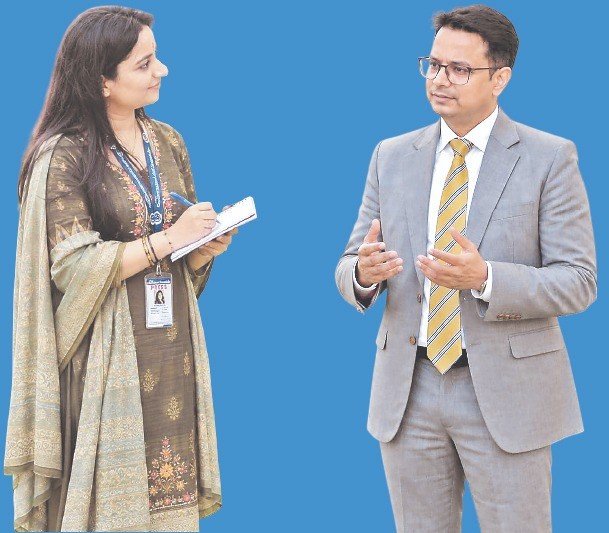
In an interview with Kritika Tiwari, TGC’s Senior Correspondent, Uma Shankar Singh, Secretary, Jharkhand Government, says the government is pursuing a phased approach to reform, while acknowledging that the availability of teachers remains the most pressing obstacle to improving learning outcomes across Jharkhand.
Q. What are the Education Department’s top priorities for the next five years?
A. There are three major priorities. The first is timely teacher recruitment. We want recruitment to take place within a reasonable timeframe so that vacancies do not continue to accumulate because of administrative delays and retirements.
The second is teacher training and evaluation. Every teacher needs to be properly trained and regularly assessed. A more comprehensive system of teacher training and evaluation was initiated last year, and we intend to strengthen it further.
The third is the gradual expansion of mother-tongue-based education. At present, the initiative is being implemented in 1,041 schools. Our aim is to expand it gradually, particularly in schools covering Classes I to V and Classes I to VIII, so that children can receive education in their mother tongue, especially during the foundational and primary stages.
Q : What are the biggest challenges facing school education in Jharkhand today?
A : If we assess the pupil-teacher ratio (PTR) against the norms prescribed under the Right to Education (RTE) Act, the situation in Jharkhand is not satisfactory. The state currently has around 50,000 teacher vacancies, and this is one of the biggest challenges to delivering quality education. In the first phase, the department sent a requisition for 26,000 teachers to the Jharkhand Staff Selection Commission (JSSC). Against this, recommendations for only around 11,000 teachers were received, leaving a substantial gap that still needs to be addressed.
The situation is further complicated by the fact that teachers continue to retire while the recruitment process takes time. As a result, the gap between the requirement for teachers and actual recruitment continues to widen. At present, the shortage of teachers is among the department’s most serious concerns. A teacher remains the most important component in implementing any meaningful quality-education initiative. The number of single-teacher schools has increased from around 7,400 last year to nearly 9,000 this year. The primary reason is that the number of teachers retiring is significantly higher than the number of new recruits.
Q : What are the major hurdles in the teacher recruitment process, and how can recruitment be made faster and more transparent?
A : Teacher recruitment must be fair, transparent and time-bound. If the process takes two or three years, the problem becomes considerably more difficult because teachers continue to retire during that period. We then have to fill not only the vacancies that existed initially, but also those created by subsequent retirements. The examination and recruitment body is an independent agency. Once the department finalises the recruitment rules and sends the requisition, the process is largely outside the department’s direct control.
There is therefore a need to reform the functioning of the recruitment system so that examinations are conducted on schedule and appointments are completed without unnecessary delays. There are also issues arising from ambiguities in recruitment rules, which can lead to litigation and further delay. These shortcomings need to be addressed at the departmental level, while the recruitment agency must ensure that examinations are conducted in a timely and transparent manner. Allegations of irregularities or question-paper leaks also undermine public confidence in the recruitment process. The government is considering ways to strengthen and improve the system.
Q : How does the department plan to integrate digital technology and AI into the education system?
A : Digital technology can play an important role in supplementing classroom teaching, particularly in areas where the availability of teachers remains a challenge. The department has already been expanding Information and Communication Technology (ICT) facilities and smart classrooms, with support from Samagra Shiksha and state government funds.
This year, at least 1,000 schools are being connected under the initiative. We also plan to establish one studio in each division and two studios at JCERT, from where live classes can be conducted for students. The first phase will cover around 1,000 schools. The objective is to use live classes to partially address the shortage of teachers and give students in remote areas greater access to quality teaching. The tendering process has already been initiated, and implementation is expected to begin within the next two to three months.
At the same time, digital and AI-enabled education cannot immediately replace the need for teachers. There remains a significant gap to be bridged, while financial liabilities and available resources must also be taken into consideration. Therefore, the department is adopting a phased and step-by-step approach to expanding digital education. Technology should complement teachers, not be seen as an immediate substitute for them.
Q : What is being done to address teacher shortages and regional disparities in remote and rural areas?
A : Regional disparity is a significant factor affecting the availability of teachers. Jharkhand has 24 districts, but a large proportion of teachers selected through recruitment come from only a few districts, particularly Ranchi, Giridih, Palamu, Dhanbad and Hazaribagh. These districts together account for a significant share of selected teachers, while regions such as Santhal Pargana and Kolhan have comparatively lower representation.
This has an indirect impact on the deployment of teachers in these areas. The state has both state-cadre and district-cadre posts. State-cadre teachers can be posted at the state level, whereas district-cadre teachers are generally selected and posted within the concerned district.
In districts where fewer teachers are selected, shortages can persist even after recruitment. Some areas already have extremely poor pupil-teacher ratios. For instance, certain schools in the Chaibasa region have very high PTRs. In such circumstances, deploying one or two additional teachers may still not be sufficient to bring the ratio down to a satisfactory level.
The department is taking several initiatives to improve the quality of education in rural areas. But ultimately, the availability of teachers remains the most fundamental requirement for ensuring that these initiatives translate into meaningful improvements in the classroom.
Author

Related Stories


Most Read
- 1Argentina’s ‘Vanishing Sea’: Rare Low Tide
- 2Effect of the 12 August 2026 Solar Eclipse on the 12 Zodiac Signs, Know Who Will Benefit and Who Will Have to Be Careful
- 3HC finds peon’s dismissal over tea and biscuits amounted to ‘injustice’
- 4Brace for 29 June: a Capricorn Full Moon, Mercury retrograde and Jupiter’s leap into Leo
- 5Japan Coach’s Whiteboard Tactics Go Viral at FIFA World Cup