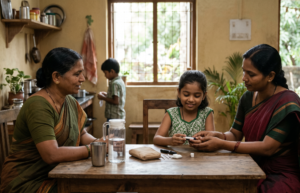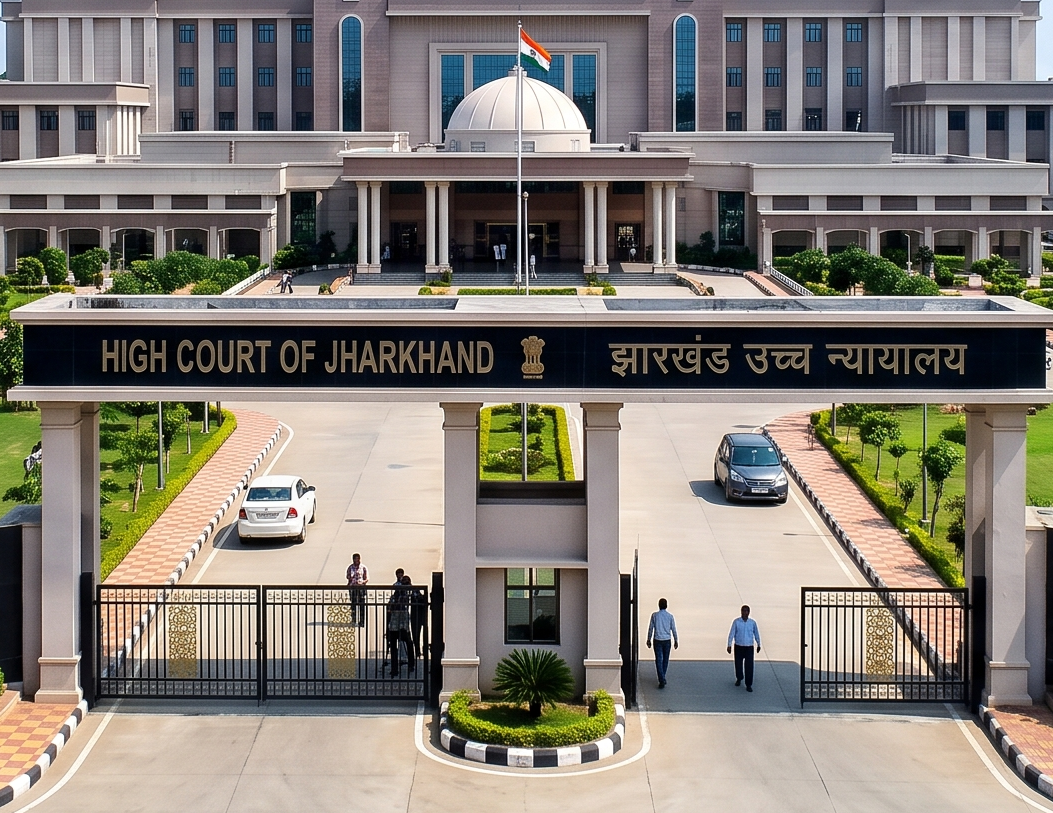
In a significant ruling on tribal women’s property rights, the Jharkhand High Court has upheld the right of Santhal daughters to inherit their father’s ancestral property, holding that any customary practice seeking to exclude women from inheritance must be strictly established through convincing evidence.
Dismissing a second appeal in a 41-year-old property dispute originating in Jamtara, a division bench of Chief Justice M.S. Sonak and Justice Rajesh Shankar held that there was no established, uniform custom among Santhals that barred daughters from inheriting their father’s property. The court said a party seeking to deny a woman’s inheritance rights on the basis of an alleged tribal custom must prove its existence and continued practice.
The dispute, which dates back to 1985, concerned a property in Turka village under Kundahit police station. The woman had approached the court seeking her share in her father’s property. While the trial court in 1996 declared her owner of one-third of the property, the first appellate court in 2006 allowed her claim in its entirety. The defendants subsequently challenged the appellate court’s decision before the High Court.
During the hearing, the defendants argued that daughters among Santhals were not ordinarily entitled to inherit ancestral property. They claimed that an exception existed only in cases where a daughter was married through the Gharjamai system, under which her husband was accepted as the family’s adopted son.
The bench, however, found that the defendants had failed to produce sufficient evidence to establish the existence and continued practice of such a custom in Turka village. It observed that a custom cannot be assumed merely on the basis of general assertions. The party relying on it must prove that it is certain, reasonable and consistently followed.
The court also noted that customs may vary from one place to another and even between families. Therefore, a practice claimed to exist in one area cannot automatically be treated as a uniform rule governing all Santhal communities.
Finding that the woman’s oral and documentary evidence supported her claim, the bench said the defendants had failed to discharge the burden of proof placed on them.
Author

Related Stories



Most Read
- 1Argentina’s ‘Vanishing Sea’: Rare Low Tide
- 2Effect of the 12 August 2026 Solar Eclipse on the 12 Zodiac Signs, Know Who Will Benefit and Who Will Have to Be Careful
- 3Powai: Minor Girl Sexually Assaulted by Six Men, All Accused Arrested Within 24 Hours
- 4BJP chief Nitin Nabin arrives in Ranchi on a 2-day visit to Jharkhand
- 5HC finds peon’s dismissal over tea and biscuits amounted to ‘injustice’