Kathmandu: The Nepali government on Thursday informed the foreign diplomatic community in Nepal that the Himalayan nation would seek further international assistance for the recovery and reconstruction of infrastructure damaged by the recent Bhote Koshi floods.
The death toll from the Rasuwa flood disaster had reached 1,252 by Thursday noon, with 4,216 people remaining out of contact, according to the latest data released by the National Disaster Risk Reduction and Management Authority (NDRRMA).
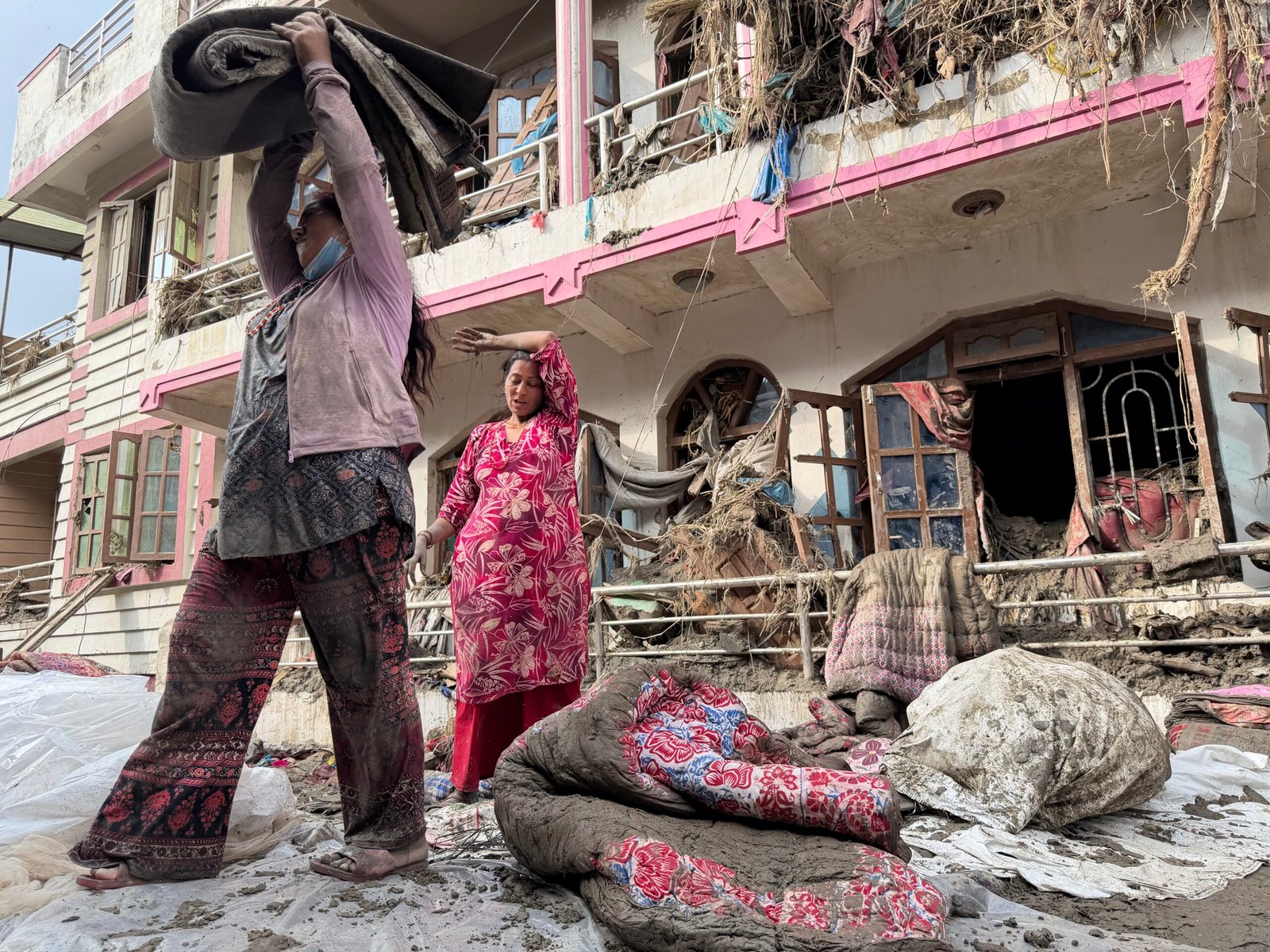
The deadly floods also caused massive damage to infrastructure, including roads, bridges, public and private buildings, and hydropower projects along the Bhote Koshi and Trishuli river corridors.
The Nepali government is currently seeking domestic and international support for the rescue and relief of people affected by the floods, including those who remain out of contact, many of whom are believed to be inside tunnels of hydropower projects.
However, the extensive damage to infrastructure caused by the floods will require significant additional resources for reconstruction. It is the second major incident to cause significant loss of life and infrastructure damage since the Gen-Z movement last year, during which 77 people were killed and property worth more than NPR 84 billion was destroyed, according to government statistics.
“The Nepali government will seek international assistance for the recovery and reconstruction of infrastructure damaged by the Bhote Koshi flood after completing a Post-Disaster Needs Assessment (PDNA),” Foreign Minister Shishir Khanal said on Thursday during a briefing to the diplomatic community in Kathmandu on the Bhote Koshi flood disaster.
Ambassadors, heads and representatives of diplomatic missions, and representatives of international organisations, including the World Bank, Asian Development Bank and the United Nations, attended the diplomatic briefing held at the Ministry of Foreign Affairs on Thursday, the minister’s secretariat said in a statement.
During the briefing, Minister Khanal said a preliminary assessment was underway to determine the damage caused to houses, roads, bridges, hydropower projects and other critical infrastructure by the devastating flood. The PDNA will establish the full extent of the damage and identify the resources required for recovery and reconstruction, he said.
“Preliminary estimates indicate that a significant amount of resources will be required to reconstruct the infrastructure damaged by the Bhote Koshi flood,” Khanal said. “Once the detailed assessment is completed, the government will formally inform international partners about the resources required and request assistance for recovery and reconstruction.”
He also committed that the government would manage international assistance with transparency, accountability and clearly defined priorities. Earlier this week, he said the government was in discussions about holding an international donor conference to seek support for the rehabilitation and reconstruction of damaged infrastructure.
Nepal had earlier organised an international conference to seek international support following the devastating earthquake in 2015. The donor community pledged as much as US$ 4.1 billion at the conference.
As rescue efforts continue, Foreign Minister Khanal made clear that the safety and welfare of foreign nationals remained a top priority of the Government of Nepal. As many as 583 foreign nationals remain out of contact, according to the NDRRMA.
“The Foreign Ministry has been continuously coordinating with the NDRRMA, Nepal Police, Nepal Tourism Board, Nepali diplomatic missions abroad and the families of foreign nationals reported missing,” Khanal said.
He said the Emergency Control Room established at the Ministry of Foreign Affairs and Nepali diplomatic missions abroad were helping provide verified information to the families of missing foreign nationals, facilitate the identification process and arrange repatriation when necessary.
Thanking diplomatic missions for providing information about their nationals who had been reported missing, Minister Khanal said such information was proving important in search, verification and identification efforts.
Describing the floods as a “Himalayan tsunami”, Khanal said the Nepali government was studying the causes and development of the disaster and was receiving assistance from relevant technical experts.
Minister Khanal said the Bhote Koshi disaster should not be viewed only as an immediate humanitarian crisis but also in the context of increasing climate risks in the Himalayan region.
“Although Nepal makes a negligible contribution to global emissions, the people of Nepal are bearing a disproportionate and heavy burden of the impacts of a warming Himalaya,” Minister Khanal said.
He stressed the need to translate climate justice, effective early warning systems, disaster preparedness and resilient reconstruction from paper commitments into practice.
“In this context, Nepal has already written to the co-chairs of the Loss and Damage Fund Board under the United Nations requesting immediate assistance,” Khanal said.
Author

Related Stories



Most Read
- 1Argentina’s ‘Vanishing Sea’: Rare Low Tide
- 2Effect of the 12 August 2026 Solar Eclipse on the 12 Zodiac Signs, Know Who Will Benefit and Who Will Have to Be Careful
- 3HC finds peon’s dismissal over tea and biscuits amounted to ‘injustice’
- 4Brace for 29 June: a Capricorn Full Moon, Mercury retrograde and Jupiter’s leap into Leo
- 5Japan Coach’s Whiteboard Tactics Go Viral at FIFA World Cup