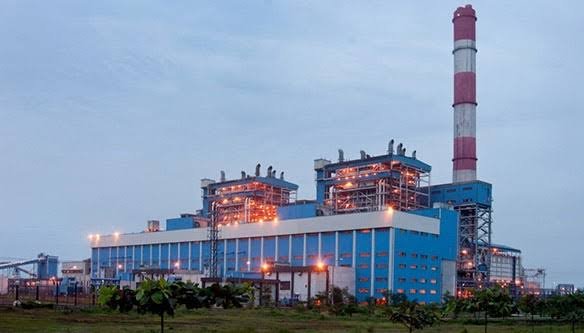
Ranchi: Jharkhand has achieved a major milestone in the power sector, as the second 800 MW unit of the Patratu Vidyut Utpadan Nigam Limited (PVUNL) started commercial operations on the intervening night of Wednesday and Thursday, officials said. With this, the state has not only become self-reliant in power generation and availability but has also entered the club of surplus power states.
Out of the 800 MW generated by the new unit, 85 per cent — around 680 MW — will be allocated to Jharkhand. Earlier, the first 800 MW unit, which began operations in November 2025, has also been supplying 680 MW to the state. With both units operational, Jharkhand will now receive a total of 1,360 MW of power from the Patratu project alone.
Energy Independence: Patratu Plant Boosts State Capacity with 1,360 MW Combined Output
According to data from the state Energy Department, Jharkhand’s current average electricity demand stands at around 3,000 MW, while total availability — including the two Patratu units and other sources — has reached approximately 3,885 MW. This means the state has a surplus of nearly 600 MW over the requirement, excluding distribution loss. Experts believe that the surplus power can be sold during non-peak hours, which will bring the state additional revenue.
PVUNL is a joint venture between NTPC and the Jharkhand Bijli Vitran Nigam Limited (JBVNL), with NTPC holding a 74 per cent stake and JBVNL 26 per cent. The long-term objective of the project is to develop a generation capacity of 4,000 MW. Under the first phase, three units of 800 MW each — totalling 2,400 MW — are being established. While two units are now operational, the third is expected to start production in the coming months.
NTPC-JBVNL Supercritical Technology Framework to Drive Industrial Investment
The project has been developed using advanced supercritical technology. To minimise environmental impact, features such as air-cooled condensers and a 100 per cent dry ash handling system have been incorporated. Coal for the plant is sourced from the Banahardi coal block in Latehar, while water is supplied from the Patratu dam.
Energy sector experts say the project will strengthen power supply across all districts of the state, reduce dependence on costly purchases from outside, and provide stable electricity to industries. This is expected to boost investment and generate employment opportunities in Jharkhand.
Author

Related Stories



Most Read
- 1Argentina’s ‘Vanishing Sea’: Rare Low Tide
- 2Effect of the 12 August 2026 Solar Eclipse on the 12 Zodiac Signs, Know Who Will Benefit and Who Will Have to Be Careful
- 3HC finds peon’s dismissal over tea and biscuits amounted to ‘injustice’
- 4Brace for 29 June: a Capricorn Full Moon, Mercury retrograde and Jupiter’s leap into Leo
- 5Japan Coach’s Whiteboard Tactics Go Viral at FIFA World Cup