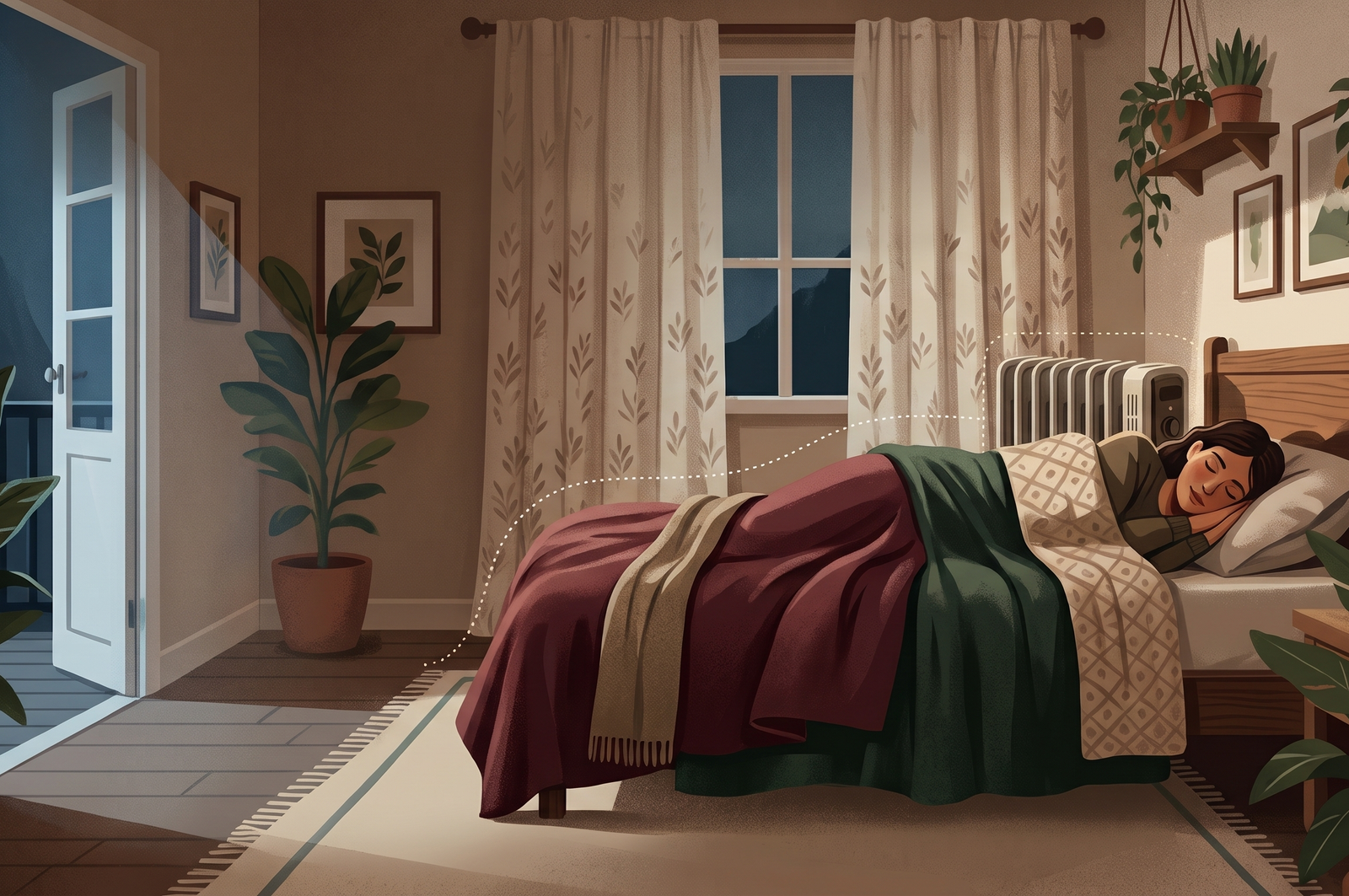
As temperatures drop during winter, room heaters become a common way to keep homes warm and comfortable. Many people prefer keeping their heaters running while sleeping to avoid the discomfort of cold nights. However, using a room heater for long hours, especially in a closed room, can sometimes pose health and safety risks.
From dry skin and breathing discomfort to fire hazards and carbon monoxide poisoning, improper heater use can have serious consequences. If you use a room heater during winter, here are six important precautions you should follow to stay warm and safe.
Avoid Keeping the Heater On All Night
Running a room heater continuously while sleeping is not always a safe practice. Prolonged use can make the room excessively warm and reduce humidity, leading to dry skin, throat irritation and discomfort.
Tip: Warm up your room before going to bed and switch off the heater while sleeping, if possible. Use warm blankets and comfortable winter clothing to maintain body temperature.
Never Use a Gas Heater in a Poorly Ventilated Room
Gas and fuel-burning heaters can release carbon monoxide, a colourless and odourless gas that can be extremely dangerous. Inadequate ventilation increases the risk of carbon monoxide poisoning. Symptoms may include headaches, dizziness, nausea, weakness and confusion.
Tip: Never operate a fuel-burning heater in a completely closed room. Ensure proper ventilation and use only appliances designed for indoor use. Install a carbon monoxide detector where appropriate.
Keep the Heater Away from Flammable Objects
Placing a heater close to curtains, blankets, mattresses, furniture or clothes can increase the risk of accidental fires. Even a small spark or excessive heat can become dangerous.
Tip: Maintain at least a three-foot safety distance between the heater and flammable materials. Never use a heater to dry clothes or place anything on top of it.
Maintain Proper Distance from the Heater
Sitting or sleeping too close to a room heater can expose your skin to excessive heat. Direct and prolonged exposure may cause skin dryness, irritation and, in some cases, low-temperature burns.
Tip: Keep a safe distance from the heater and avoid directing hot air continuously towards your face or body. People with reduced skin sensitivity should take extra precautions.
Final Thoughts
Room heaters can make winter nights more comfortable, but careless use can create unnecessary health and safety risks. Avoid running heaters unnecessarily throughout the night, maintain proper ventilation, keep flammable objects away and regularly inspect electrical connections.
A few simple precautions can help you enjoy a warm and comfortable winter while keeping your family safe.
Author

Related Stories




Most Read
- 1Argentina’s ‘Vanishing Sea’: Rare Low Tide
- 2Effect of the 12 August 2026 Solar Eclipse on the 12 Zodiac Signs, Know Who Will Benefit and Who Will Have to Be Careful
- 3Powai: Minor Girl Sexually Assaulted by Six Men, All Accused Arrested Within 24 Hours
- 4BJP chief Nitin Nabin arrives in Ranchi on a 2-day visit to Jharkhand
- 5HC finds peon’s dismissal over tea and biscuits amounted to ‘injustice’