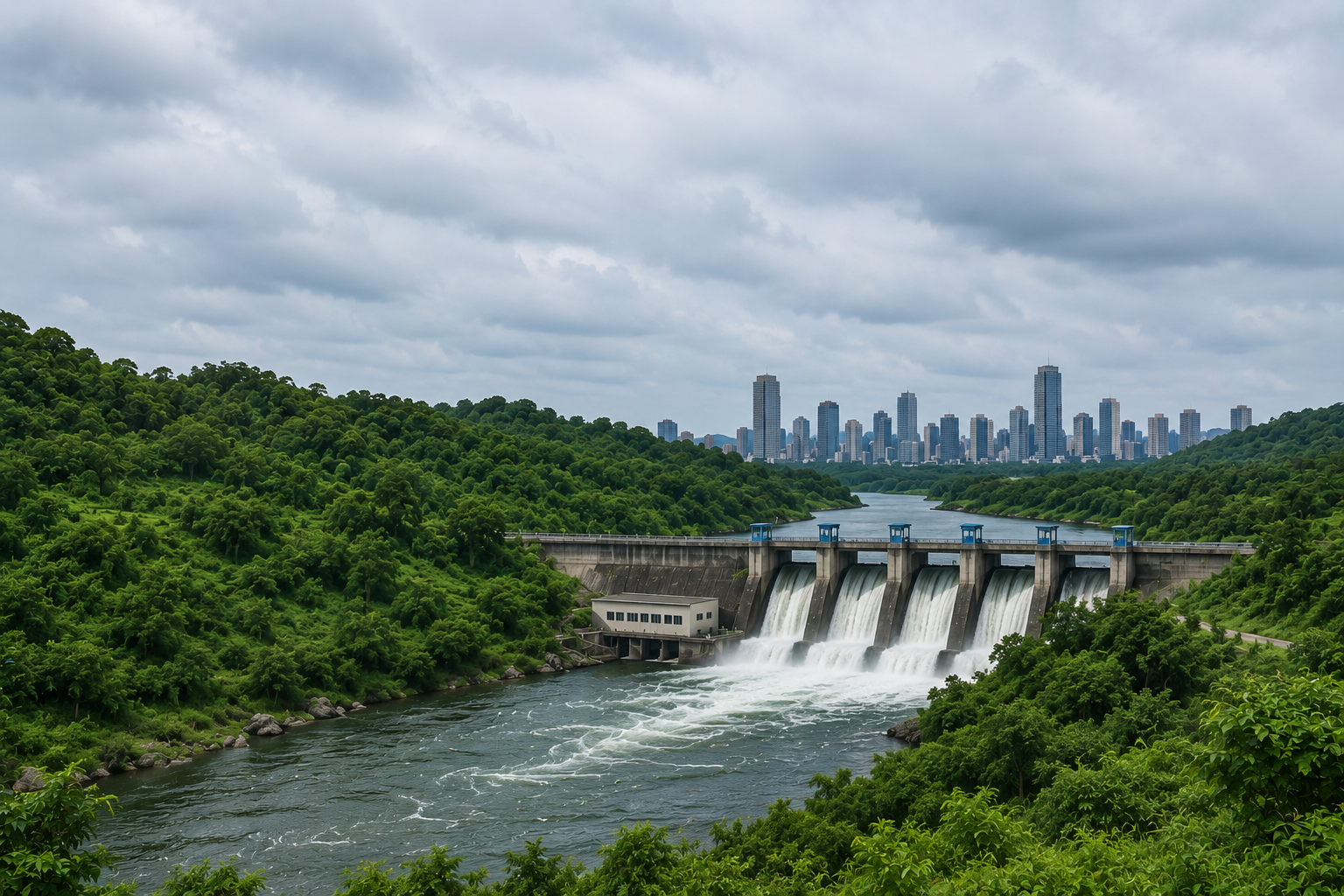
Phnom Penh: Asian Development Bank (ADB) announced on Wednesday that it has approved a financing package of 63.44 million US dollars to boost Cambodia’s renewable energy transition through a major battery storage project.
The Utility-Scale Battery Energy Storage Project will accelerate the integration of renewable energy into Cambodia’s power system, strengthen grid stability and energy security, and bolster cross-border power trade, the ADB said in a press release.
New 500-MWh Battery Energy Storage Facility Set to Stabilize Regional Power Grid
It will fund the construction of a 250-megawatt/500-megawatt-hour battery energy storage system at the Takeo substation, the ADB said, adding that the facility will store excess renewable energy and dispatch it back to the grid to manage peak loads and stabilise fluctuations.
The project will help meet growing electricity demand from rapidly expanding industrial zones, agro-processing facilities and urban districts in southern Cambodia, it added.
It will also drive cross-border electricity trade and grid interconnectivity with Vietnam, including Cambodia’s power imports, contributing to the ASEAN Power Grid’s goal of achieving fully integrated electricity grid operations across Southeast Asia by 2045, reports Xinhua news agency.
“Amid the global energy crisis, this project further reinforces Cambodia’s commitment toward a clean energy transition,” said ADB Country Director for Cambodia Yasmin Siddiqi.
“By strengthening the power grid with advanced battery storage, we are helping the country unlock more renewable energy while ensuring that families, farmers and businesses benefit from safe, stable and affordable electricity,” she added.
Global Supply Shocks and Volatile Import Reliance
Cambodia’s energy sector relies heavily on imported fuel for power generation. Despite significant progress in expanding generation capacity, access and transmission infrastructure, the Southeast Asian nation remains exposed to external price volatility and supply disruptions caused by geopolitical tensions and other external shocks that threaten grid stability and sustainability.
The project supports Cambodia’s target to achieve 70 per cent renewable energy capacity by 2030, enabling greater integration of solar and other renewables, the ADB said, adding that once operational, it is expected to avoid up to 27,700 tons of greenhouse gas emissions annually.
Author

Related Stories




Most Read
- 1Argentina’s ‘Vanishing Sea’: Rare Low Tide
- 2Effect of the 12 August 2026 Solar Eclipse on the 12 Zodiac Signs, Know Who Will Benefit and Who Will Have to Be Careful
- 3HC finds peon’s dismissal over tea and biscuits amounted to ‘injustice’
- 4Brace for 29 June: a Capricorn Full Moon, Mercury retrograde and Jupiter’s leap into Leo
- 5Japan Coach’s Whiteboard Tactics Go Viral at FIFA World Cup