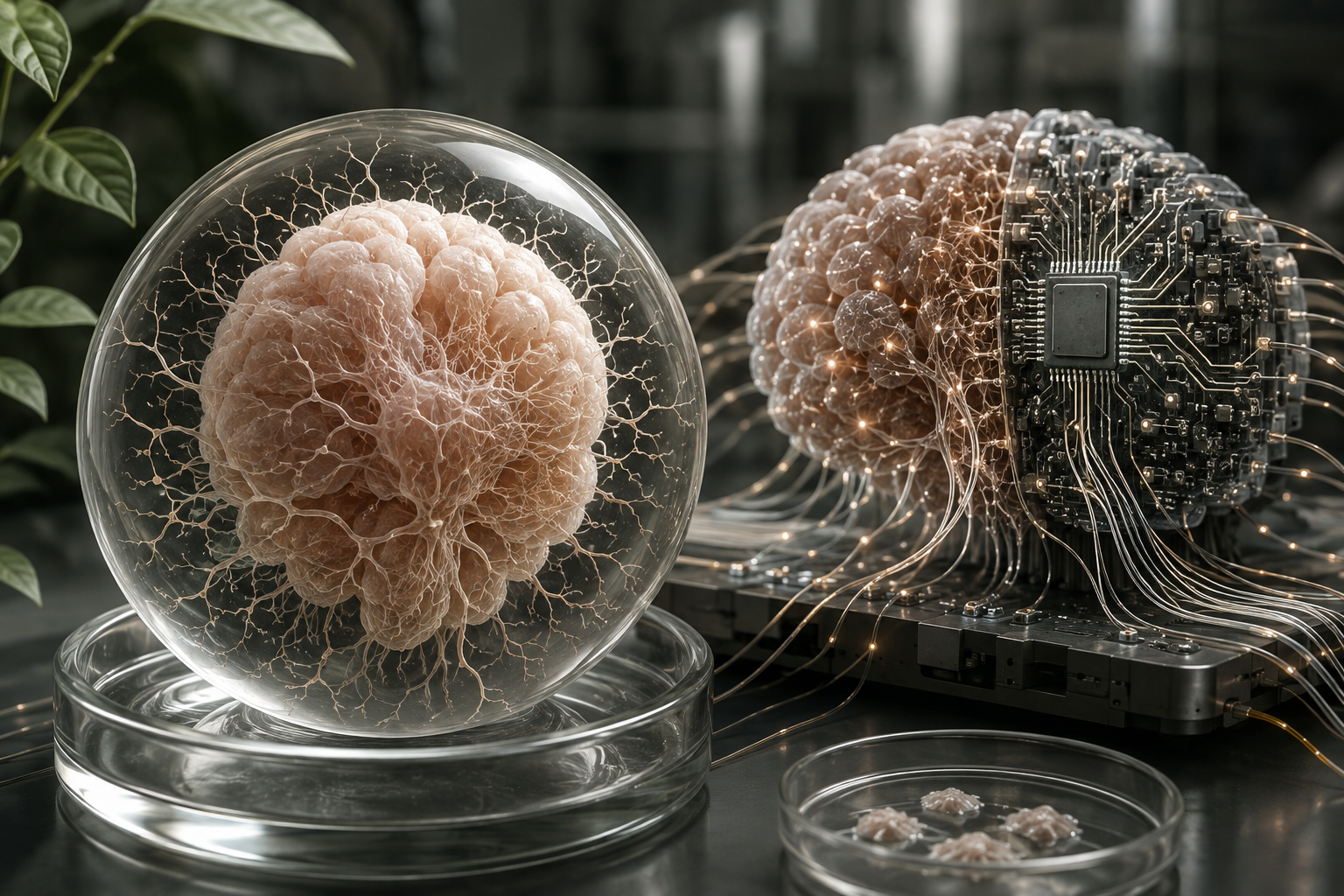
New Delhi: Scientists are successfully growing three-dimensional human neural structures — known as brain organoids — from reprogrammed adult skin cells (induced pluripotent stem cells, or iPSCs). Although these lab-grown tissues lack the structural complexity and vascularisation of a full human brain, they mimic key developmental features, offering unprecedented opportunities for medical research and biological computing.
From medical diagnostics to biological intelligence: Brain organoids provide a human-relevant model to study complex neurodevelopmental disorders and test potential pharmaceuticals without relying solely on animal models.
Recognizing this potential, the US National Institutes of Health (NIH) allocated $87 million in September 2025 for a Standardized Organoid Modeling Center, followed by over $150 million in March 2026 to scale human-based biological research.
Beyond medicine, researchers are exploring Organoid Intelligence (OI) — integrating living neural tissue directly into electronic systems. A prominent early milestone occurred in 2022 when Melbourne-based Cortical Labs created DishBrain, a system using cultured neurons connected to microelectrodes that learned to play the video game Pong.
Cortical Labs has since developed the CL1 biological computer, even demonstrating the classic game Doom running on living neural substrates. These experiments showcase “synthetic biological intelligence”, where living neural networks process sensory feedback and adapt in real time.
Ethical, moral, and philosophical frontier: As organoid systems grow larger, more mature, and better interconnected, they raise profound bioethical questions regarding potential consciousness, moral status, and governance.
While fully autonomous biological systems remain speculative, the fundamental building blocks linking living human brain cells with hardware are rapidly transitioning from theory into reality.
Author

Related Stories


Most Read
- 1Argentina’s ‘Vanishing Sea’: Rare Low Tide
- 2Effect of the 12 August 2026 Solar Eclipse on the 12 Zodiac Signs, Know Who Will Benefit and Who Will Have to Be Careful
- 3HC finds peon’s dismissal over tea and biscuits amounted to ‘injustice’
- 4Brace for 29 June: a Capricorn Full Moon, Mercury retrograde and Jupiter’s leap into Leo
- 5Japan Coach’s Whiteboard Tactics Go Viral at FIFA World Cup