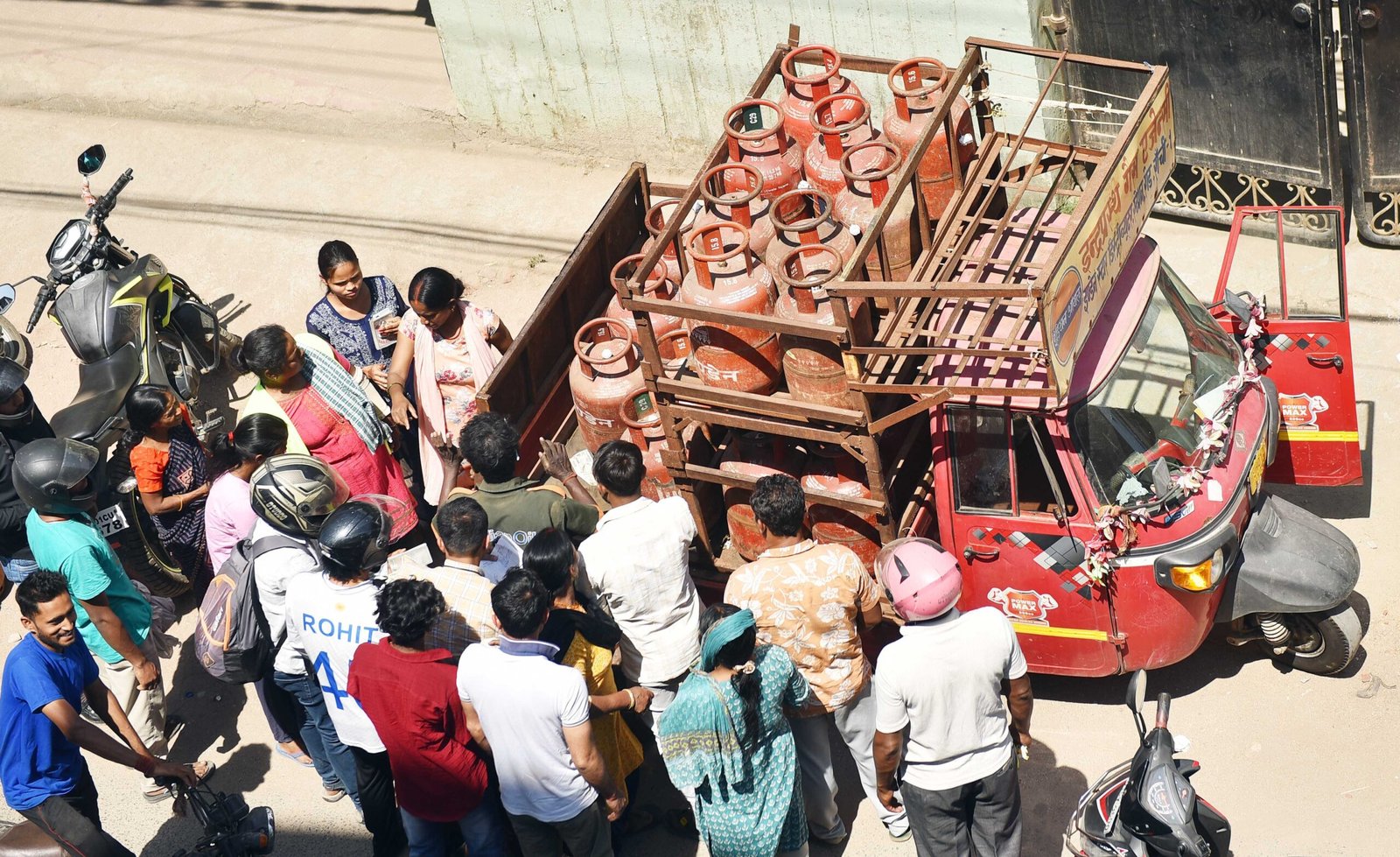
The long queues outside gas agencies have largely disappeared and panic buying has subsided, but many Ranchi residents continue to face delays in receiving LPG cylinders as the city’s distribution network slowly recovers from months of disruption. The shortage, which peaked in March and April, affected both domestic and commercial consumers across the state capital. While agencies say household supplies have mostly stabilised, businesses and some consumers report lingering problems.
For NS Rajesh, an indane gas subscriber in Lalpur, the crisis is not yet over. “We booked our cylinder on May 23 and received a message saying, it would be delivered within five days,” he said. “But we are still waiting and nobody is answering our calls.” Rajesh said his family followed the mandatory 25-day gap between refills and has been using its current cylinder since April 24. Fearing it could run out at any moment, they have cut down LPG use and shifted part of their cooking to an electric heater despite the higher cost. “The panic may have reduced in the city, but for us it still exists,” he said. “Even restaurants are facing shortages and they have revised the price list on their menus.” Small food vendors have been among the worst affected. Near Ranchi’s Gymkhana Club, tea and snack seller Arvind Singh has abandoned LPG and switched entirely to coal. “We don’t have a gas connection and used to refill 5kgs cylinders from the local market,” he said. “For the last three months, we have been using coal because LPG has become too expensive.
Buying gas at Rs 250 to Rs 300 a litre and selling tea and bread pakoda cooked on it is not viable.” Singh said coal prices have also risen sharply, from around Rs 220 a sack to nearly Rs 380. “We cook our family meals at the stall using the same coal stove. What can poor people do? We are somehow managing the situation,” he said. Others report a marked improvement, despite facing tough situation due to ongoing war. Nitesh Kumar, owner of New Raj Sweets on Ranchi Main Road, said commercial supplies had returned to normal over the past few weeks. “We are getting the number of cylinders we require. Even during the worst period, we managed because we use a diesel bhatti and have connections with both Indane and Bharat Gas,” he added.
The business is also preparing to connect to a piped natural gas (PNG) network, which Kumar believes will provide protection against future disruptions. Few distributors have clarifiefd that domestic supplies have largely normalised. Madhav, a delivery worker with SK Gas Agency serving Morabadi and Bariatu, said most household cylinders are now reaching customers within two to three days. iyush Roy of Shashi Chandra Gas Agency, a Bharat Gas distributor in Ashok Nagar opines that, ” Our agency was delivering 300 to 350 domestic cylinders daily and that there is no major scarcity in household LPG at the moment. Commercial supply chain, however, remain under pressure.
Roy said distributors are able to meet only 20% to 30% of demand, with daily deliveries dropping from more than 300 cylinders to fewer than 100. He concluded,”Hotels are feeling the pinch and many have reduced their menus. There is also virtually no supply of 5kgs cylinders for small vendors.” Overall, officials insist the situation is improving, but still Ranchi’s LPG crisis continues to cast a long shadow. For many households and small businesses, recovery remains uneven and long haul, marked with shortages, delays and rising costs.
Author

Related Stories


Most Read
- 1Argentina’s ‘Vanishing Sea’: Rare Low Tide
- 2Effect of the 12 August 2026 Solar Eclipse on the 12 Zodiac Signs, Know Who Will Benefit and Who Will Have to Be Careful
- 3HC finds peon’s dismissal over tea and biscuits amounted to ‘injustice’
- 4Brace for 29 June: a Capricorn Full Moon, Mercury retrograde and Jupiter’s leap into Leo
- 5Japan Coach’s Whiteboard Tactics Go Viral at FIFA World Cup