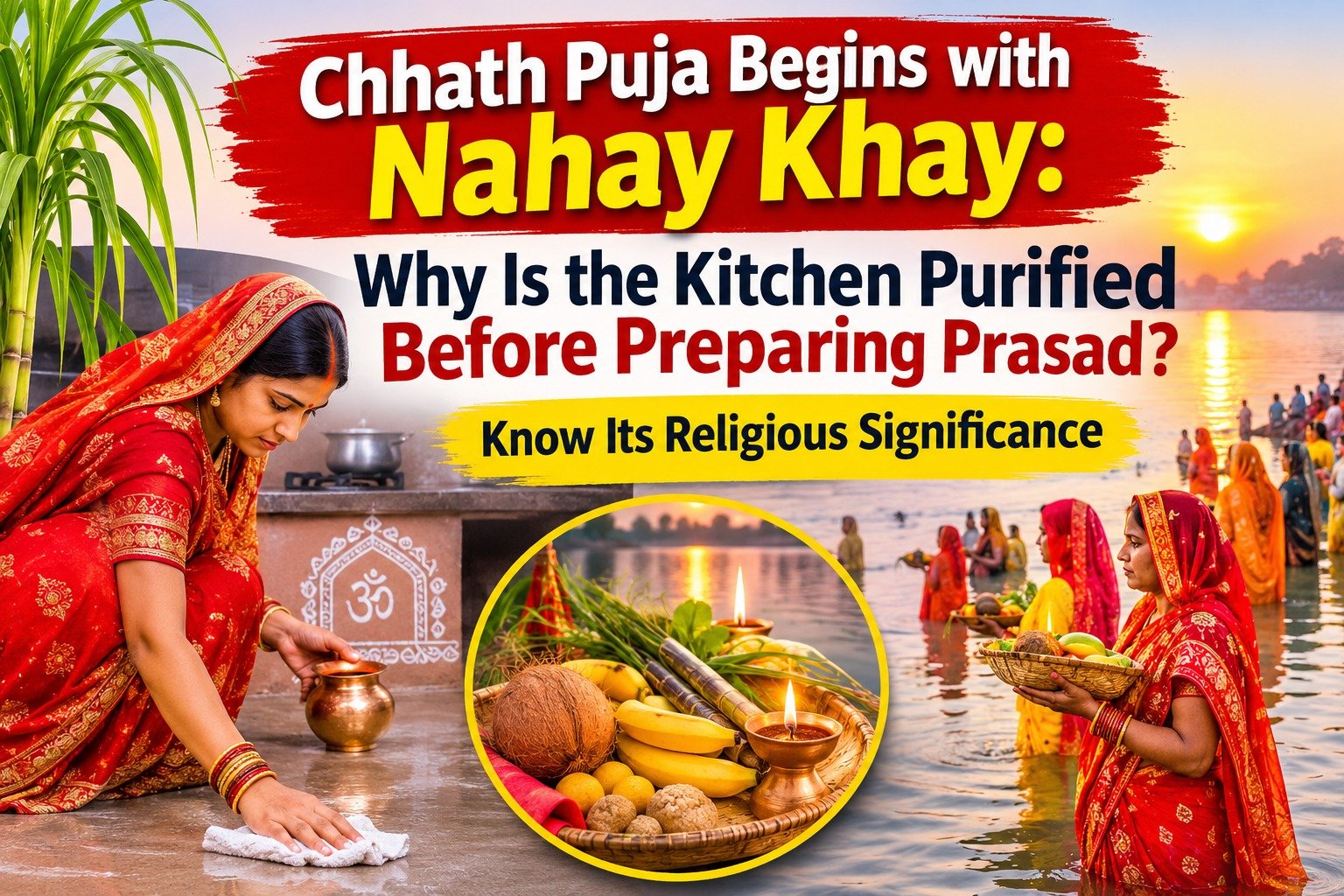
The great festival of folk faith, Chhath, begins today, Friday, November 13, 2026. During this four-day festival, devotees worship the Sun God (Surya Dev) and Chhathi Maiya. Chhath commences with Nahay-Khay. On this day, alongside cleaning the house, devotees pay special attention to the purity of the kitchen and the utensils used in worship. It is believed that Chhath prasad (sacred offering) must be prepared with complete devotion, sanctity, and strict adherence to rituals.
How the Four-Day Chhath Mahaparva Will Be Celebrated
November 13, Friday – Nahay-Khay: Devotees take a ritual bath and clean their homes and kitchens. Pure, sattvic food is consumed on this day.
November 14, Saturday – Kharna: Devotees observe a fast throughout the day and consume prasad consisting of jaggery kheer (rice pudding) and roti in the evening.
November 15, Sunday – Sandhya Arghya: Devotees visit rivers, ponds, or ghats to offer arghya (water libations) to the setting sun.
November 16, Monday – Usha Arghya and Parana: After offering arghya to the rising sun, devotees break their fast (parana).
Why is Kitchen Purity Considered Essential During Chhath?
Prasad holds special religious significance in Chhath Puja. Cleaning the kitchen before preparing thekua, jaggery kheer, and other delicacies is a tradition rooted in this very sanctity. It is believed that the place where offerings for Lord Surya and Chhathi Maiya are prepared must maintain utmost cleanliness and purity (sattvikta).
During Chhath, kitchen purity is not merely limited to physical cleanliness; it is also associated with the purity of mind and thoughts. For this reason, in many households, the kitchen is thoroughly washed before Nahay-Khay. Stoves, gas burners, utensils, and other items used in making the prasad are also meticulously cleaned.
What Precautions Are Taken Before Preparing Prasad?
The kitchen and the area where prasad is prepared are thoroughly cleaned. Utensils used for the prasad are kept separate and clean. Onion and garlic are strictly avoided in food preparation. Those preparing the prasad maintain strict personal hygiene and bathe beforehand.
In many families, the prasad is cooked on an earthen stove (mitti ka chulha) using mango wood. On the day of Nahay-Khay, devotees consume bottle gourd with rice (kaddu-bhaat), Bengal gram lentils (chana dal), and other sattvic foods. The observance of Chhath’s strict rules begins from this very day. This tradition of kitchen purity is regarded as a symbol of family heritage, discipline, and devotion toward Chhathi Maiya.
Why Does the Tradition of Purity Begin on Nahay-Khay?
Nahay-Khay literally translates to eating after taking a bath. This day is considered a symbol of purifying the body, home, and mind. After bathing, devotees prepare sattvic food and first offer it as bhog to the Sun God. Only after this offering do they partake in the prasad.
Astrologer Sanjeet Kumar Mishra
Astrology, Vastu, and Gemstone Expert
8080426594 / 9545290847
Author

Related Stories




Most Read
- 1Argentina’s ‘Vanishing Sea’: Rare Low Tide
- 2Effect of the 12 August 2026 Solar Eclipse on the 12 Zodiac Signs, Know Who Will Benefit and Who Will Have to Be Careful
- 3Powai: Minor Girl Sexually Assaulted by Six Men, All Accused Arrested Within 24 Hours
- 4HC finds peon’s dismissal over tea and biscuits amounted to ‘injustice’
- 5Brace for 29 June: a Capricorn Full Moon, Mercury retrograde and Jupiter’s leap into Leo