Patna: The four-day Chhath festival, one of the most significant celebrations of faith in Bihar and several other parts of the country, began on Friday with the traditional ritual of ‘Nahay-Khay’.
Nahay-Khay: Significance of Cleanliness, Purity and Devotion
The first day marks the beginning of a period of spiritual discipline, cleanliness and devotion dedicated to the worship of the Sun God and Chhathi Maiya.
Devotees observing the fast, known as ‘vratis’, begin preparing themselves for the rigorous rituals that follow. The day is marked by extensive cleaning of homes, kitchens and places designated for preparing offerings.
Significance of Sattvic Food and Traditional Cooking Practices
Food preparation is carried out with particular care, as maintaining ritual purity is considered central to Chhath Puja.
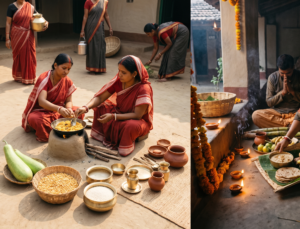
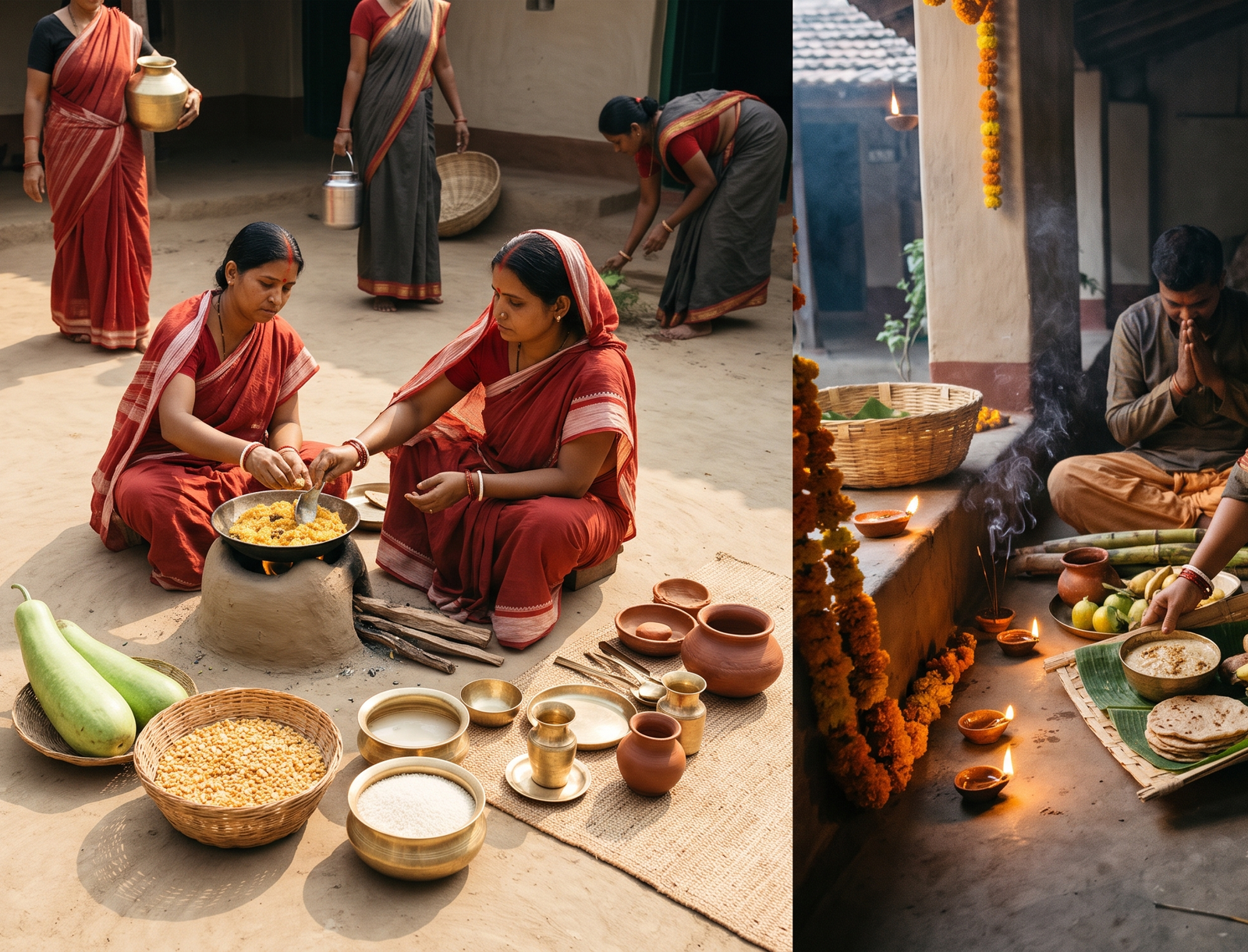
The traditional Nahay-Khay meal consists of arwa rice (non-parboiled rice), chana dal (split Bengal gram) and kaddu (pumpkin). The food is prepared without onion and garlic and is considered ‘sattvic’.
In many households, the meal is cooked on traditional earthen stoves using mango wood, although practices may vary according to family customs and convenience.
Nutritional Significance of Traditional Chhath Food and the 36-Hour Fast
The ‘vrati’ consumes the meal first as ‘prasad’, after which it is served to other family members.
Each item in the traditional meal has religious as well as nutritional significance. Pumpkin, for example, contains a high proportion of water and provides nourishment before devotees undertake the approximately 36-hour nirjala fast, during which they abstain from both food and water.
Chana dal provides protein, while arwa rice is associated with the tradition of consuming pure and ‘sattvic’ food during the festival.
From Nahay-Khay onwards, devotees become particularly careful about their diet and daily routine, avoiding tamasic food and maintaining strict cleanliness in cooking and worship.
The second day of Chhath is observed as ‘Kharna’. Devotees observe a day-long fast and perform worship in the evening after taking a bath. They prepare offerings that traditionally include jaggery-based ‘kheer’, ‘roti’ and other ‘prasad’. After offering the food to the deity, the ‘vrati’ consumes it and distributes it among family members and others.
This is followed by the rigorous 36-hour nirjala fast, which continues through the main worship rituals dedicated to the setting and rising Sun.
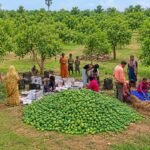
Chhath is also marked by collective participation across families and communities. Traditional folk songs begin resonating in homes from Nahay-Khay, while family members work together to arrange fruits, bamboo baskets, ceremonial items and other offerings.
Markets across towns and villages also witness increased activity, with people purchasing fruits, vegetables, ‘soop (bamboo winnowing baskets)’, ‘daura (bamboo baskets)’ and other items required for the rituals.
The festival, rooted in folk traditions and devotion, places special emphasis on discipline, cleanliness, simplicity and the collective participation of families and communities.
Author

Related Stories




Most Read
- 1Argentina’s ‘Vanishing Sea’: Rare Low Tide
- 2Effect of the 12 August 2026 Solar Eclipse on the 12 Zodiac Signs, Know Who Will Benefit and Who Will Have to Be Careful
- 3Powai: Minor Girl Sexually Assaulted by Six Men, All Accused Arrested Within 24 Hours
- 4HC finds peon’s dismissal over tea and biscuits amounted to ‘injustice’
- 5Brace for 29 June: a Capricorn Full Moon, Mercury retrograde and Jupiter’s leap into Leo