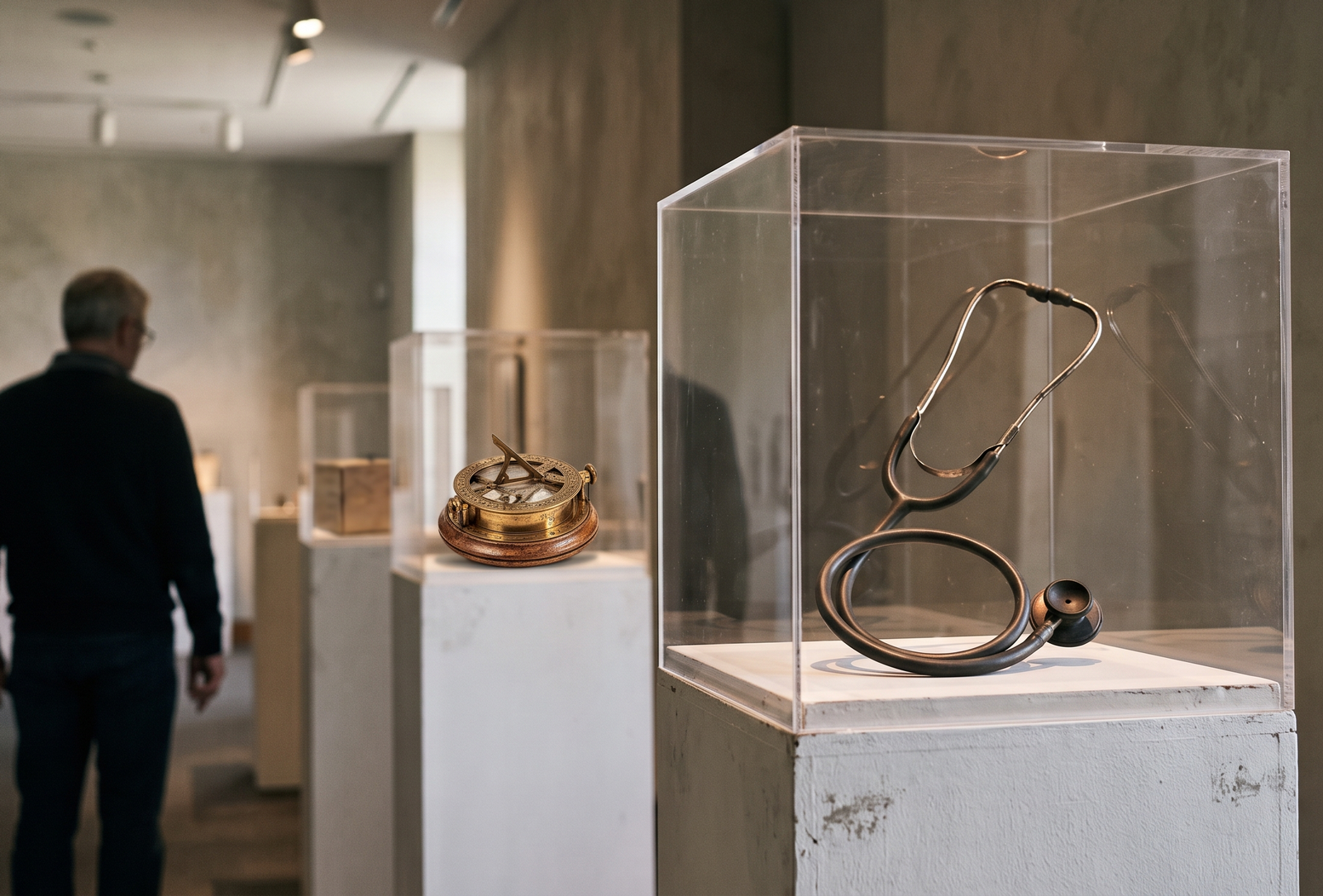
On a vacation of mine to Croatia, I came across an interesting museum in the culturally beautiful and prosperous city of Zagreb – the Museum of Broken Relationships. Intrigued, I bought myself an entry ticket, thinking to myself that this would probably be a complete waste. However, they had good air conditioning, and it was sweltering outside, so fair deal, I thought to myself.
Now, the essence of it was not just about romantic breakups but about a chance for the normal, average person to express their breakup with anything or anyone that had left a deep and indelible mark on their psyche. They had on display objects from people’s lives of deep significance associated with a person, incident, or a phase that was so inherently personal that it had had a profound impact when lost or broken.
Almost melancholic, but thought-provoking nonetheless, before long I was reading intently about how inanimate objects like a rock, a twig, a glove, or even a wound scab had been saved and cherished for years in memory of something lost or broken and eventually put up in the library to seek closure. So, at the end of my time there, I wondered if I were to give up something there, what would it be, and after a lot of thought, it struck me. It struck me, and then the shock struck me harder—that’s how I truly felt.
Before I proceed, take a moment and ponder this—what do you think when you leave for work, college, school, or wherever you go every day? Mostly, we don’t think, for it’s a matter of routine, but if you were to, would you think of performing any less than your best on that given day? One usually wants to do their designated job and take home their salary in a minimally fussy and joyful way.
Similarly, every doctor and healthcare professional either doesn’t think actively but, at every moment, tries to do their level best at work. This is because he or she is aware of the difference their timely intervention, or the lack of it, can make to another person’s well-being.
Now, I’d be putting it mildly to say it’s an extremely interesting time to be a budding doctor. A wave of emotions floods your mind, ranging at times from pride, joy, and contentment to sadness, anger, and disgust at others. All the positivity comes from the gratification of seeing a patient smile, walk, and talk again, to know that you made a difference in someone’s life, however little. That feeling transcends every other joy and is the core reason that keeps one going on the toughest days. The financial remuneration is adequate, no doubt, but, in truth, much less than that in some other fields like finance, management, etc.
Now, almost every healthcare professional understands that the margin for error is near zilch in our field as compared to others, for the loss is not just time and money but life itself. Hence, the arduously long, rigorous training, eating well into our early thirties before one is ready to ply his or her trade. Though frustrating, there is sound logic in the need to hone and refine your skills and knowledge to a desired level before attempting to be a healer in any way whatsoever.
Considering the news updates in India, unless you have been living under a rock, a constant recurring theme in the news has been the negligence, deceit, and treachery of doctors towards each and every patient who happens to stumble through their doorstep. Vilified and maligned, abused and beaten, thrashed and robbed, humiliated, and now almost killed—name me one other profession, besides being a cow hunter, that gets similar treatment at any point.
Lawmakers and the judiciary have treated the field of medicine as being in the line of duty and demanded doctors accept this and any casualties. The last I heard, we weren’t at war, but it certainly seems so now. At war every day, discharging our duties while living under a constant threat to life, property, reputation, and even family.
The impact of all this, coupled with expensive education, reservations and quotas, and a lack of enough opportunities, has led most to look for an avenue that involves moving to safer lands.
The internet will provide you with the grave numbers and statistics that prove many qualified and capable doctors are leaving the country, and this brain drain isn’t slowing down. It’s a shame that managing to migrate to another country is a measure of accomplishment even today. There’s the promise of more humane working hours, better pay and quality of life, no threat to life at work, time for yourself and family, and a political system that deals with you like any other citizen.
Our hospitals will still run, the doctors will soldier on, the politics will still be dirty, and the violence will probably not curb till all hell breaks loose. The quality shall go down, and the prices of healthcare shall rise as medicine in India will soon transition to defensive medicine rather than curative medicine. The priority will be to remain safe in the eyes of the law, and the cost shall be borne by none other than the patients.
I realized, if there is one thing I would probably dedicate to the Museum of Broken Relationships today, it would be my stethoscope, my symbol of the broken bond.
Author

Related Stories


Most Read
- 1Argentina’s ‘Vanishing Sea’: Rare Low Tide
- 2Effect of the 12 August 2026 Solar Eclipse on the 12 Zodiac Signs, Know Who Will Benefit and Who Will Have to Be Careful
- 3HC finds peon’s dismissal over tea and biscuits amounted to ‘injustice’
- 4Brace for 29 June: a Capricorn Full Moon, Mercury retrograde and Jupiter’s leap into Leo
- 5Japan Coach’s Whiteboard Tactics Go Viral at FIFA World Cup