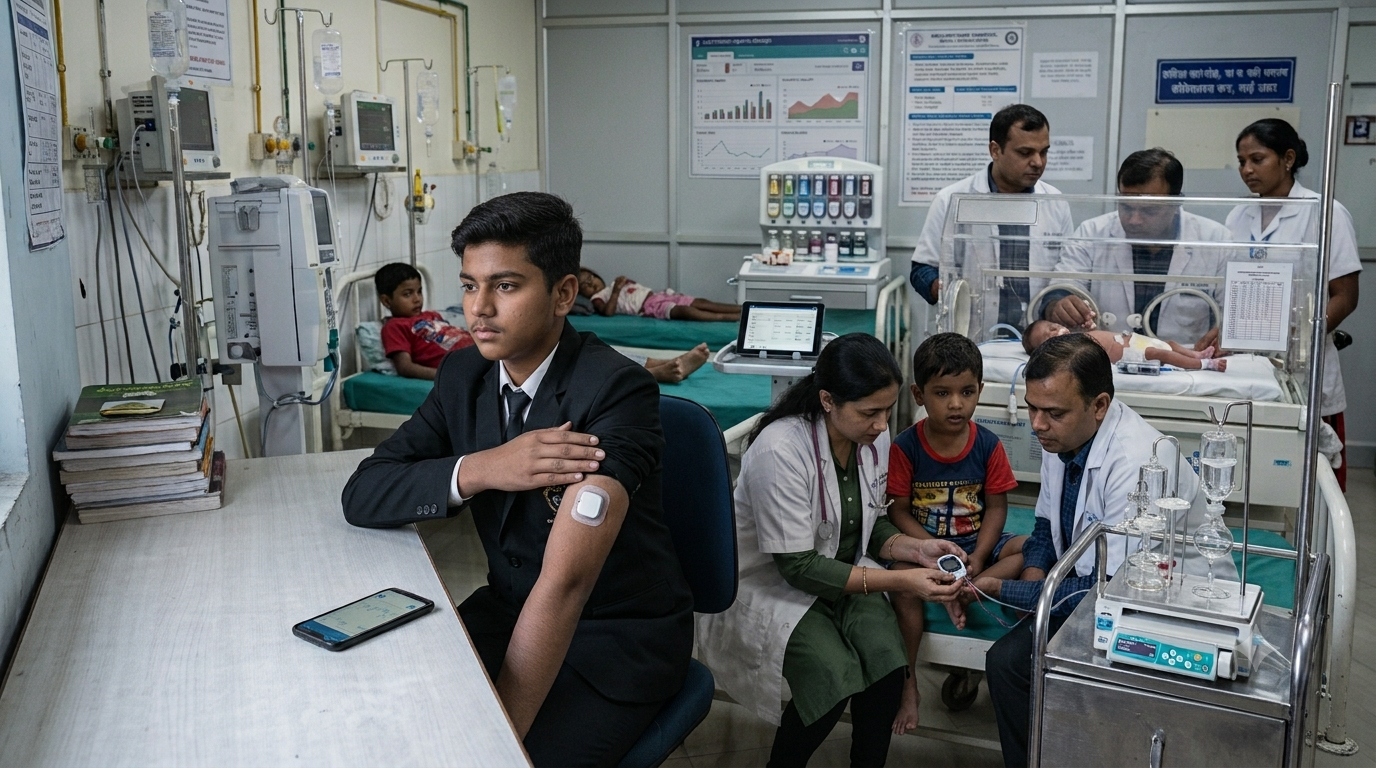
Once widely considered a disease affecting people above the age of 50, diabetes is now being detected among children, teenagers, and even newborns.
Shift in Lifestyle and Genetics Leading to Early-Onset Diabetes in Youth
Doctors say the trend reflects a growing shift in lifestyle patterns, dietary habits, and genetic factors that are affecting younger populations.
Medical professionals at Rajendra Institute of Medical Sciences (RIMS) have observed that cases of diabetes among children are gradually rising, with even rare conditions like Neonatal Diabetes Mellitus (NDM) being reported.
According to doctors, the hospital records indicate that around one to three newborns are diagnosed with Neonatal Diabetes Mellitus every year. This rare condition appears in the first months of life and is primarily linked to genetic abnormalities that affect insulin production.
NDM can occur in two forms: Permanent Neonatal Diabetes Mellitus (PNDM) and Transient Neonatal Diabetes Mellitus (TNDM). PNDM requires lifelong treatment, while TNDM may disappear within a few months but can reappear later.
Severe Diabetes Complications Forcing Hospitalization in Young Children, Expert Warns
Dr. Abhishek Kumar, HOD, Paediatric Surgery at RIMS, said, “Earlier, diabetes was largely seen in people above 50 or 60 years of age. Now we are noticing cases among teenagers and even younger children. In rare situations, it is also detected in newborns due to genetic issues affecting insulin production.”
Doctors say the symptoms in newborns and young children often include high blood sugar levels, poor weight gain, dehydration, and frequent urination. In many situations, the disease is not immediately suspected. Instead, it is discovered during medical examinations conducted for other health problems.
At Rani Children Hospital, around 12 children suffering from severe diabetes-related complications require hospitalisation each year. Dr. Rajesh Kumar, Senior Consultant at Rani Hospital, said, “Many children do not come to the hospital with complaints related to diabetes. They may be admitted for another illness, and during routine blood tests we find that their sugar levels are unusually high.”
Medical experts say these cases often involve serious conditions that need immediate monitoring and specialised treatment.
Author

Related Stories




Most Read
- 1Argentina’s ‘Vanishing Sea’: Rare Low Tide
- 2Effect of the 12 August 2026 Solar Eclipse on the 12 Zodiac Signs, Know Who Will Benefit and Who Will Have to Be Careful
- 3HC finds peon’s dismissal over tea and biscuits amounted to ‘injustice’
- 4Brace for 29 June: a Capricorn Full Moon, Mercury retrograde and Jupiter’s leap into Leo
- 5Japan Coach’s Whiteboard Tactics Go Viral at FIFA World Cup