
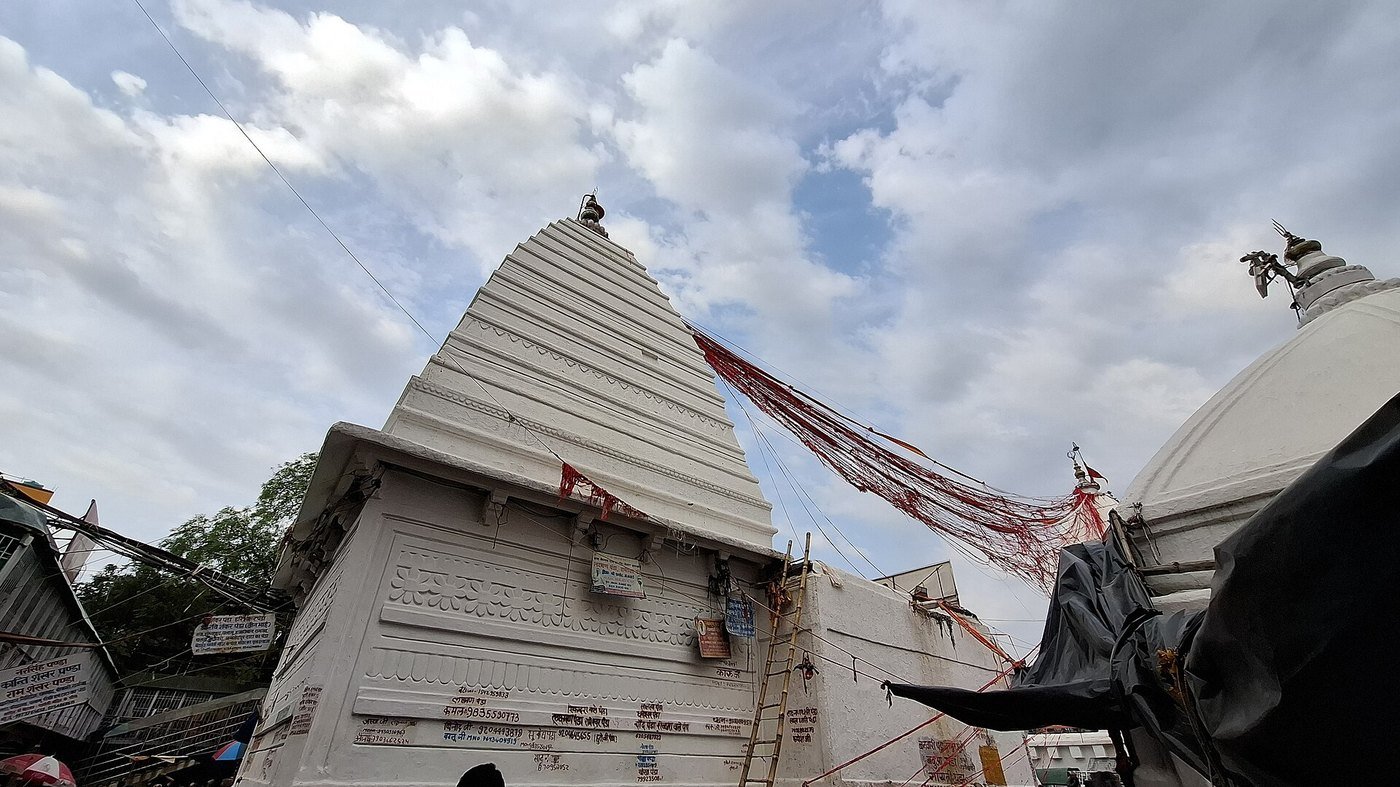
The culmination of the Kanwar Yatra, and the reason lakhs travel to Deoghar, is jalabhishek: the pouring of holy Ganga water over the Baidyanath Jyotirlinga. During Shravani Mela the temple sees extraordinary crowds, and the administration organises the flow of pilgrims through a managed queue system so that darshan can happen safely and continuously. This guide explains, in general terms, how darshan and jalabhishek work during the Mela.
The Temple Complex
Baba Baidyanath Dham is a large complex containing the main shrine of the Jyotirlinga along with a cluster of temples dedicated to other deities within the same walled premises. The main sanctum houses the lingam over which pilgrims perform the water offering. Around it, devotees move through defined entry and exit routes, and during the Mela these paths are separated with barricades and corridors to keep the enormous crowds moving in one direction.
The Queue System During the Mela
To handle the volume of pilgrims, the district administration sets up long, barricaded queue lines that begin well outside the temple and channel devotees toward the sanctum in an orderly sequence. Key features generally include:
- Serpentine queue corridors that let pilgrims wait in a shaded, managed line rather than a crush at the gate
- Separate arrangements at different times for general pilgrims and for those who have taken special vows such as dak bam
- A single queue for everyone: for Shravani Mela 2026 the Jharkhand government has discontinued VIP and VVIP out-of-turn darshan, so there is no paid or expedited line ahead of the general queue
- Rest points, drinking water, and medical aid stations placed along the waiting lines
What is confirmed for the 2026 Mela:
- No VIP or out-of-turn darshan. The state government has ordered the facility discontinued for the duration of the State-run Shravani Mela 2026, so every pilgrim goes through the same queue. Treat any offer of paid queue-jumping as a scam.
- The fair area is divided into sectors, each with its own control room, with AI-assisted CCTV, face-recognition and drone monitoring over the queue and the temple approach.
- A QR-code based complaint system and a chatbot helpline are in service this year for pilgrims to report problems from the queue.
- Drinking water, toilets, bathing points, mobile charging and medical camps are provided along the holding areas and the queue route.
Waiting times and entry gates still shift daily with the size of the crowd, so confirm current details on arrival from the sector control room or on-duty staff.
Jalabhishek and Arghya
When a pilgrim reaches the sanctum, the Ganga water carried all the way from Sultanganj is offered onto the Jyotirlinga. Because of the immense crowds during the Mela, direct hands-on access to the lingam is usually limited, and the administration often arranges an arghya system, a special vessel or spout through which pilgrims pour their water so that the offering reaches the lingam without everyone needing to touch it directly. This lets the maximum number of devotees complete their jalabhishek while keeping the line moving.
Along with water, devotees traditionally offer bilva (bel) leaves, flowers, and other items sacred to Lord Shiva. During peak days, the temple may run continuously with only brief pauses for rituals.
Tips for a Smooth Darshan
- Arrive prepared for a long wait; carry water and keep essentials minimal
- Follow the barricaded route and the instructions of on-duty staff and volunteers
- Keep your offering simple and ready so the line does not stall
- Note that mobile phones and certain items may be restricted inside the sanctum area; check the current rules
- Weekdays are generally less crowded than Mondays, which are the peak darshan days of Shravan
The temple’s standard daily schedule, as published by the temple management, is:
- 04:00 — temple doors open
- 04:10 — kancha jal (the first water offering of the day)
- 14:00 — doors close for the afternoon
- 18:00 — doors reopen for the evening
- 18:10 — shringar puja
- 20:00 — doors close for the night
During Shravani Mela these hours are routinely extended, and on the busiest days the temple can run almost continuously with only short pauses for rituals. Darshan timings, entry rules and offering procedures are set by the temple management and the district administration and may change day to day during the Mela — check babadham.org or verify locally before your visit.