
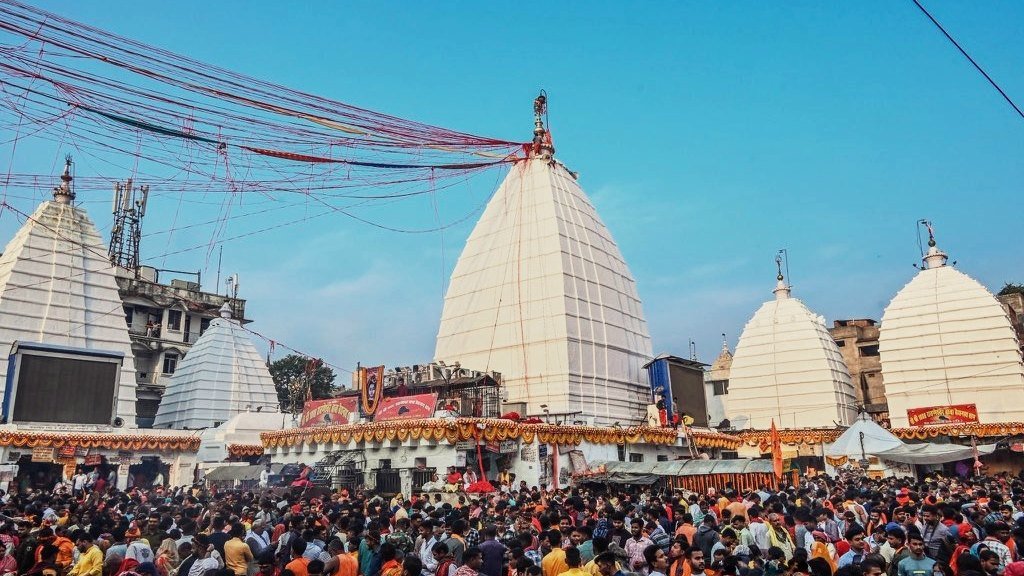
At the heart of Deoghar stands one of the most revered shrines in the Shaiva tradition: Baba Baidyanath Dham, home to the Baidyanath Jyotirlinga. Counted among the twelve Jyotirlingas of Lord Shiva, this shrine draws devotees from across India, and its glory reaches its peak during the sacred month of Shravan. This page recounts the significance of the Jyotirlinga and the well-known legend of Ravana associated with it.
What Is a Jyotirlinga?
The word Jyotirlinga means “pillar of light” or “radiant sign” of Lord Shiva. In devotional tradition, the Jyotirlingas are twelve especially sacred shrines where Shiva is believed to have manifested as a column of divine light. They are spread across the length of India, and pilgrimage to them is considered a path of great spiritual merit. Baidyanath at Deoghar is one of these twelve, and it holds a place of deep affection among devotees, who address the Lord here as Baba Baidyanath, the divine healer.
The Name Baidyanath: The Divine Physician
The name “Baidyanath” is understood to mean “Lord of Physicians” or “the divine healer.” Devotees believe that worship here brings healing of body, mind, and spirit, and the shrine is often called Kamna Linga, the linga that fulfils the heartfelt wishes of those who pray with faith. This healing and wish-granting reputation is one reason the Kanwar Yatra to Deoghar carries such emotional power for pilgrims.
The Legend of Ravana
The most widely told legend connected to Baidyanath concerns Ravana, the mighty king of Lanka and a great devotee of Lord Shiva. According to tradition, Ravana performed severe penance to please Shiva, offering his own heads one by one to win the Lord’s favour. Moved by this devotion, Shiva appeared and healed him, and this act of healing is one explanation devotees give for the name Baidyanath.
The legend continues that Ravana asked Shiva to accompany him to Lanka in the form of a linga. Shiva granted this on one condition: the linga must not be set down anywhere on the way, for wherever it was placed it would remain fixed forever. As Ravana carried the linga homeward, the gods, anxious that Shiva’s power should not go to Lanka, contrived a situation in which Ravana had to hand the linga over briefly. It was set upon the ground and became immovable, rooting itself at the spot that is Deoghar today. Despite Ravana’s mighty efforts, the linga could not be lifted again, and so the Lord remained here as Baidyanath.
Different regional retellings of this story vary in their details, but all share the same essence: the Lord chose to remain at Deoghar, and this soil became eternally sacred.
Spiritual Significance
For devotees, Baba Baidyanath Dham is far more than a place on a map. It is a living centre of faith where the offering of Ganga water becomes an act of surrender and love. The pouring of holy water over the Jyotirlinga, especially after the long barefoot journey of the Kanwar Yatra, is felt as a direct communion with the Lord.
- It is regarded as a place of healing, where devotees seek relief from suffering and the fulfilment of sincere wishes
- It is one of the twelve Jyotirlingas, giving it a place of the highest sanctity in Shaiva pilgrimage
- It is a site where devotion, endurance, and grace meet, especially during the month of Shravan
To stand before the Jyotirlinga at Deoghar, water in hand and the chant of “Bol Bam” all around, is for many pilgrims the fulfilment of a lifelong wish, an experience carried home in the heart long after the journey ends.