
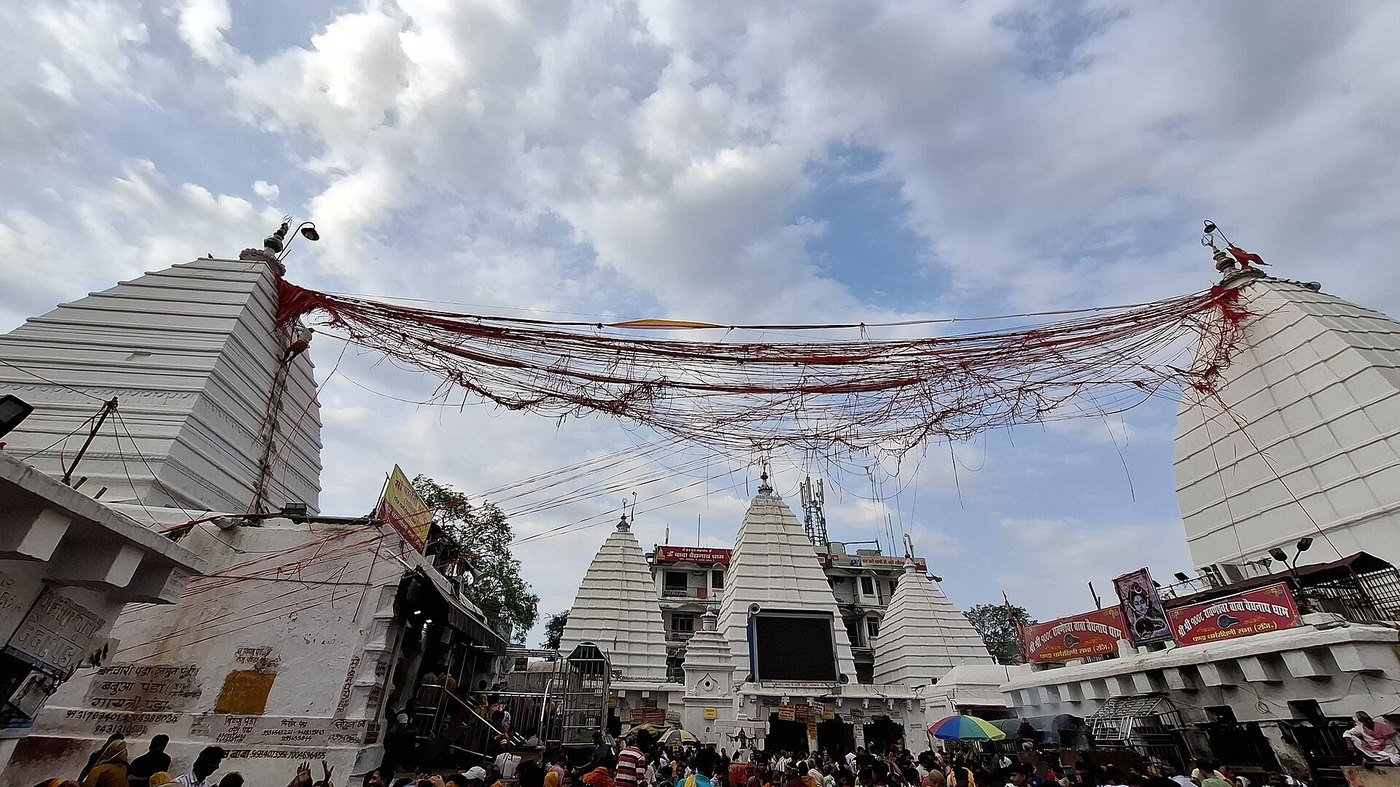
Through the sacred month of Shravan, the rhythm of daily worship at Baba Baidyanath Dham gives shape to the pilgrimage. From the first aarti of the morning to the offerings of water and bel leaves, and above all on the special days of Sawan Somwar and Shivratri, the rituals of Shravan carry the devotion of millions. This page explains the daily worship, the aarti, and why certain days of the month hold the greatest significance.
The Daily Rhythm of Worship
Like most great Shiva temples, Baba Baidyanath Dham follows a daily cycle of rituals that open and close the day and mark its key moments. In general terms, the temple day includes:
- An early-morning opening of the sanctum, followed by the first darshan and worship of the day
- The morning aarti and ritual bathing of the linga
- The long day of jalabhishek, when pilgrims pour Ganga water over the Jyotirlinga
- Evening worship and aarti as the day draws to a close
- The final aarti and closing of the sanctum for the night
The temple’s published daily schedule is:
- 04:00 — the sanctum doors open for the day
- 04:10 — kancha jal, the first water offering of the morning
- 14:00 — doors close for the afternoon
- 18:00 — doors reopen for the evening
- 18:10 — shringar puja, when the Lord is adorned
- 20:00 — the sanctum closes for the night
During the Mela this schedule is adjusted to accommodate the vast crowds, with darshan running for extended hours and, on the busiest days, almost continuously with only short pauses for the rituals themselves. Timings change day to day through the season, so confirm the current schedule on babadham.org or locally before you plan around a particular aarti.
The Aarti
Aarti is the ceremony of light and song offered to the deity, performed with lamps, incense, bells, and devotional chanting. At Baidyanath Dham the aarti is a moment of great feeling, when the crowd’s attention gathers as one toward the Lord. Devotees fortunate enough to be present join in the chanting and receive the blessing of the sacred flame. The morning and evening aartis mark the spiritual bookends of each day, and being present for them is treasured by pilgrims.
Offerings and Rituals
The central act of Shravan worship is the offering of water, but it is accompanied by other traditional offerings dear to Lord Shiva:
- Jalabhishek, the pouring of holy Ganga water over the linga
- Bel (bilva) leaves, considered especially sacred to Shiva
- Flowers, dhatura, and other traditional offerings
- Chanting of “Om Namah Shivaya” and “Bol Bam” as the offering is made
Many devotees also observe fasts through Shravan, taking simple food or abstaining during the day, as an added discipline of the season.
Sawan Somwar: The Mondays of Shravan
Mondays, or Somwar, are dedicated to Lord Shiva throughout the year, and the Mondays that fall within Shravan, known as Sawan Somwar, are the most sacred days of the month. On these days the temple sees its greatest crowds, many devotees keep a special Monday fast, and worship reaches its highest intensity. Pilgrims often time their journey so that their jalabhishek falls on a Sawan Somwar.
In 2026 the four Sawan Somwars fall on:
- Monday, 3 August 2026 — the first Sawan Somwar, held to be the most auspicious of the four
- Monday, 10 August 2026
- Monday, 17 August 2026
- Monday, 24 August 2026
These are the Mondays of Shravan under the Purnimanta calendar followed in North India and at Deoghar, where Shravan runs 30 July to 28 August 2026. Under the Amanta reckoning of Maharashtra, Gujarat and South India, Shravan falls later and its Mondays differ. Expect the heaviest crowds, longest queues and tightest traffic restrictions on each of these four days.
Shivratri in Shravan
The month also contains a Shivratri, the “night of Shiva” that falls each lunar month and is observed with particular devotion during Shravan. On this night devotees keep vigil, fast, and worship through the hours of darkness, offering water and prayers to the Lord. Coming within the holiest month, the Shravan Shivratri is a night of especially deep devotion for those at Deoghar.
In 2026, Sawan Shivratri falls on Tuesday, 11 August, with the night’s worship period running from the early hours of 11 August into the small hours of 12 August. Along with the four Sawan Somwars, it is one of the peak days of the Mela — plan for very heavy crowds if you intend to be at the temple.
Together, the daily aartis, the constant flow of jalabhishek, the fasts, and the great days of Sawan Somwar and Shivratri weave the sacred fabric of Shravan, a month in which the whole of Deoghar seems to breathe in the name of Baba Baidyanath.