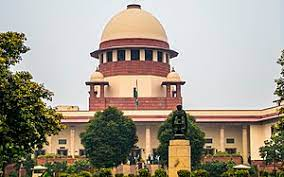
New Delhi, June 3 (IANS): The Supreme Court Collegium, headed by Chief Justice of India (CJI) Surya Kant, has recommended a fresh set of appointments to the Karnataka, Madhya Pradesh and Himachal Pradesh High Courts.
The apex court Collegium has approved the proposal for the appointment of advocates Raghavendra Seetharam Srivatsa, Hema Kulkarni, Subramanya Rangarao, Thadagavadi Prakash Vivekananda, Bakkeswara Pramod and Hombe Gowda Shanthi Bhushan as Judges of the Karnataka High Court. In its meeting held on June 2, the SC Collegium also recommended the name of advocate Amit Lahoti for appointment as a Judge of the Madhya Pradesh High Court.
“The Supreme Court Collegium in its meeting held on 2nd June, 2026 has approved the proposal for appointment of Shri Amit Lahoti, Advocate as a Judge of the High Court of Madhya Pradesh,” said a statement uploaded on the website of the apex court. Further, the Collegium approved the proposal for appointment of judicial officers Chirag Bhanu Singh, Bhupesh Sharma and Yogesh Jaswal as Judges of the Himachal Pradesh High Court. “The Supreme Court Collegium in its meeting held on 2nd June, 2026 has approved the proposal for appointment of the following Judicial Officers as Judges of the High Court of Himachal Pradesh: (i) Shri Chirag Bhanu Singh, (ii) Shri Bhupesh Sharma and (iii) Shri Yogesh Jaswal,” a separate statement said.
As per the Memorandum of Procedure (MoP) governing the appointment of High Court judges, the proposal for appointment is initiated by the Chief Justice of the concerned High Court in consultation with the two senior-most judges of that High Court. The recommendation is forwarded by the Chief Justice to the Chief Minister, who transmits it to the Governor. The Governor in turn forwards the proposal to the Union Minister of Law and Justice, along with relevant inputs and documents.
The proposal is then processed by the Centre before being placed before the Chief Justice of India (CJI), who consults the senior-most judges of the Supreme Court for finalising the recommendation. Following the Collegium’s approval, the recommendation is sent to the Central government. The appointments take effect after the President of India signs the warrants of appointment and the Department of Justice issues the notification in the Gazette of India.
-IANS